
Reviewed · NIGHT WATCHMAN TOURS
Munich: Middle Ages Tour with Night Watchman
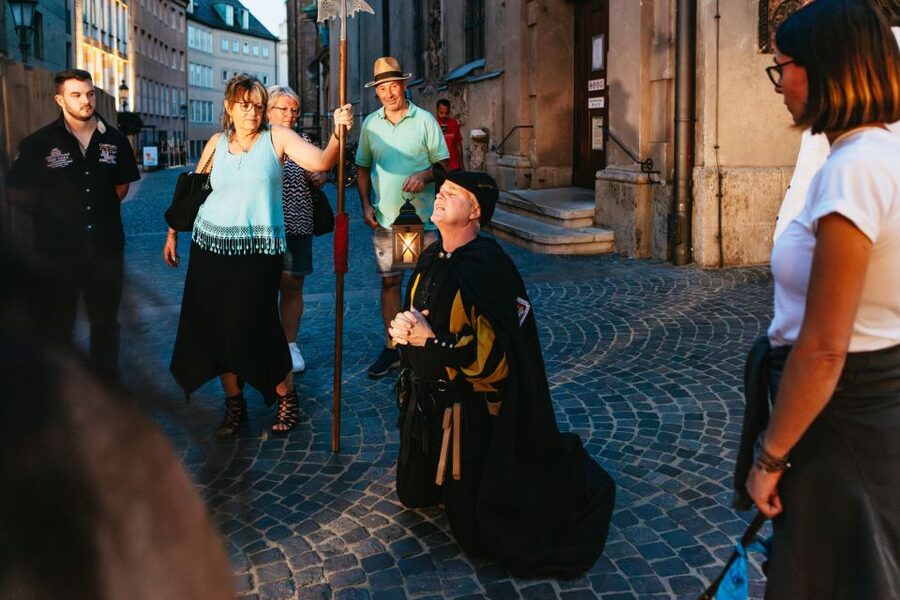
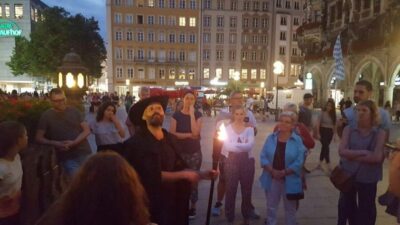
This tour is interesting because Munich tells its dark medieval side at night, with a guide playing the role of a real night watchman. You meet Wolfram in full costume with a lantern and period gear, and the walk turns landmarks into stories you can actually picture.
I love how specific the stops feel. You do not just see famous facades, you move from Marienplatz toward the old city wall and gates, with explanations tied to daily life, crime, and punishment.
One possible drawback: the themes get gruesome at times, including executions, beheadings, and prison torture techniques. If you are traveling with kids under 12, this is not a great fit, and if you prefer light and cheerful sightseeing, you may want a different tour.
Key highlights you will remember
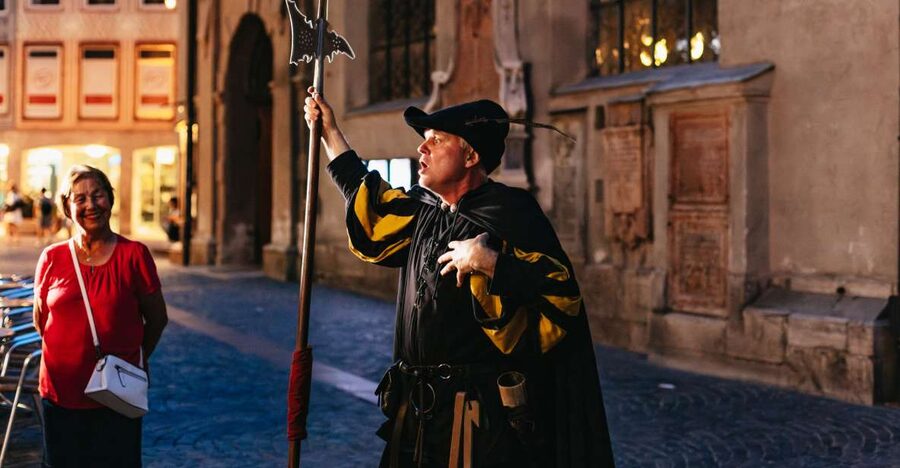
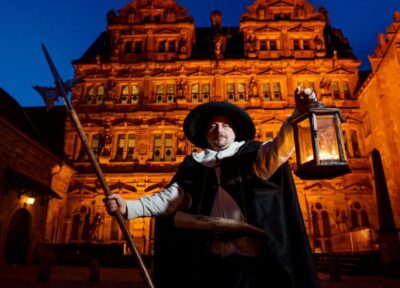
- Wolfram the night watchman guides the experience with lantern, halberd, and horn
- Marienplatz start plus a route through major old-town landmarks
- Medieval justice themes including punishments and executions
- 12th-century city wall and key gates like Talburg Gate and Schwabinger Gate
- Metzgerzeile stop with the story of punishments for bad bakers
- Rain or shine night style tour, in about 1.5 hours
Why this medieval night watchman route works in Munich
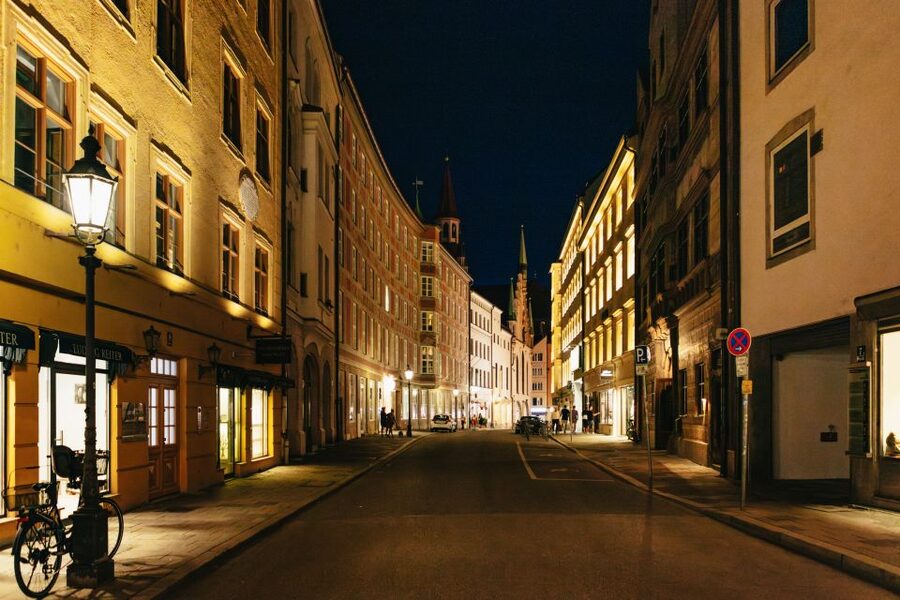
This is one of those tours where a city map alone will not give you the point. Munich is full of beautiful historic buildings, but the Middle Ages are hard to picture unless someone gives you a role, a voice, and a reason to look closely.
What makes it work is the mix of everyday old-town stops and the darker “how control really worked” stories. You will walk between places that still anchor the city today, then hear what life was like when punishment was public and fear was part of order.
The value is also the time. At about 1.5 hours, you get a condensed, story-driven version of medieval Munich without burning a whole evening.
More night watchman walks:
- Munich: Night Watchman Walking Tour
★ 4.7 · 2,092 reviews - Munich: Night Watchman Torch Tour in German
★ 4.8 · 1,280 reviews - On the road with the night watchman
★ 5.0 · 142 reviews
Starting at Marienplatz: lanterns, halberds, and medieval character
Your meeting point is straightforward: in front of Rathaus Apotheke am Marienplatz, about 25 meters left of number 8. The GPS coordinates given are 48.13737, 11.57588, which you can paste into Google Maps to find it fast.
From the start, you get the key ingredient: the guide shows up in medieval garb and carries theatrical tools, including a lantern, halberd, and horn. That sounds like “costume tour” marketing until you realize the effect on how you watch the street corners and gates. You stop treating the buildings like scenery and start treating them like set pieces where something happened.
Expect a live guide in German, and the tour is designed to run rain or shine. Wear shoes that handle wet pavement and keep your camera ready, because there are visual moments you will want to remember.
St. Peter’s Church stops: incense, remains, and what people felt
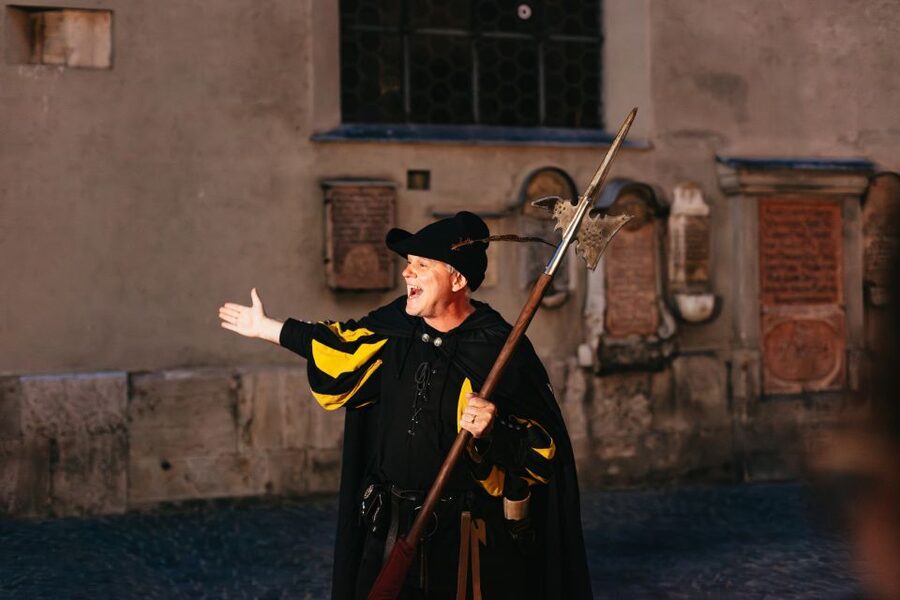
The tour includes time at St. Peter’s Church in two different segments, each around 10 minutes. The first stop is quick orientation, helping you link the church area to the medieval world you are about to walk into.
Later, you return for the sensory detail that makes the place stick. You will smell incense in the ancient remains of St. Peter’s, and that small moment does a lot of work. It pulls you out of modern Munich habits and into the idea that religious space was not just architecture, it was atmosphere.
A practical note: if you are sensitive to scents, be prepared for incense. It is short, but it is part of the tour’s character.
Viktualienmarkt and the old civic core: where power and daily life meet
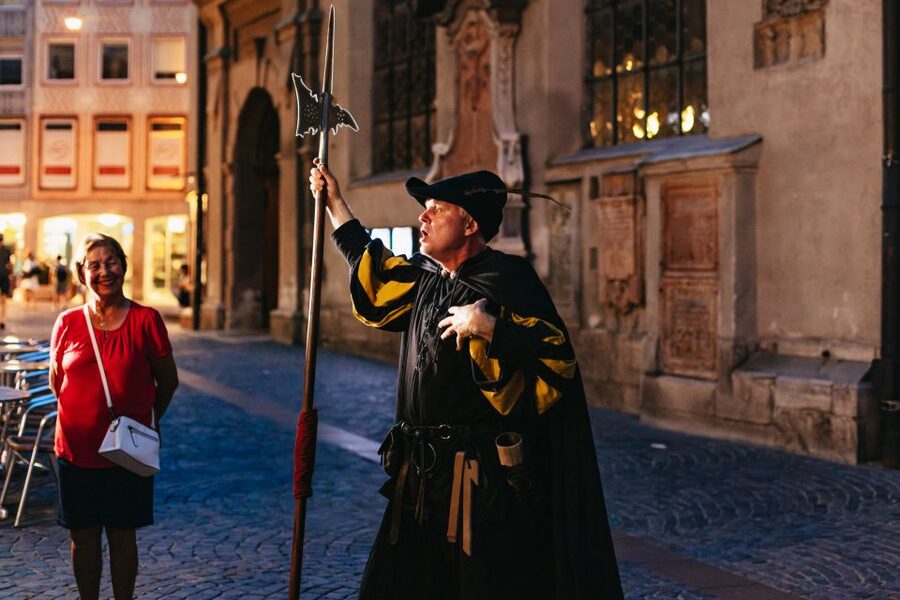
You pass through Viktualienmarkt, the market area that has long fed the city and drawn people together. Even with only a short stop, the guide can frame it in a way that makes medieval survival feel close to you, not distant.
Next you spend time near the Old Town Hall. This is where you get the civic layer, the side of Munich where rules were set and order was enforced. It helps to look at historic government buildings not as museum pieces, but as places tied to real consequences.
The benefit here is perspective. You are not only learning about dramatic punishments. You are also getting the context that those punishments came out of ordinary systems people depended on, from food rules to public order.
Weigh these Munich picks against each other
- From Munich: Neuschwanstein & Linderhof Castle Full-Day Trip
★ 4.6 · 14,646 reviews - Neuschwanstein & Linderhof Castle-Fairytale Day Tour from Munich
★ 4.5 · 7,275 reviews - Munich: Third Reich & WWII Walking Tour
★ 4.6 · 6,181 reviews - Dachau Concentration Camp Memorial Site Tour from Munich by Train
★ 4.5 · 5,637 reviews
Alter Hof and Marienhof: courtyards that explain the medieval city mindset
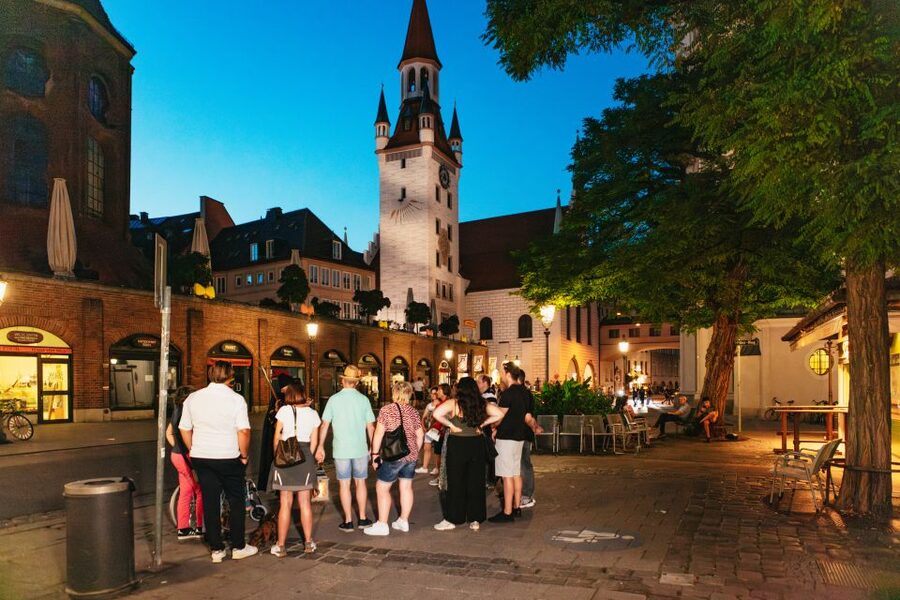
The route includes Alter Hof and Marienhof, with short guided time at each. These stops matter because they connect Munich’s story to decision-making spaces, where authority was close enough to feel personal.
In medieval cities, “justice” was not an abstract concept. It was a process people watched, feared, and talked about, and the tour’s pacing pushes you to think that way as you move through the old-town geometry.
If you like history that answers the practical questions, these courtyard stops are a good bridge. You move from market life to governance to enforcement, without the tour feeling like a random list of famous buildings.
Frauenkirche: a major landmark, explained through medieval behavior
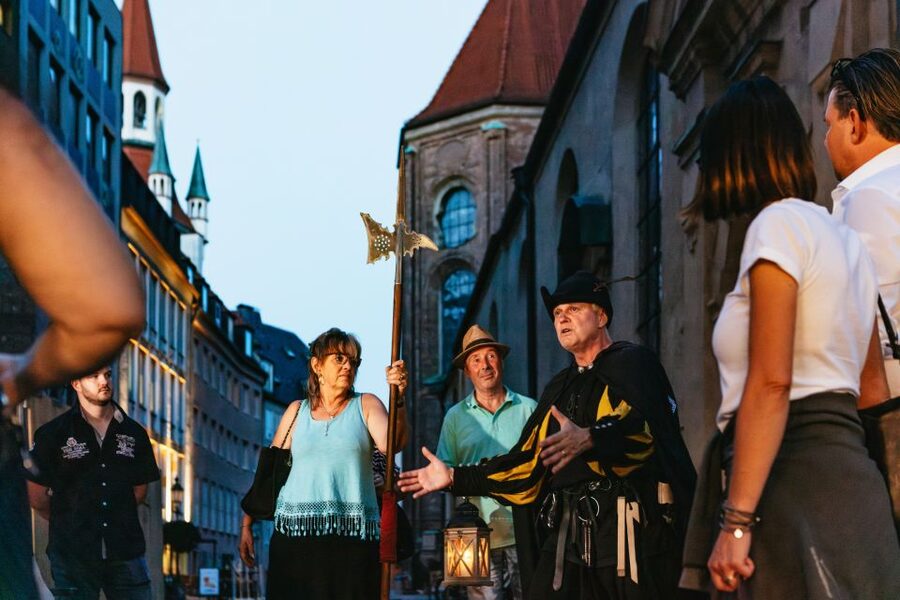
You also spend time at Munich Frauenkirche, with about 10 minutes guided. Even if you already recognize the building from photos, the tour approach helps you see it differently by linking it to the larger medieval environment.
A drawback to keep in mind: because Frauenkirche is a big public focal point, you may feel some crowds around you depending on the time of day. It is still worth it, because the guide uses the location to pull you back into the era of public rules and visible authority.
This is the kind of stop where you can stand, look upward, and let the explanation do the heavy lifting. The tour does not ask you to memorize facts. It helps you build a mental picture.
The 12th-century city wall and gates: the city’s defenses as a story stage
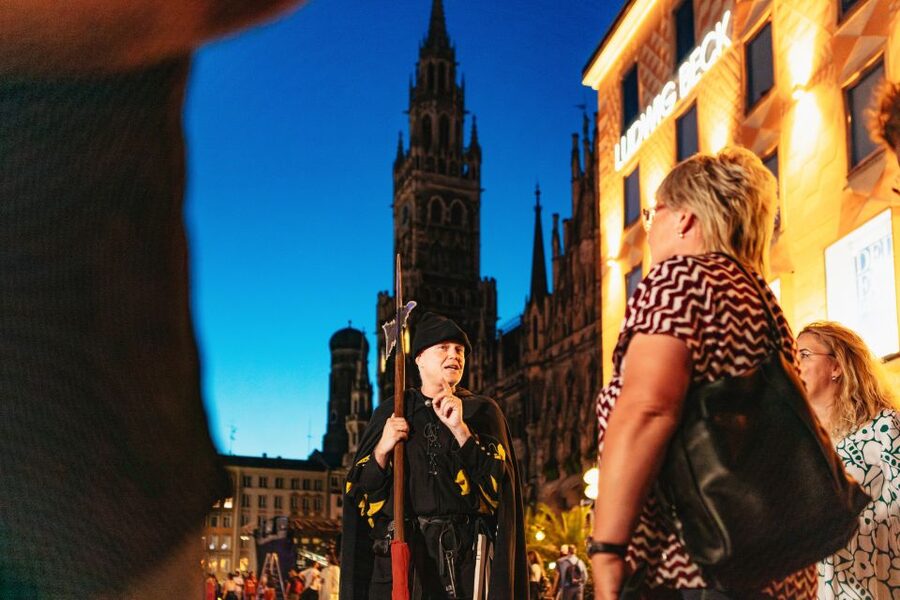
One of the tour’s standout sections is the walk to the city wall dating to the 12th century. Walls like this are not just defensive structures. They shaped everything about how people moved, where they gathered, and how safe or unsafe they felt.
Then comes a highlight that feels more like theater than a typical tour moment: you will witness the closing of the Talburg Gate and a fight with a halberd. That part is important even if you normally skip reenactments, because it helps you understand how quickly a city could shift from open to controlled.
Watch how the guide ties the action to daily realities. A gate closing was not just symbolism. It affected travel, trade, and who got to be inside when night settled.
Metzgerzeile and the warning story about bad bakers
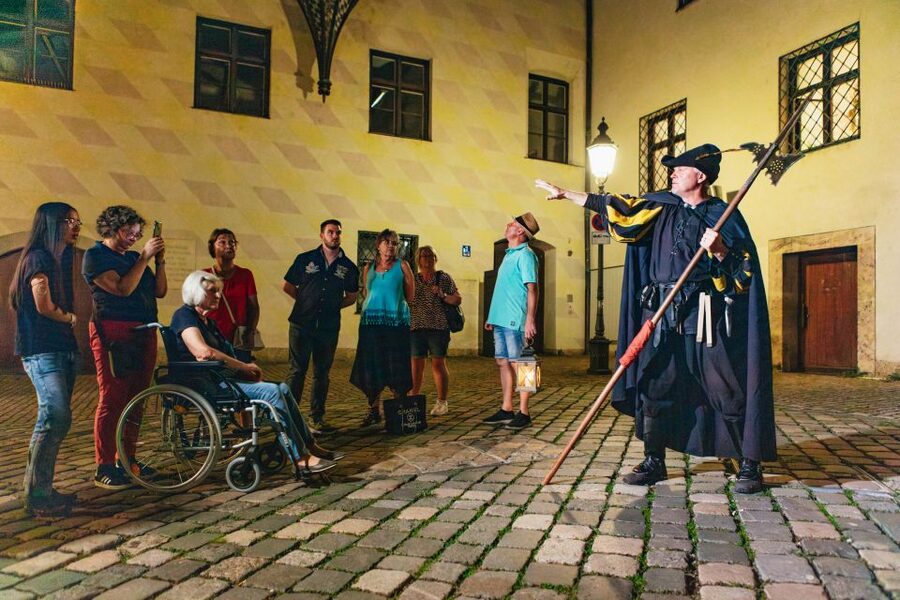
You will also visit Metzgerzeile, and the guide connects it to punishments for bad bakers. Food was not a casual choice in the Middle Ages. It was survival and health, and it had direct consequences for merchants and workers.
This stop is a great example of why the tour is worth it even for people who think they already know Munich. The story moves you from “medieval is dark” to “medieval is rule-driven,” where the same city logic that governs today also shows up in older forms.
If you want to understand the tone of the period, this is one of the most useful moments. The crimes are not only about violence. They are also about trust, quality, and protecting the community.
Executions, beheadings, and why punishment was public
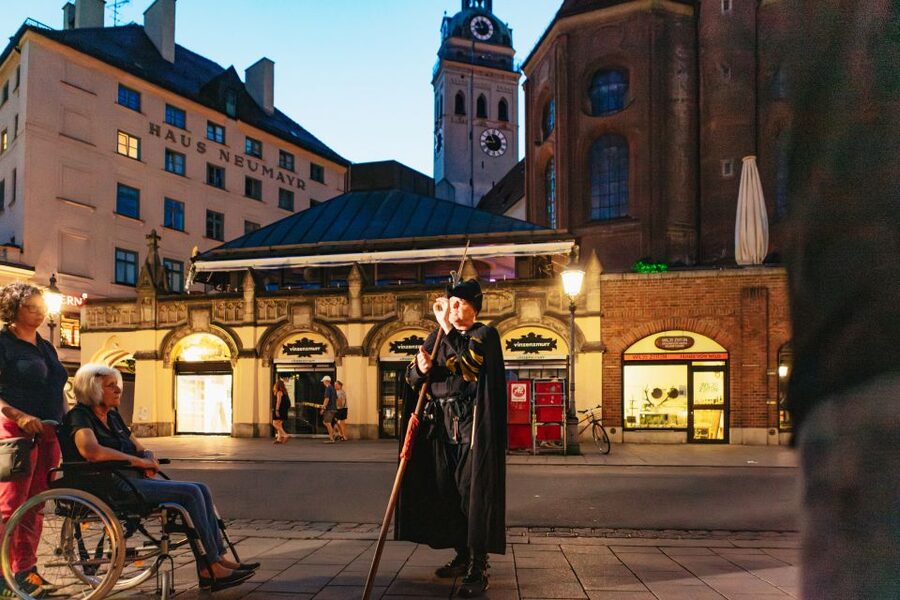
The tour openly includes executions and beheadings, and the guide does not shy away from describing how medieval justice could work. You also hear about the idea of interrogations and how the system created fear and compliance.
This is the part where you should pace yourself mentally. The tour uses these themes to explain how the city operated, not to shock for the sake of shock. Still, you should know what you are stepping into.
A good practical tip: if you are traveling with someone who is sensitive, you can politely discuss it before you start. The overall format is a role-playing night story, so keeping expectations aligned helps everyone enjoy the walking portion.
Medieval prisons and torture techniques: what you should know before you go
Another intense section focuses on terrifying torture techniques used in medieval prisons. This is included as part of the broader narrative about punishment and control.
I am glad the tour includes it rather than pretending medieval justice was only symbolic. You get a fuller understanding of why public behavior could be so strict, and why the city walls and gates mattered so much.
That said, it is not a “light history” stop. If your goal is relaxed culture time, choose a different tour. If your goal is to understand medieval Munich as people actually experienced it, this is one of the most effective segments.
Schwabinger Gate and the castle: closing the loop with more power symbols
As the tour continues, you explore more major medieval features, including the castle area and the Schwabinger Gate. Gates again matter here, because they connect the story to movement, safety, and control.
The castle segment helps you tie the earlier civic stops to something more strategic. Markets and church areas show daily life, while gates and castle spaces show the city’s power structure.
The overall effect is that you end with a clearer mental map. You can look at Munich landmarks later and understand what they might have meant to someone living in the medieval era.
Price and time: is $21 per person good value?
At $21 per person for about 1.5 hours, the price-to-time ratio is strong, especially because the tour includes a live guide with medieval garb and role-based presentation. You are not paying just for a route. You are paying for guided storytelling that turns multiple locations into one coherent narrative.
Food and drinks are not included, so plan a snack or a drink before or after. Since it runs rain or shine, bring a light layer even in mild weather, and consider a small umbrella or waterproof jacket.
Also note what is not allowed: flash photography and video recording. If you like casual street photos, you can still take pictures without flash, just be mindful of the rules so you do not get stopped mid-moment.
Pace, language, and what to pack for a smooth evening
This is a walking-focused tour with several short guided stops. Even with short durations like 10 minutes at each location, you should expect continuous movement and standing. Comfortable shoes are not optional.
The guide language is German, so if you do not speak German, your enjoyment will depend on how well you follow a story through context. Even so, medieval costumes, lantern atmosphere, and the dramatic gate moments help bridge gaps.
Wheelchair accessibility is listed, and there is also a private group available option. If you need a quieter pace or easier movement, a private setting can make the experience feel less rushed.
Who should book this Munich night watchman tour
Book it if you want a medieval Munich experience that feels specific and theatrical, not just a list of sights. You will likely enjoy it most if you like urban history, crime-and-justice stories, and learning how people lived under rules they feared.
Skip it if you want only cheerful monuments and light commentary. The tour includes executions, beheadings, and details about prisons and torture techniques, so it is not the gentlest history style.
It is also not suitable for children under 12, so families with younger kids should look for a different option.
Should you book this tour?
If you like your city history with a strong narrative and a character guide, yes, this is a smart pick. For $21 and 1.5 hours, you get a concentrated route through central old-town landmarks, city defenses, and the darker side of medieval order, with Wolfram’s role making the whole thing easier to picture.
My final advice: read the theme carefully and match it to your comfort level. If the idea of executions and prison techniques fits your curiosity, you will likely come away with a much sharper sense of how Munich worked in the Middle Ages.
FAQ
Where is the meeting point for the Munich night watchman tour?
You meet your guide in front of Rathaus Apotheke on Marienplatz, about 25 meters left of number 8. You can also use the GPS coordinates 48.13737, 11.57588 in Google Maps.
How long is the tour?
The tour lasts about 1.5 hours.
What language is the tour guide speaking?
The live tour guide speaks German.
Is the tour wheelchair accessible?
Yes, the tour is listed as wheelchair accessible.
Does the tour run in bad weather?
Yes, it takes place rain or shine.
Are there photography or recording restrictions?
Flash photography is not allowed, and video recording is not allowed.
Fresh reviews out of Munich
- Munich: Christmas Markets Food & Drink Tour★ 4.6 · 50 reviews
- Munich: Walking tour of the old town with all your senses★ 4.5 · 51 reviews
- Munich: Scavenger Hunt Self-Guided Tour★ 4.1 · 51 reviews
- Hidden Architectural Gems of Munich (Max. 16 guests)★ 4.9 · 52 reviews
- Shared Departure Transfer: Munich Central Station to Munich Airport★ 3.5 · 54 reviews
- Hard Rock Cafe Munich with Set Lunch or Dinner★ 3.5 · 54 reviews
- Quatsch Comedy Club München: Die Live Show★ 4.6 · 56 reviews
- From Munich: Royal Fairytale Tour★ 4.9 · 56 reviews
Night Watchman Tours, compared.
The Original Night Watchman Tour in Lantern Light
Read our review →
1.5-Hour Public Tour with Night Watchman Bremme
Read our review →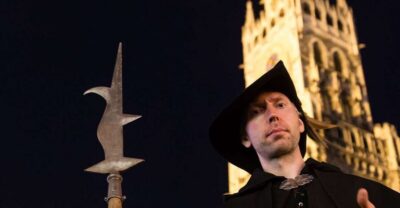
Night Watchman Historic Adventure Tour
Read our review →Browse the lists this tour appears in