
Reviewed · RHINE VALLEY CRUISES
Guided tour in Mainz on the Rhine in german and english
If you like your city history in layers, this Mainz on the Rhine walk is a fun way to get your bearings fast. I especially like the chance to see the Roman Theater area up close and then end with the Chagall windows at St. Stephan. One thing to consider: the route has a strong Roman focus, so if you are mainly chasing Mainz stories beyond that era, you might wish it spent a bit more time on later chapters.
I also like that the guide, Andreas, comes across as genuinely invested. In German, he answers questions clearly, and the tour feels like a guided conversation rather than a lecture.
Plan on an easy to moderate pace. You will walk about 60 minutes in total during the 2-hour experience, which makes it a good option when you want history without a full day commitment.
Key highlights you will notice right away
- Römisches Theater start: You kick off at the Roman Theater and build context as you go.
- Roman excavations included: You get access to Roman-era remains as part of the walk.
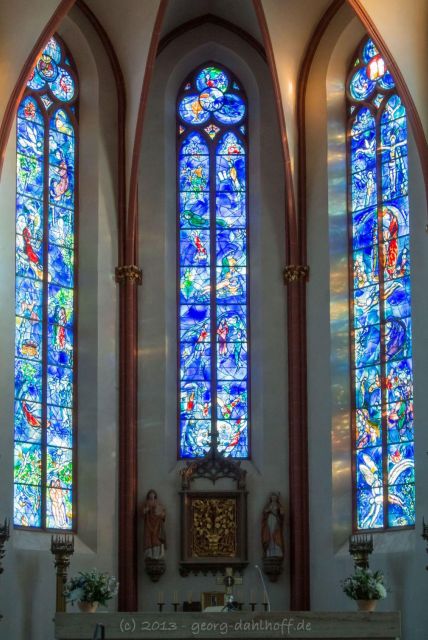
- Chagall windows at St. Stephan: The visit to the stained glass is a real payoff moment.
- Domplatz orientation and market stop: You pass through key central spots, including the Wochenmarkt area.
- Church-and-holy-place route: St. Ignatius, St. Johannis, and more shape the feel of the walk.
- Fastnacht-season highlight: If you go during Carnival season, you get a themed moment tied to Fastnacht.
Meeting at the Roman Theatre, then easing into Mainz on foot
This tour starts where it makes sense, at the Roman Theatre. The meeting point is at the church steps above it, the Luther Church. It is an easy start point if you are already in the center of Mainz, and it helps you understand why Mainz has always been important at this bend on the Rhine.
From there, the day has a simple rhythm. You get a short stop to learn, then you move on through the Old Town area. Walking time is about 60 minutes, so you should not expect a marathon. The whole experience lasts 2 hours, which means you will see a lot, but you will not get stuck standing around for long.
The guide leads in German, and English is also listed as an available language for this tour. Either way, you can expect a live guide style, with time for your questions.
More Rhine Valley cruises:
- Mainz: guided evening tour of the Rhine riverbank/old town in German and English
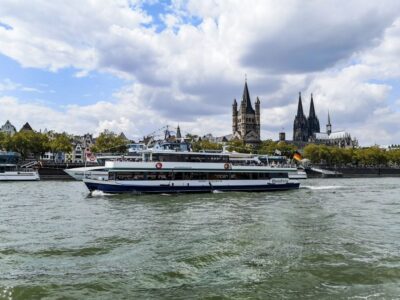
★ 4.9 · 106 reviews - Cologne: Top Sights Rhine River Cruise – Skyline Tour
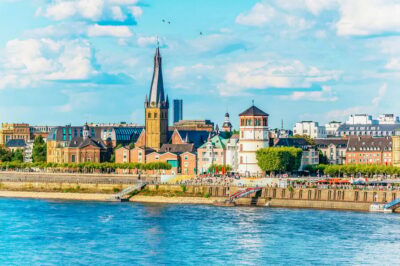
★ 4.4 · 3,030 reviews - Düsseldorf: City Sightseeing Cruise on the Rhine
★ 4.1 · 2,954 reviews
Römisches Theater and Roman excavations, what you actually see
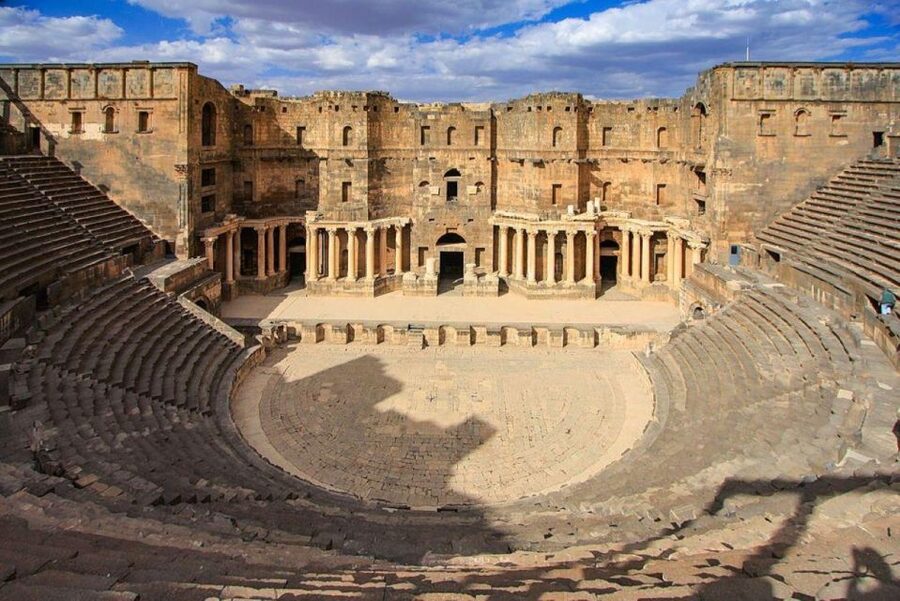
The first major stop is the Römisches Theater itself, with about 25 minutes here. This is not just a quick photo stop. You get enough time to understand what you are looking at and how it connected to life in Roman Mainz.
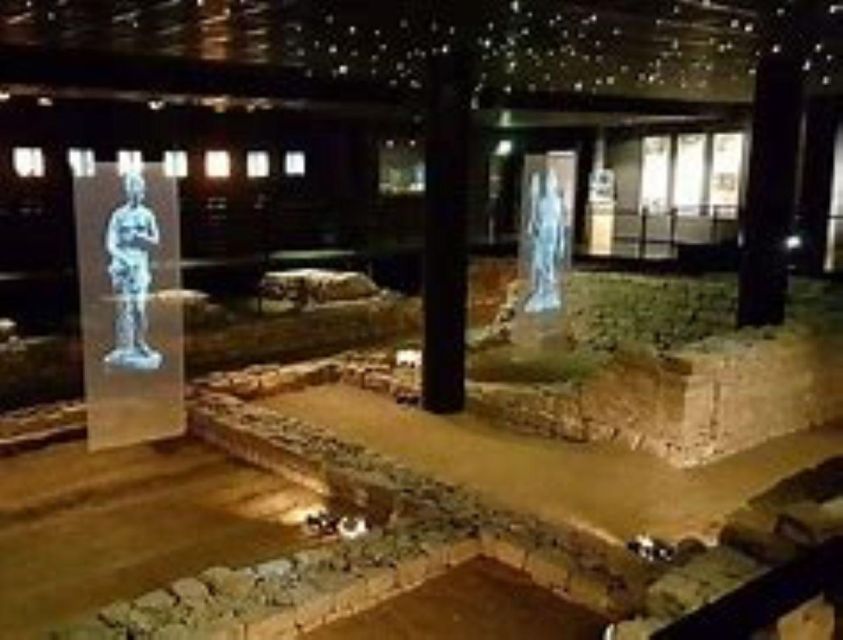
After the theater, the tour shifts into a Roman-era thread through the center of town. The experience includes a visit to Roman excavations from the Roman period. That part is arranged as part of the tour, which is helpful because Roman remains in city centers can be tricky to locate on your own. Here, you have someone pointing out what matters and placing it in context.
A practical tip for this part: wear shoes you trust. Even though the tour is not described as strenuous, you are moving between historic sites with stone surfaces and uneven ground in places. If you want good viewing, you might pause often, so cushioning matters.
Altstadt Mainz and Domplatz, where the walking route becomes your map
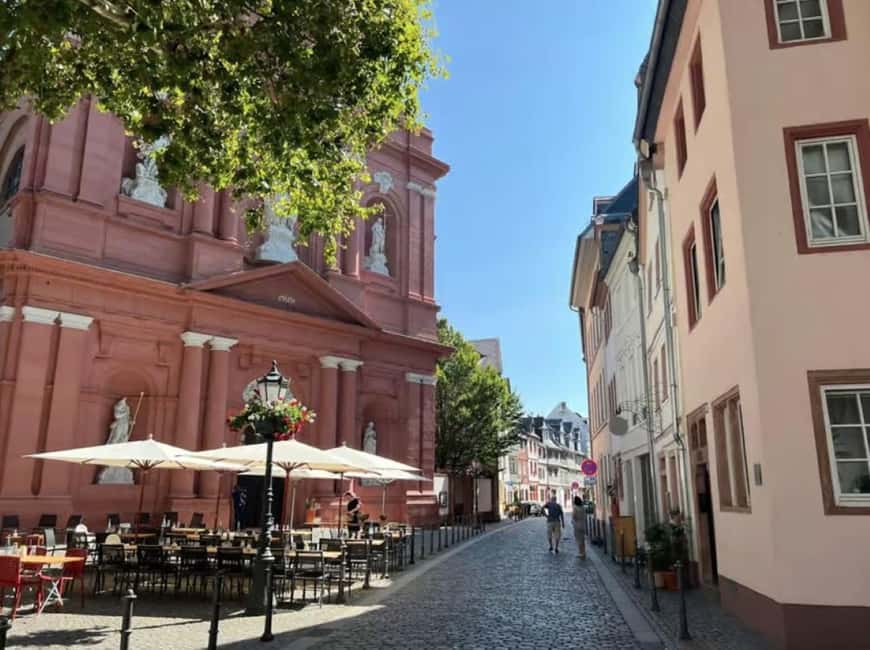
Once you leave the Roman start area, you transition into the Altstadt, the Old Town zone. You get around 30 minutes in this area, which is the sweet spot for orientation. This is where Mainz starts to feel like a real, walkable city rather than a list of landmarks.
The route brings you toward Domplatz, and it includes a stop connected to the Wochenmarkt Mainz Domplatz. If a market is operating, it is an easy way to see everyday Mainz life instead of only monumental scenes. Even if you are not buying anything, you get the sense of how locals move through this central square.
As you go, the tour also covers streets and squares like Ludwigsstraße and Ballplatz. These are short segments, roughly 10 minutes each, but they matter. They show you how the city connects its religious and civic centers, and they help you picture where you will want to wander later on your own.
If you like “city reading,” this portion is valuable. You start noticing sightlines, where the churches sit relative to the squares, and how the Rhine-facing atmosphere influences the feel of the streets.
Kirschgarten and Ballplatz, quick pauses that make the Old Town make sense
Two of the smaller stops, Kirschgarten and Ballplatz, are about 15 minutes and 10 minutes respectively. The names might not sound famous in the way a castle does, but that is part of why I like them on a walking tour. You see the texture of Mainz.
Think of these moments as the connective tissue. After the Roman sites and the central squares, Kirschgarten helps you keep the flow. Ballplatz is another hinge point in the route that keeps you from feeling lost or stuck. You learn enough here to understand what you are passing, not just what you are standing in front of.
If you are the kind of traveler who likes to return later and recognize places without a guide, these “in between” stops help a lot.
Churches you will visit: St. Ignatius, Alter Dom St. Johannis, and the holy-place focus
A big part of this tour is the religious and holy-place route. You do not just skim outside. You spend time at several church-related stops, with guided moments built in.
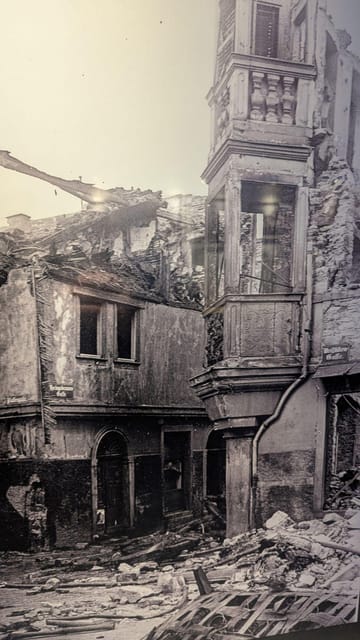
After the Altstadt and toward the central areas, the itinerary includes the Parish of St. Ignatius (about 15 minutes). Then you move to the Alter Dom St. Johannis (also about 15 minutes). You also stop at the Alter Dom St. Johannis area before heading toward the final destination.
Here is the value of these stops, even if you are not a church-history specialist. Mainz is a city where faith landmarks and public life overlap. By including multiple church sites, the tour helps you understand why Mainz feels the way it does today, not only what happened in the Roman period.
One balanced note: because the tour includes several churches, you may want to bring a bit of patience for quiet, indoor or semi-indoor moments. If you are hoping for constant outdoor views, you will still get them between stops, but the tour does have a reflective side.
St. Stephan and the Chagall windows, the emotional finale
The end of the tour lands at St. Stephan’s Church. Before the final finish, you visit the Kath. Pfarramt St. Stephan area for about 20 minutes, and that is where the Chagall windows come into play.
This is the highlight that most people remember, because it is not abstract. The stained glass by Marc Chagall turns a church stop into something visual and immediate. If you enjoy art that feels expressive rather than purely historical, you will likely feel it here.
It also works as a smart ending. You start with Roman Mainz, then you move through civic squares and churches, and you finish with a creative, modern link to how Mainz continues to tell stories through its sacred spaces.
Practical advice for the finale: take a little extra time looking before you move on. With stained glass, details can be easy to miss if you rush. The tour timing gives you a guided window, but you can slow down after your guide’s points if the space allows.
Fastnacht-season highlight, how Carnival fits in without taking over
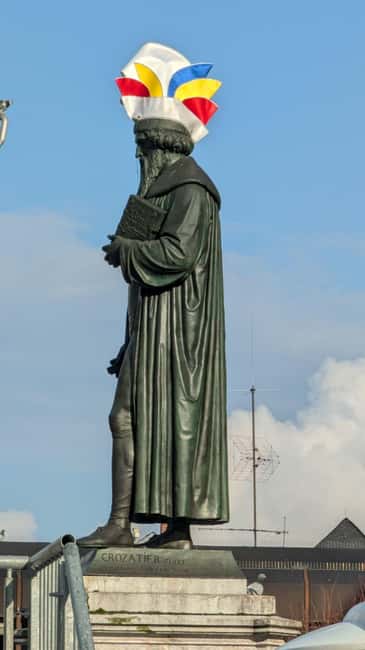
This tour specifically notes that during Fastnachtszeit, you get an included Fastnacht highlight. That is a big plus if you are visiting around Carnival and want more than just seeing costumes on the street.
That said, the tour still keeps its structure, and the overall emphasis remains on the sights along the route. If you want Karneval history as a main storyline, you may find the Roman threads dominate the flow. Still, it is a nice way to connect Mainz identity to what is happening that season, instead of treating it like an afterthought.
If you are going during Fastnacht, I suggest you arrive with the mindset that you are getting a thematic moment, not a full Carnival deep dive.
Price and value at about $20 for 2 hours
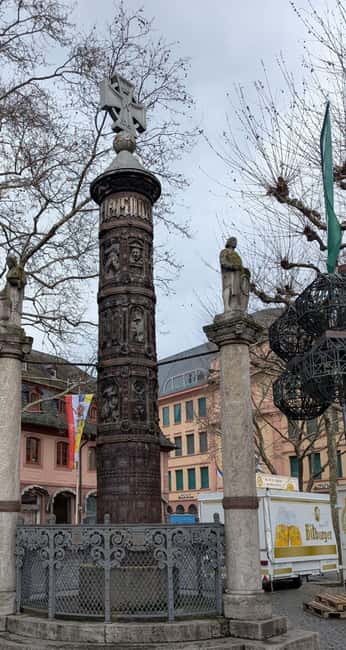
At about $20 per person for a 2-hour guided walk, this is good value when you care about two things: interpretation and access. The tour is not only a walking route. It includes visits to the Roman excavations and the Chagall windows at St. Stephan, with that access arranged as part of the experience.
For many travelers, the tricky part of an Old Town visit is figuring out what is worth noticing and what you might miss. This tour pays that problem down. You get a coherent route, short stops that actually explain what you are seeing, and a guide who answers questions rather than rushing through points.
Also, you get a practical “where to eat next” benefit. Your guide will show you where you can stop for a meal after the tour, which is useful when you are finishing near St. Stephan and you want an easy next step.
Is this the right Mainz tour for you?
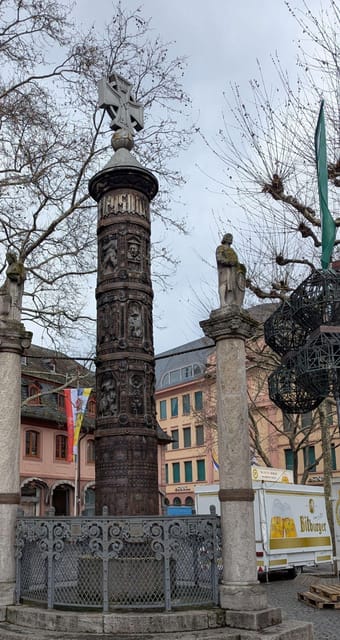
You will probably enjoy this tour if you:
- want a short 2-hour walk that covers major central sights
- like Roman remains and churches, not just one type of landmark
- care about seeing the Chagall windows rather than only reading about them
- appreciate a guide who answers questions and keeps the pace friendly
You might want to think twice if you:
- mainly want Mainz history centered on later eras, especially Fastnacht as the main topic
- prefer tours that are consistently outdoor with constant views
- dislike any itinerary with multiple religious stops
Should you book this Mainz on the Rhine walking tour?
If your goal is to understand Mainz in a practical, human way, I would book it. The combination of Roman start points, a central Old Town route, and a strong art finale at St. Stephan makes the time feel well used.
Look for a guide-led experience led by Andreas, who comes across as both knowledgeable in a usable way and clearly invested in the city. Add the Roman excavations and the Chagall windows, and you have two “reasons to go” that are not easy to recreate with just self-guided wandering.
If you are visiting during Fastnacht, you will also get a season touchpoint. Just remember, it is a highlight inside a route that leans Roman and church-focused.
FAQ
How long is the Mainz on the Rhine walking tour?
The tour lasts 2 hours.
Where does the tour meet?
It meets at the steps of the church above the Roman Theatre, the Luther Church.
How much walking is included?
You will walk for about 60 minutes during the tour.
What languages are available for the guided tour?
The tour is offered in German and English, with the live tour guide noted as German.
What are the main sights included on the route?
The tour includes the Roman Theatre area, the Altstadt, stops at churches and holy places, the Wochenmarkt area at Domplatz, and ends at St. Stephan’s Church.
Does the tour include the Chagall windows?
Yes, you visit the Chagall windows at St. Stephan, arranged as part of the tour.
Is the tour wheelchair accessible?
Yes, the tour is wheelchair accessible.
Fresh reviews out of Mainz
- Mainz: guided evening tour of the Rhine riverbank/old town in German and English★ 4.9 · 106 reviews
- Small Group Rheingau Vineyards Tour with Castles and Abbeys★ 5.0 · 100 reviews
- Exclusive Wine & Food Tasting in Historic Cellar | Mainz Old Town★ 5.0 · 42 reviews
Rhine Valley Cruises, compared.
Rhine Valley Castles: 1.5-Hour Boat Tour from Rüdesheim
Read our review →
Rhine Valley Trip from Frankfurt including Rhine River Cruise
Read our review →
Rhine Valley boat tour along the castles and palaces
Read our review →
Cologne City Tour Experience cathedral city on the Rhine
Read our review →Browse the lists this tour appears in