
Reviewed · JAPAN
Goslar: Hinter den Rathaustüren
Goslar’s town hall is interesting because it is not just a pretty facade. This experience takes you behind the Rathaus doors into spaces that were built for real council life, then restored so you can actually feel what they were like. I love the Rathausdiele with its Sternenhimmel effect, and I love how the Huldigungssaal returns to life through a multimedial presentation after extensive restoration.
The one thing to plan for is the stairs. The building has a variety of steps, so it is not suitable for rollators or a wheelchair.
Below the surface, you also connect the building to the wider UNESCO story of the Harz. In the lower levels, you get a World Heritage information stop, plus a look at how the Rathaus grew over more than 400 years.
Key things to know before you go
- Sternenhimmel in the Rathausdiele: the starry ceiling look sets the mood fast.
- Huldigungssaal full of panel paintings: walls, ceiling, and even window niches are covered.
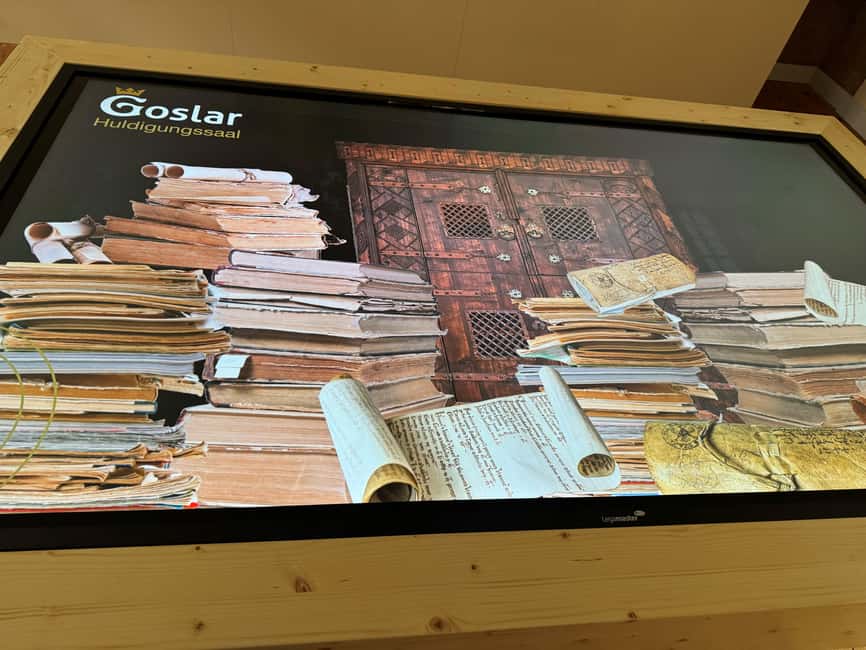
- Multimedial show after restoration: security, climate, and light tech protect the artwork while you experience it again.
- UNESCO Harz exhibit in the town hall cellar level: World Heritage information is part of the visit.
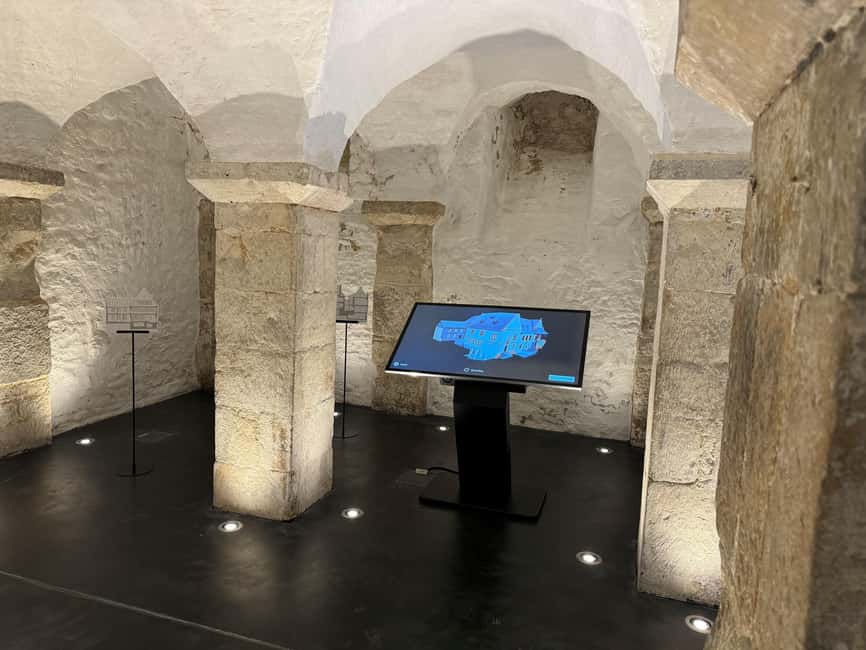
- Baugeschichte in the Beinkeller: a focused stop on how the Rathaus kept expanding since the mid-15th century.
Behind Goslar’s Rathaus Doors: What This 1-Hour Tour Really Gives You
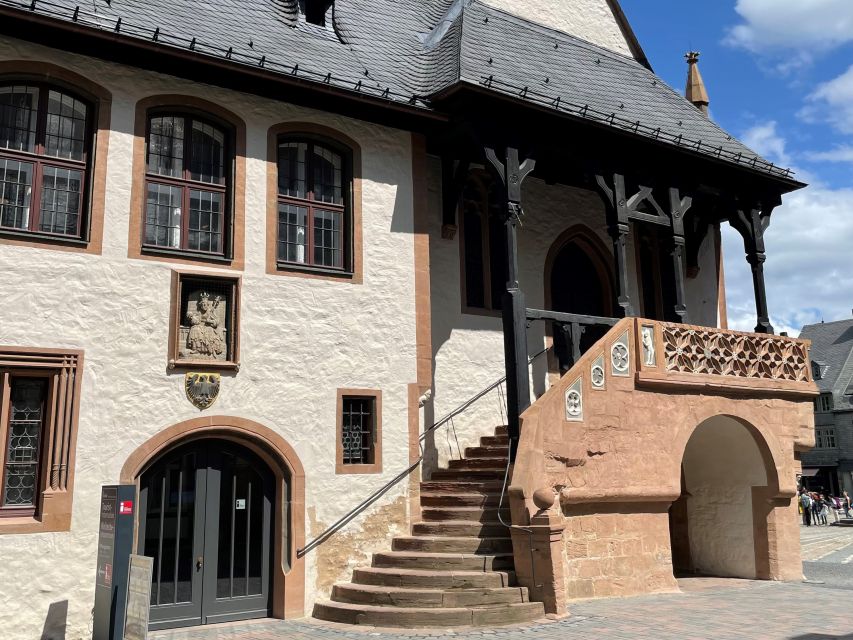
Goslar’s Rathaus is a century-building, not a single snapshot. Work started in the middle of the 15th century with the east wing, and the hall kept growing through later additions for more than 400 years. That long build story matters, because it explains why the interior feels like it has layers, not just one era.
The visit is built around a small set of dramatic spaces. You step into the Rathausdiele and then move on to the Huldigungssaal, a late Gothic room with panel paintings covering surfaces you normally never get close to. You also get practical context through World Heritage information for the Harz and a construction-history stop in the Beinkeller.
The pacing is also part of the value. At one hour, you will not feel dragged through corridors. You get highlights, interpretation, and enough time to actually look.
Weigh these Goslar picks against each other
- Goslar: Tausend Schritte durch die Altstadt
★ 4.7 · 417 reviews - Goslar: Führung durch die Kaiserpfalz
★ 4.5 · 50 reviews - Goslar: On the road with the night watchman’s wife
★ 4.6 · 34 reviews
Rathausdiele and the Sternenhimmel Effect: The First Wow Moment
The Rathausdiele is your opening act, and it is a smart choice. Even if you are not a museum person, the star ceiling effect brings the space into focus right away. It helps you understand that this town hall is not sterile. It is a room designed to impress.
What I like here is how quickly it sets expectations for what comes next. That “starry” look is not only decorative. It signals the tone of the building, where display, ceremony, and art were part of civic life.
Practical tip: in a short tour, your eyes need to be ready. Spend your first moments looking up. Then let your gaze move outward to absorb how the entry space connects into the deeper rooms.
If you are sensitive to light or prefer quieter viewing, you still should be fine. You are not expected to stand in a single spot forever. The tour structure encourages movement, and the big moment is supported by guided explanation.
The Huldigungssaal (1505 to 1520): Painted Walls, Protected Art, and a Multimedial Revival
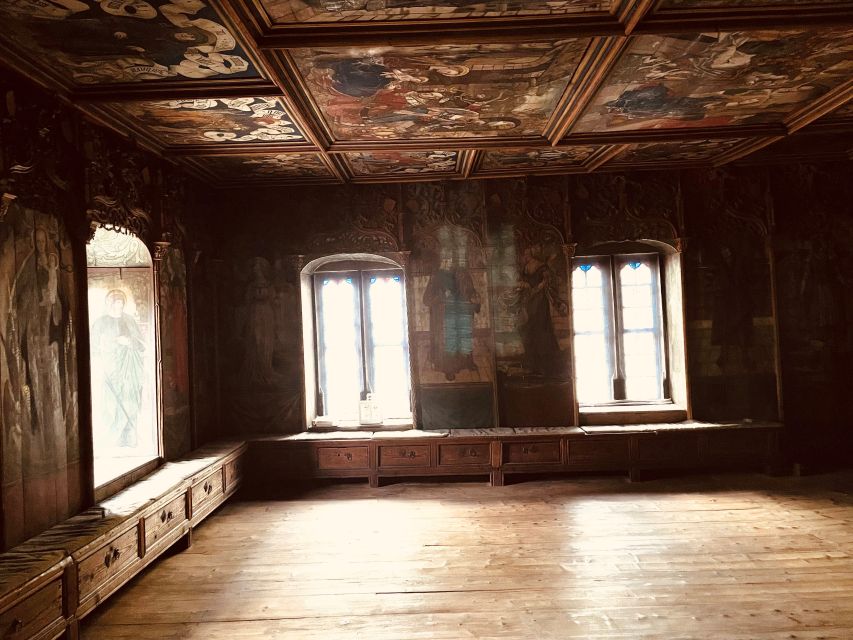
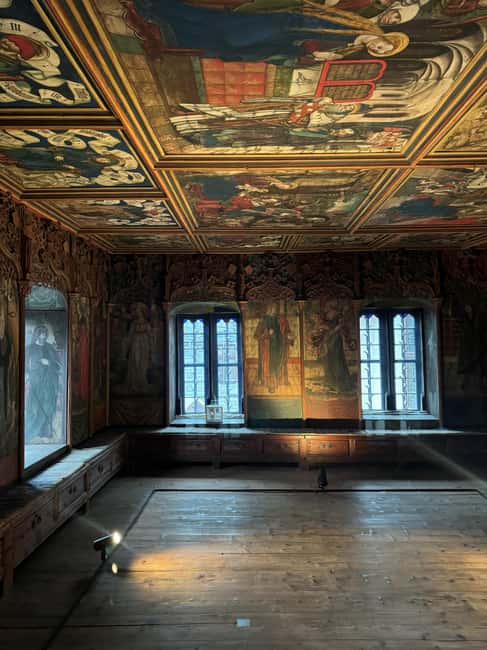
This is the main reason to pick this tour. The Huldigungssaal was set up as a council meeting room between 1505 and 1520. The room is a late Gothic treasure of small-scale room art, meaning it is detailed, controlled, and made for close attention.
Here is the key detail that changes how you experience it: the walls, the ceiling, and even the window niches are fully lined with panel paintings. These are not just “pretty pictures.” Each work is presented as art of high quality, and the overall impact is meant to be experienced as a whole.
Now add the restoration and protection layer. After years of restoration, the artwork is kept safe by complex security, climate, and lighting systems. That matters for two reasons. First, it means the paintings can survive for the long term. Second, it allows the room to be experienced without the kind of wear-and-tear that often comes with heavy public access.
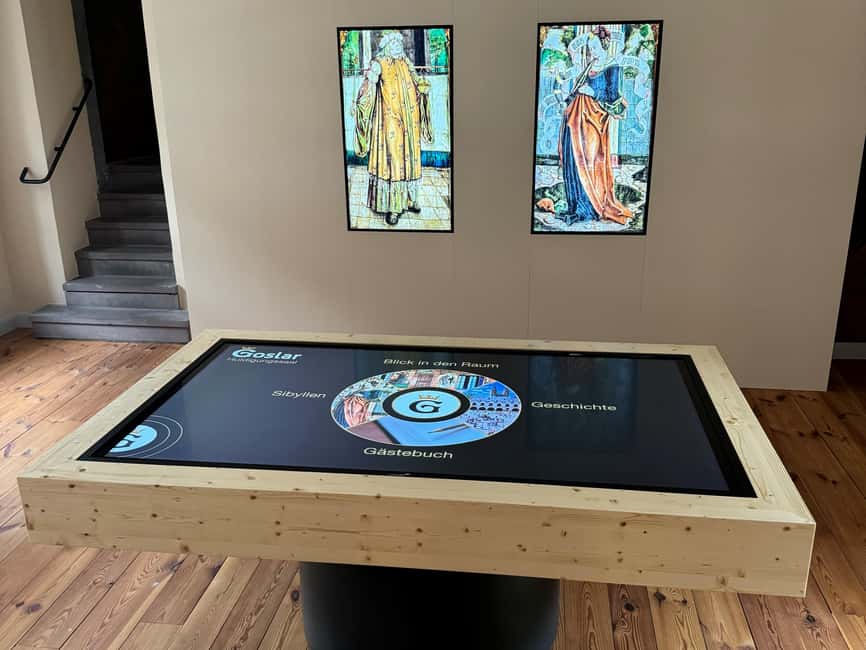
Then comes the multimedial inszenierung, the modern element. It helps bring the hall back to life so you are not just looking at still decoration. You get a guided way of understanding what the space is showing and why it was made that way.
If you want a best-case moment, think about timing and mood. One of the most positive impressions in the available feedback was that the multimedial setup feels especially effective during Advent season. Even if you visit another time of year, the point stays the same: this is a room that benefits from atmosphere.
Welterbe-Infozentrum for the Harz: Why UNESCO Context Belongs Inside a Town Hall
The tour does not stop at “look at art.” It connects Goslar’s Rathaus to the broader UNESCO story of the Harz. The Welterbe-Infozentrum sits inside the town hall area on the lower level (kellergeschoss), alongside the Tourist Information zone nearby.
What you get here is a free World Heritage exhibition focused on UNESCO World Heritage in the Harz. This is valuable because it turns the Rathaus from an isolated monument into part of a living cultural landscape. You start to see the connection between civic power, regional identity, and the reasons the area is protected.
I find this kind of context helps you remember what you saw. Without it, the Huldigungssaal can feel like a self-contained showpiece. With it, you place Goslar into a larger story, so the visit sticks.
Also, this stop offers a change of pace. After a visually intense hall filled with painting, the information-focused exhibit lets your brain reset. It is a practical balance for a one-hour experience.
Beinkeller: Rathaus Construction History in a Meaningful Place
The Beinkeller is where the tour shifts from artwork to building history. You get a presentation about the Rathaus construction story here, which is crucial because the town hall is not one “finished” building. It began around the mid-15th century, and it expanded over more than 400 years through continuing additions.
That length of time is not just trivia. It is why the Rathaus interior feels like it has multiple layers of purpose. Each new wing and addition reflects changing needs, changing resources, and changing styles in civic life. The Beinkeller stop gives you that framework so you can interpret what you are seeing, not just admire it.
One caution: if you go in hungry for only grand visuals, the Beinkeller presentation might feel more “talk-based” than “wow-based.” Still, it is short, and it gives you the kind of context that makes the painted hall feel less random. You come out with a clearer mental map of what grew where and why.
Price and Value: How $10 Makes Sense for a One-Hour Experience
At about $10 per person for roughly one hour, the value is strong for three reasons.
First, you are paying for access to the interior highlights of a major civic building, not just a quick exterior look. Entry into the town hall and view time inside the key rooms are central to the experience.
Second, you are paying for interpretation. The Huldigungssaal’s art is impressive on its own, but it becomes far more meaningful with guided explanation, especially when you learn what you are actually looking at, how the room was used as a council seat, and what restoration and protection make possible today.
Third, you are getting educational depth without time waste. The UNESCO Harz exhibition adds context in a way that does not stretch the visit beyond a manageable hour.
The overall quality signal is also encouraging. The available rating is extremely high, and the comments repeatedly highlight two things: the strength of the Huldigungssaal experience and the competence of the guide in storytelling. If you care about getting meaning, not just photos, this tends to be a good match.
The Tour Flow Inside the Town Hall: What Happens When
While the exact order can vary by schedule, expect the visit to move in a logical arc.
You start in the main town hall spaces, where the Rathausdiele sets the tone with its starry ceiling effect. From there you move into the Huldigungssaal, the painting-filled council chamber, where the multimedial presentation helps you experience the restored room.
After the major visual highlight, you head to the lower-level stops. You will spend time with the UNESCO Harz World Heritage information exhibition in the Welterbe-Infozentrum area. Then you round out the building story with the presentation in the Beinkeller about the Rathaus construction history.
The biggest benefit of this flow is variety. You are not only staring at one type of attraction for 60 minutes. You alternate between sensory impact, interpretive art context, and factual building and UNESCO context.
Guide Quality and Group Feel: What to Expect From the Human Part
This tour is guided live in German. That matters because the best moments are interpretive. You want someone to guide your eye in the Huldigungssaal, to explain what the paintings mean, and to help you understand how restoration and protection techniques shape what you can experience today.
The feedback you have here points to guides who know the material and can tell the story in a way that holds your attention. Even when the tour is short, the explanation is not treated like filler. It is treated like the point.
Also, keep an open mind about group size. Some comments describe a more personal feel when the group was only two people. Even if you cannot count on that, it is a reminder that this is not the kind of tour where you have to shout to be heard. You can ask questions and follow along more easily than in very large groups.
Who Should Book This Tour, and Who Might Not
This is a strong pick if you want one hour to do three things well:
- See a major painted room up close, including its restored details
- Get UNESCO context for the Harz without adding a separate museum stop
- Understand why Goslar’s Rathaus looks the way it does, thanks to the building-history story
It is also a good match if you like controlled art viewing. Because the room uses security, climate, and lighting protection, you are seeing something preserved, not something constantly exposed.
The main reason to skip it is accessibility. The town hall has many stairs and is not suitable for rollators or guests in a wheelchair. If mobility is a concern, you should look for an alternative experience elsewhere in Goslar.
Finally, if you dislike guided interpretation and prefer to wander alone with a map, this might feel structured. But if you want the story stitched together for you, the one-hour format helps a lot.
Should You Book Goslar Hinter den Rathaustüren?
I recommend booking if you are going to be in Goslar long enough to justify a focused, high-impact interior visit. For the price, you get the starry Rathausdiele, the major highlight of the Huldigungssaal with its restored painted walls and multimedial presentation, and you also gain UNESCO Harz context inside the same town hall complex.
You should not book if stairs are a problem for you. And if you only want the exterior and quick photos, you might be better off spending that hour elsewhere.
If you choose to go, go with one simple mindset: look up, then look close. The best parts of this tour happen when you slow your eyes for a moment and let the room’s details do the talking.
FAQ
How long is the tour?
The tour lasts about 1 hour.
What does the tour include?
You get entry to the town hall, a view of the Huldigungssaal, and access to the World Heritage Information Center with a free exhibition on the lower level.
Who runs the tour and what language is it in?
It is a live guided tour in German.
Where is the World Heritage information stop?
The Welterbe-Infozentrum is inside the town hall, located in the cellar level (kellergeschoss).
What is special about the Huldigungssaal?
The Huldigungssaal was used as a council meeting room from 1505 to 1520, and its walls, ceiling, and even window niches are fully covered with panel paintings. A multimedial presentation helps you experience the restored room.
Is the artwork protected during the visit?
Yes. After restoration, the paintings are protected by security, climate, and lighting technology.
Is this tour accessible for wheelchairs or rollators?
No. The town hall has a variety of stairs and is not suitable for rollators or a wheelchair.
How much does it cost?
The price is listed as $10 per person.
Fresh reviews out of Goslar
- Goslar: Führung durch die Kaiserpfalz★ 4.5 · 50 reviews
- Goslar: On the road with the night watchman’s wife★ 4.6 · 34 reviews
- Goslar: Tausend Schritte durch die Altstadt★ 4.7 · 417 reviews