
Reviewed · JAPAN
Goslar: Führung durch die Kaiserpfalz
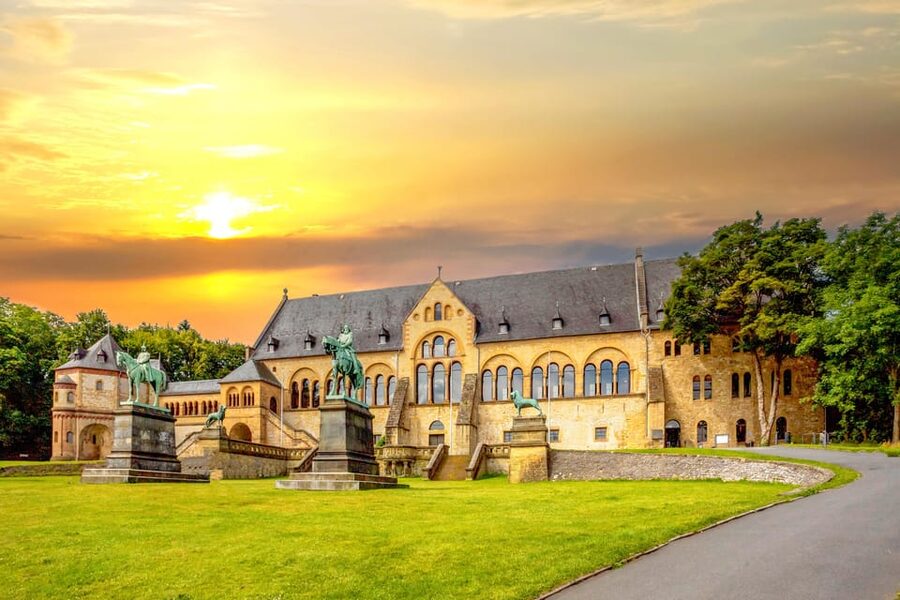
Goslar’s Kaiserpfalz is interesting because it turns a normal city stop into a serious dose of medieval power, art, and ritual, all inside one complex. I especially liked the big hall paintings by Hermann Wislicenus, because they fill the room and give you a sense of how planned the space was. I also loved the St. Ulrich chapel, where you can see the grave plate of Emperor Henry III and the heart of the emperor rests beneath it. One thing to consider: this is an interior palace tour, so if you mainly came for outdoor views, you may want to pair it with a walk in the old town on your own.
A live guide (German) keeps the tone lively and clear, and the duration is nicely tight at 1.5 hours, so you do not feel trapped in “museum time.” It has a 4.5 rating from 50 reviews, and the comments match what you’d hope for on a palace visit, history explained in a way that stays interesting. If you are traveling with kids, one review specifically called out that children enjoyed it too.
Key things to look for during the Kaiserpfalz walk
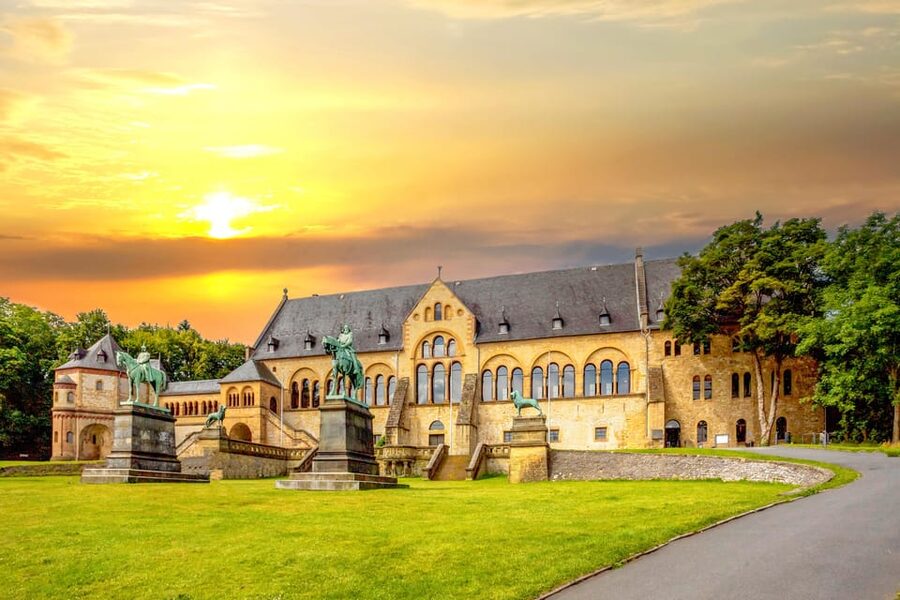
- UNESCO World Heritage status since 1992, tied to the Kaisers’ palace story
- Hermann Wislicenus paintings in the large hall, covering the wall surfaces
- St. Ulrich chapel and the high grave of Emperor Henry III
- The emperor’s heart, still kept under the grave plate
- Kaiserstuhl details, including the throne armrests
- Wintersaal vaults exhibition, shown as part of the indoor route
Goslar’s Kaiserpfalz: why this palace visit works in 90 minutes
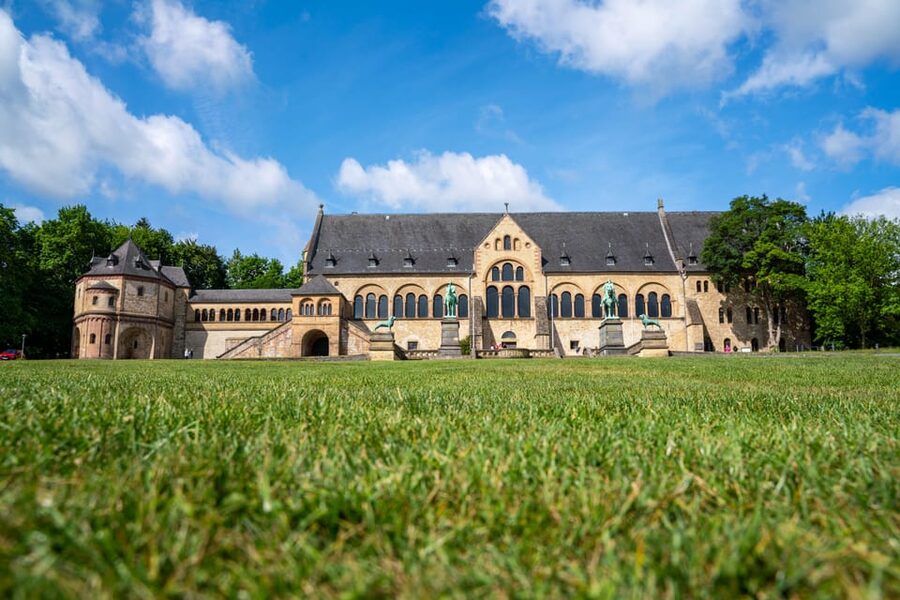
This tour is built for people who want meaning, not just facts. You start with a quick look around the old town, then step into the Kaiserpfalz and the temperature shifts from everyday travel mode to “this mattered” medieval mode. Even in a short 1.5-hour interior circuit, the palace layout helps you understand authority as something physical, architectural, and ceremonial.
The strongest payoff is how the tour connects three different ways of telling a story. You get art on the walls, a sacred space in the chapel, and the emperor’s own seat and associated details. It is not random sightseeing. It is one building teaching you how power was staged.
You should also know this is an interior palace experience. That makes it great on rainy days, but it also means the pace stays inside rooms and chapels. If you hate crowds in enclosed spaces, pick a calmer time slot when you can.
Weigh these Goslar picks against each other
- Goslar: Tausend Schritte durch die Altstadt
★ 4.7 · 417 reviews - Goslar: On the road with the night watchman’s wife
★ 4.6 · 34 reviews - Goslar: Hinter den Rathaustüren
★ 4.8 · 29 reviews
Meeting in front of the Atrium and keeping your timing easy
You meet in front of the Atrium. That is useful because you are not hunting across the complex with a ticket in hand. Once you start, the route is designed to move from the public feel of a palace approach into the most specific rooms: the large hall, then the romanesque Pfalzkapelle (Romanesque palace chapel), and later the areas associated with the Kaiserstuhl and the Wintersaal vaults.
With a 90-minute tour, I recommend arriving a little early, especially if you are also doing Goslar’s old town before. The tour starts at a fixed meeting spot, so smooth timing helps your day feel less stressful.
Price matters too. At $16 per person, this is one of the more practical ways to “buy understanding” in a World Heritage site. You are paying for access plus a live guide in German who will point out what you might otherwise miss.
UNESCO World Heritage from 1992: what you’re actually standing in
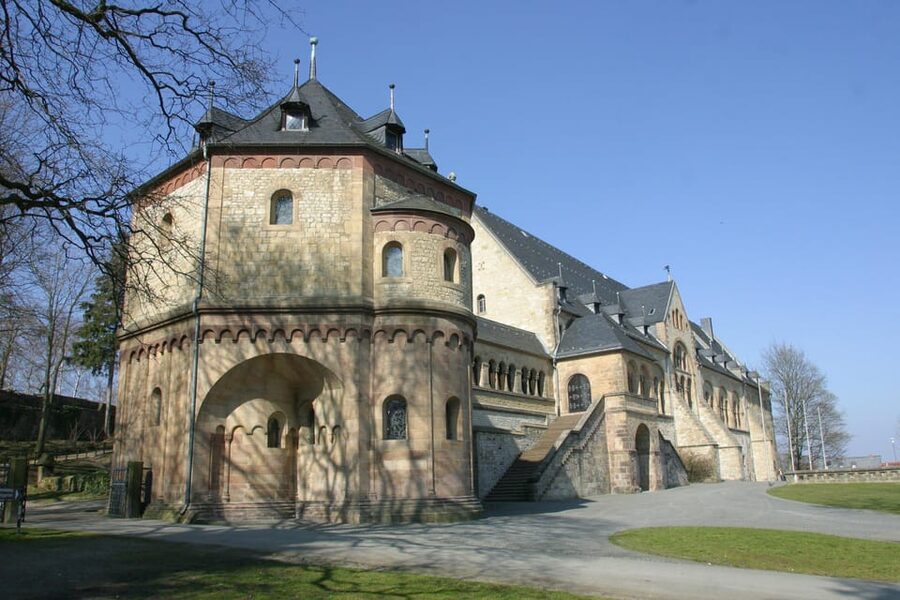
The Kaiserpfalz is part of a UNESCO World Heritage designation awarded in 1992. That sounds like an official stamp, but on-site it is a useful clue: this is not just an attractive old building. It is recognized for cultural significance, and the tour route reflects that.
UNESCO status often means buildings and spaces were chosen because they represent something bigger than one room. In this case, you are walking through a palace complex tied to emperors and the public performance of rulership. The guide’s job is to connect the details you see, like the chapel grave and the hall paintings, to why this space earned protection.
I like this part of the experience because it gives you permission to slow down. Once you realize you are in a 1992 UNESCO site, the doors and chapels do not feel like background for photos. They feel like parts of a single system.
The large hall paintings by Hermann Wislicenus
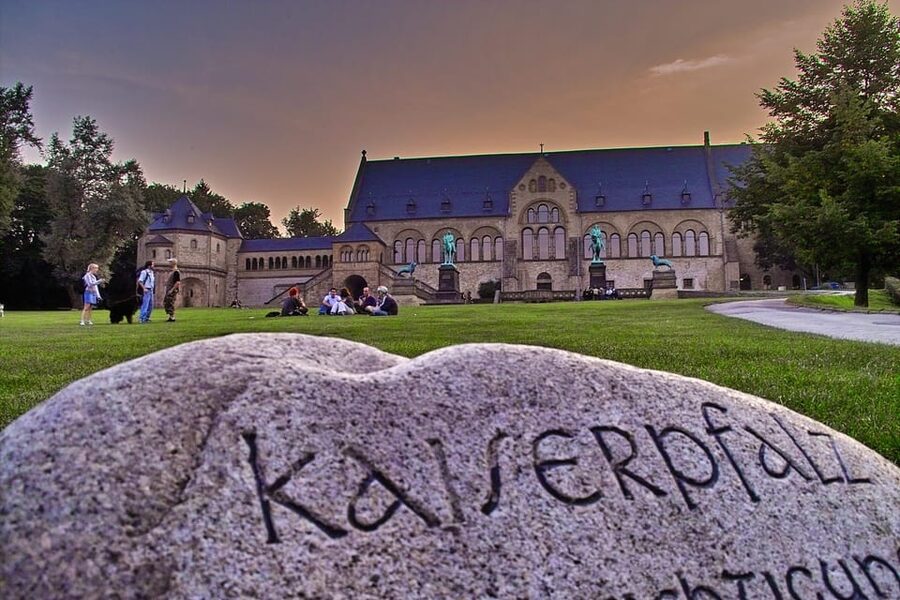
If you want one moment that makes the whole tour click, this is it: the historical paintings in the large hall. The key detail is that they fill the walls completely. That matters, because your brain reads wall coverage as a kind of storytelling surface. You are not looking at a small painting tucked into a corner. You are surrounded.
Hermann Wislicenus is the name to latch onto here. Seeing his work in a setting where the walls are designed for display makes the art feel less like a museum item and more like part of the palace’s message. Even if you are not a big art person, wall-to-wall painting coverage usually changes the mood of a room.
Practical tip: spend a few extra seconds looking before you rush to the next spot. The tour is 1.5 hours, so the guide will keep you moving, but the hall is where you can mentally reset. Let the room design do its job.
One balanced note: because the paintings cover so much of the walls, they can feel visually intense if you prefer quiet stops. If you are the type who gets overwhelmed easily indoors, take short breaks by listening to the guide, then stepping back for a quick look again.
St. Ulrich chapel and Emperor Henry III’s high grave
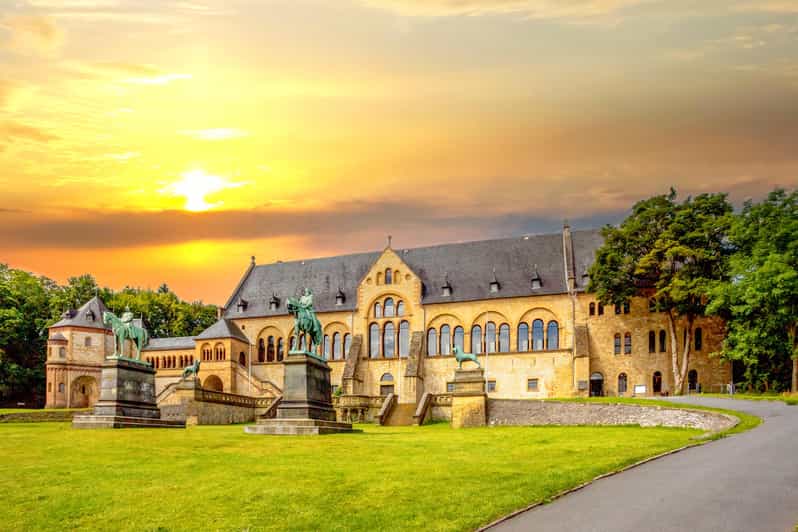
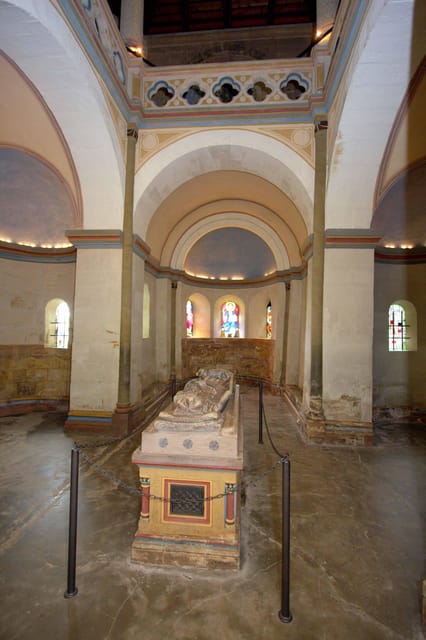
The St. Ulrich chapel is the emotional center of the tour. Here you see the high grave of Emperor Henry III, and it comes with a detail that makes the story feel grounded and specific: you can find the grave plate, and under it the heart of the emperor still rests.
That combination is powerful because it turns history into something tangible. It is not just that Henry III existed. You are shown a ritualized, preserved connection to him through the chapel space. The tour’s emphasis on the high grave and the heart makes it feel like a carefully remembered tradition, not a generic “royal burial” stop.
Also, the chapel is described as Romanesque, which hints at a particular style and atmosphere. Romanesque spaces often feel heavier, more enclosed, and more set apart. That separation from the rest of the palace helps you understand why chapels were not just decorative. They were meant for meaning.
If you are visiting with kids, this is the kind of stop that can hold attention because it is direct and concrete. One review specifically mentioned that children had fun on the tour. This chapel moment is probably one of the reasons.
Kaiserstuhl throne armrests and the Winter Hall exhibitions
After the chapel, the tour moves to more “seat and ceremony” territory. You will get to see the armrests of the Kaiserstuhl, the imperial chair. That might sound like a small detail, but it is one of the best examples of how palace artifacts can matter. The guide likely uses these pieces to explain how emperors were framed by objects around them.
Next comes an exhibition in the Wintersaal vaults. The key point you should expect is that the tour includes an indoor display in these vaulted spaces. Vaults naturally change acoustics and how light falls across surfaces, so a guide-led explanation in this part of the palace tends to feel more theatrical. It also gives context to earlier stops, tying throne symbolism and chapel meaning into the palace’s broader message.
Drawback to consider: if your main interest is the chapel and the emperor Henry III story, you might find the Winter Hall exhibition less personal unless the guide explains connections clearly. Since reviews praise how engaged the guides are, you should be fine, but it helps to go in ready to listen.
What you’ll walk through, in plain order
Here’s the flow you can expect during this kind of Kaiserpfalz tour. It matches how the palace is typically best understood in sequence:
1) Quick walk through the old town to set the mood and location context
2) Entry into the Kaiserpfalz interior
3) Large hall for the historically themed paintings, with Hermann Wislicenus highlighted
4) St. Ulrich chapel inside the Romanesque Pfalzkapelle, including Emperor Henry III’s high grave plate and the emperor’s heart beneath it
5) Look at details connected to the Kaiserstuhl, including the throne armrests
6) Finish with the Wintersaal vaults exhibition
Because it stays inside major rooms, you do not spend most of the time on transitions. That makes it a good choice when you want a focused afternoon activity.
Price and value: is $16 for 1.5 hours worth it?
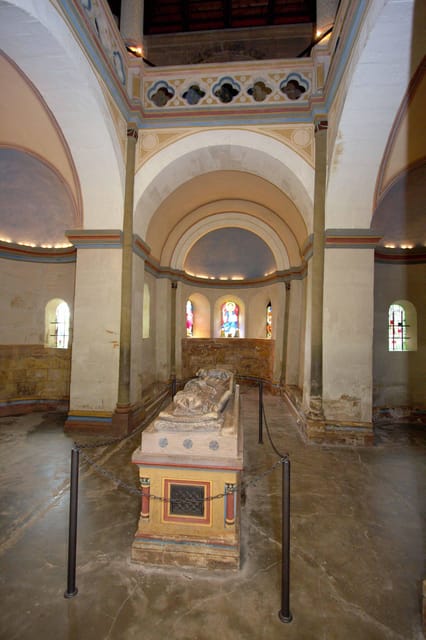
At about $16 per person for 1.5 hours, the value here is mostly about guided interpretation. You are paying for:
- a route through specific palace rooms (not just open access),
- a live guide in German who connects objects and space,
- and an organized look at major highlights, including the paintings and the Henry III grave details.
For me, the “worth it” test is simple. If you can walk into a World Heritage palace and figure out what to notice, you might skip the guide. If you want the building to explain itself, a guided interior route like this saves time and helps you understand the difference between pretty rooms and meaningful rooms.
Also, the pacing works for value. A 90-minute tour is long enough for real storytelling, short enough that you keep energy for the rest of Goslar afterward.
Who should book this Kaiserpfalz guided tour
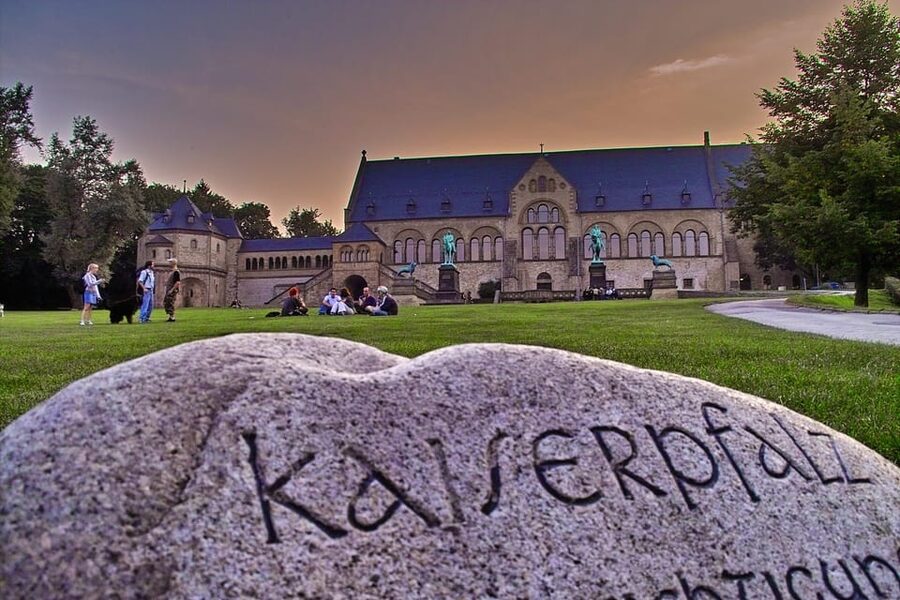
I think this tour fits best if you:
- enjoy history that is explained clearly rather than dumped in a lecture style,
- like art and religious or ceremonial spaces,
- want a single, efficient activity in Goslar that includes several major palace highlights.
It is also a solid option if you are traveling with children who can handle a structured visit. One review called out that kids had fun, which usually means the guide kept things accessible.
I would not make this your only stop if you are after lots of outdoor scenic time. This one is about interior rooms, chapels, and curated points.
Booking checklist and traveler reality notes
A few practical points based on the tour details:
- The tour is guided in German
- It is wheelchair accessible
- The meeting point is in front of the Atrium
- Pets are not allowed, but assistance dogs are allowed
If your German level is basic, do not panic. A good live guide can still make the palace feel understandable even if you do not catch every word. And since the tour includes very visual highlights like wall paintings and a specific grave plate, you can follow along with your eyes.
Should you book the Goslar Führung durch die Kaiserpfalz?
Yes, if you want the palace to make sense fast. This is one of those experiences where the guide’s job matters. You get the art by Hermann Wislicenus, the St. Ulrich chapel with Emperor Henry III’s high grave plate, and the detail that the emperor’s heart rests under it, plus throne-related objects and a Winter Hall exhibition. That is a lot of meaningful content for $16 and 1.5 hours.
Book it if you like structured indoor sightseeing, especially in a World Heritage setting that rewards attention. Skip it only if you are mainly chasing outdoor views, or if you strongly prefer self-guided visits where you control every minute without a live guide leading you from room to room.
Fresh reviews out of Goslar
- Goslar: Hinter den Rathaustüren★ 4.8 · 29 reviews
- Goslar: On the road with the night watchman’s wife★ 4.6 · 34 reviews
- Goslar: Tausend Schritte durch die Altstadt★ 4.7 · 417 reviews