
Reviewed · DACHAU MEMORIAL TOURS
From Munich: Dachau Memorial Site Tour in Spanish
Visiting Dachau is interesting because it is not just a site you look at, it is a place that forces clear thinking and careful remembrance. I like that this tour is led by an official Dachau Memorial Guide in Spanish, so you are not guessing what you are seeing. I also like that you cover the main exhibition and the remaining camp structures in a single, well-paced half-day.
The main drawback is the subject matter. This is emotionally heavy, and the tour rules make it stricter than most sightseeing. Children under 13 are not allowed, and the tour is Spanish-only, so it is not a fit if you want to browse freely in your own language.
Key highlights you will feel right away
- Official guide, Spanish language: You get context and story while you walk, not after you leave.
- Permanent exhibition first: You learn the camp’s history before you step into the yard.
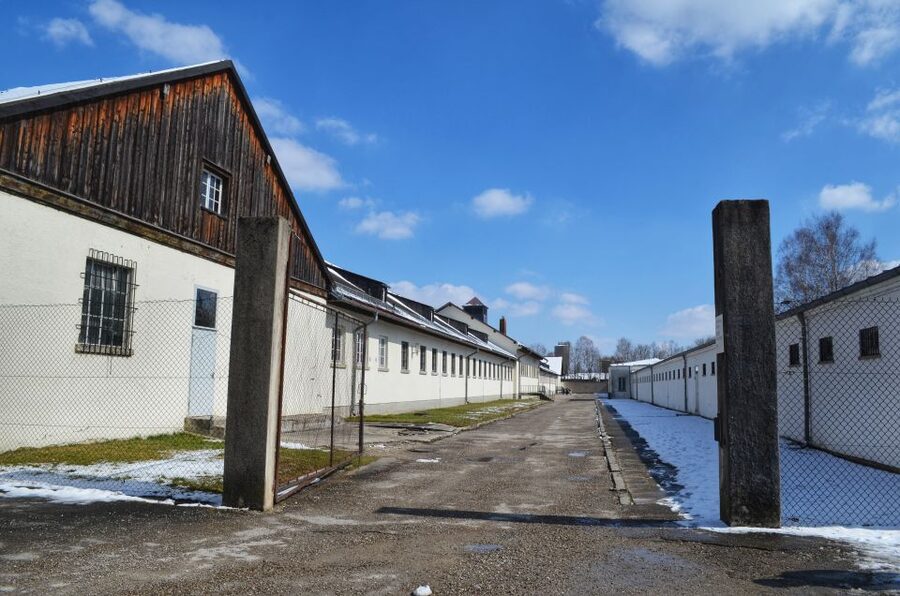
- Real remnants and reconstructed spaces: You see what remains and what has been rebuilt to explain what happened.
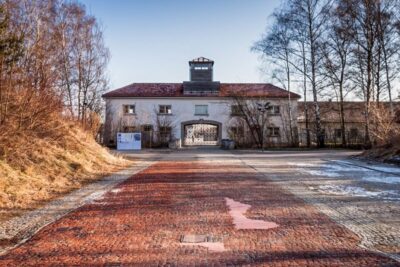
- Core camp stops: Roll-call area, bunkers, barracks, and the crematorium are included.
- International memorial and religious memorials: Remembrance is shown in multiple forms, not just one viewpoint.
- Designed with sensitivity: The visit is described as respectful and reflective, not casual.
From Munich to Dachau, with an official Spanish guide
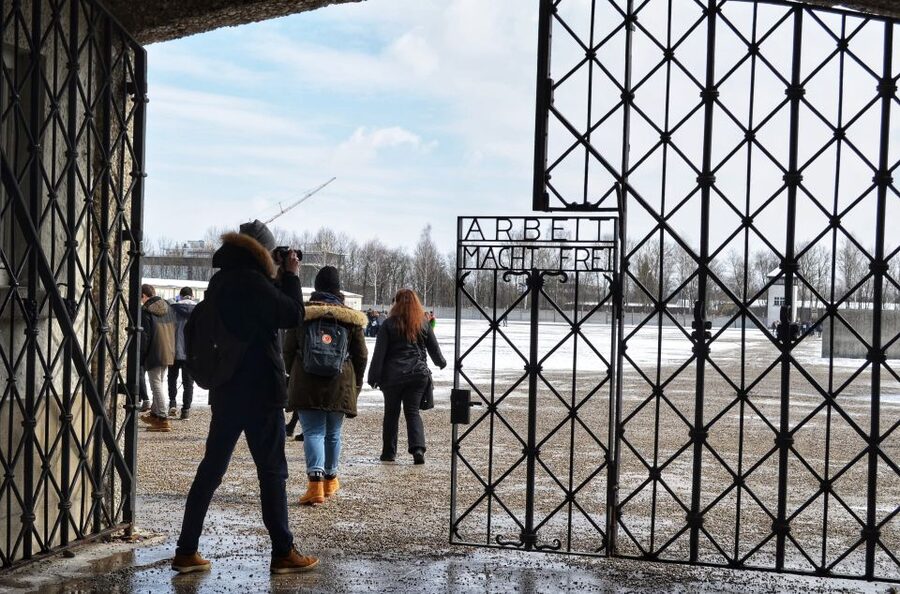
This tour is built around one simple idea: your time at Dachau is more meaningful when you understand what you are looking at. From Munich, you travel by train with a guide who is there with you through the day. Once you arrive, the focus stays on the memorial site itself, not on turning it into a long day of transfers.
What I appreciate is that the guide is an official Dachau Memorial Guide. That matters because Dachau can feel like a maze of spaces unless someone helps you connect the dots. The guide’s job is to give historical background, explain what survived, and walk you through the surviving traces and reconstructions.
It is also Spanish-only. If you speak Spanish, this is a big advantage because the camp’s history is complex, and nuance matters. If you do not speak Spanish, you cannot book. That rule keeps the group experience coherent and helps the guide keep a steady rhythm.
Other Dachau memorial visits:
- Dachau Concentration Camp Memorial Site Tour from Munich by Train
★ 4.5 · 5,637 reviews - From Munich: Dachau Memorial Site Day Tour
★ 4.8 · 2,723 reviews - From Munich: Dachau Memorial Site Half-Day Trip
★ 4.7 · 2,526 reviews
Meeting under Karlstor Gate, and why the timing matters
You meet under Karlstor Gate at Karlsplatz, about 10 minutes before the activity starts. The instructions are clear: do not look for buses. Instead, look for the guide waiting under the Karlstor arch.
That sounds small, but it is a real difference-maker with tours like this. You do not want to start a sensitive day with stress. If you arrive early, you can get your bearings fast and mentally shift into the right mode for the visit.
A practical note: wear shoes you trust. This is a memorial site walk, and you will spend real time moving between areas. Comfortable shoes are the top item on the packing list, and you will be glad you followed it.
The permanent exhibition: the story you need before the walk
Most people can recognize a concentration camp as a place of horror, but the details are what turn information into understanding. The tour’s first major educational piece is the permanent exhibition, which gives an overview of the history of the Dachau concentration camp.
This stop is valuable because it changes how you read the site. Without context, you might focus only on what looks shocking. With context, you start to notice how the camp operated day to day, how prisoners were categorized and processed, and how the camp’s systems worked. The guide also uses stories of victims as part of the interpretation, with sensitivity and respect.
If you want a tour that helps you connect dates, decisions, and physical spaces, this is a strong match. You are not just hearing facts, you are building a framework for what you will see next, including places that can look confusing at first glance.
Roll-call, bunkers, barracks, and the crematorium
After the exhibition, you visit the core parts of the memorial site. This is where the tour becomes more than “history class.” You are walking in a space where people were processed, confined, and harmed, and the guide helps you understand why each location matters.
The tour includes:
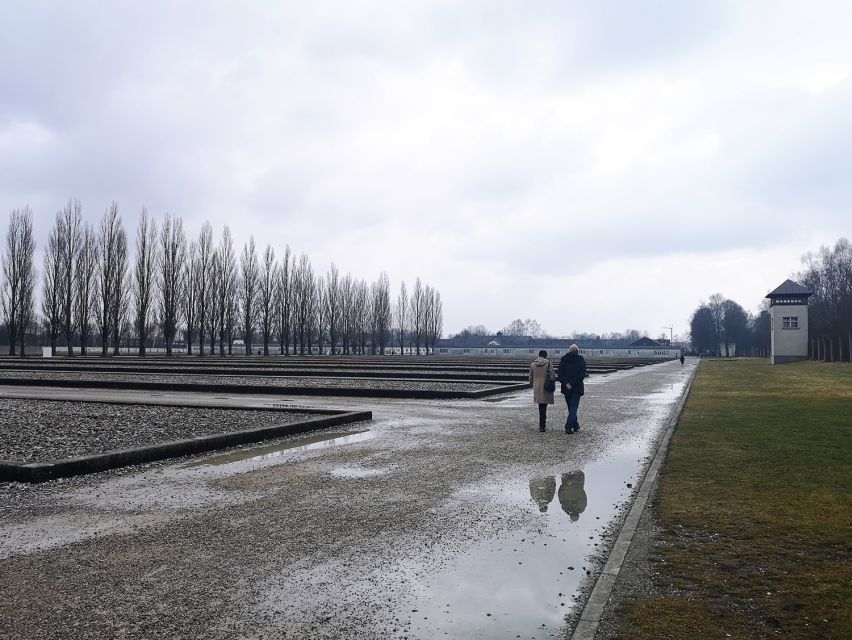
- Roll-call areas, where prisoners were gathered and counted
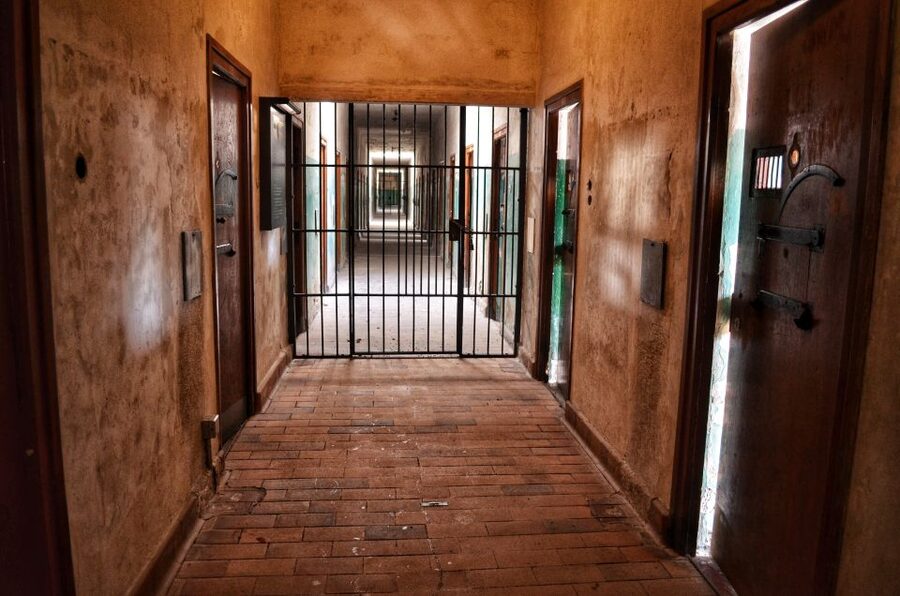
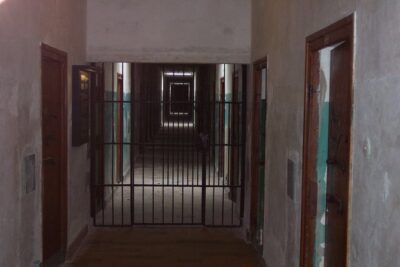
- Bunkers, which relate to punishment and confinement
- Barracks, which connect to living conditions inside the camp
- The crematorium, which is among the most difficult stops emotionally
These stops are hard to write about because you are not simply viewing structures. You are absorbing what those structures meant. The tour is described as moving and emotionally touching, and that fits the nature of the locations.
What I think is especially useful is that the guide does not treat each stop as a standalone photo moment. Instead, the tour connects the physical spaces to the camp’s function. That approach helps you avoid the common trap of turning tragedy into a checklist.
Weigh these Munich picks against each other
- From Munich: Neuschwanstein & Linderhof Castle Full-Day Trip
★ 4.6 · 14,646 reviews - Neuschwanstein & Linderhof Castle-Fairytale Day Tour from Munich
★ 4.5 · 7,275 reviews - Munich: Third Reich & WWII Walking Tour
★ 4.6 · 6,181 reviews - Neuschwanstein Castle Tour from Munich
★ 4.5 · 5,117 reviews
What you will see: original buildings and careful reconstructions
A big part of Dachau’s memorial experience is that not everything is preserved in the same way. You will see remaining original buildings and also reconstructions that testify to the terrible history of the place.
Reconstructions can be tricky. If you do not know what they represent, they can feel like replicas without weight. The guide’s explanation is what makes them meaningful. You learn why certain areas were rebuilt for interpretation, and how they help show the overall layout and purpose of the former camp.
This matters for value. You are paying for more than access to grounds. You are paying for guided interpretation that helps you separate what is original from what is reconstructed, and then understand what both types of evidence are trying to communicate.
International memorial and religious sites: remembrance with different languages
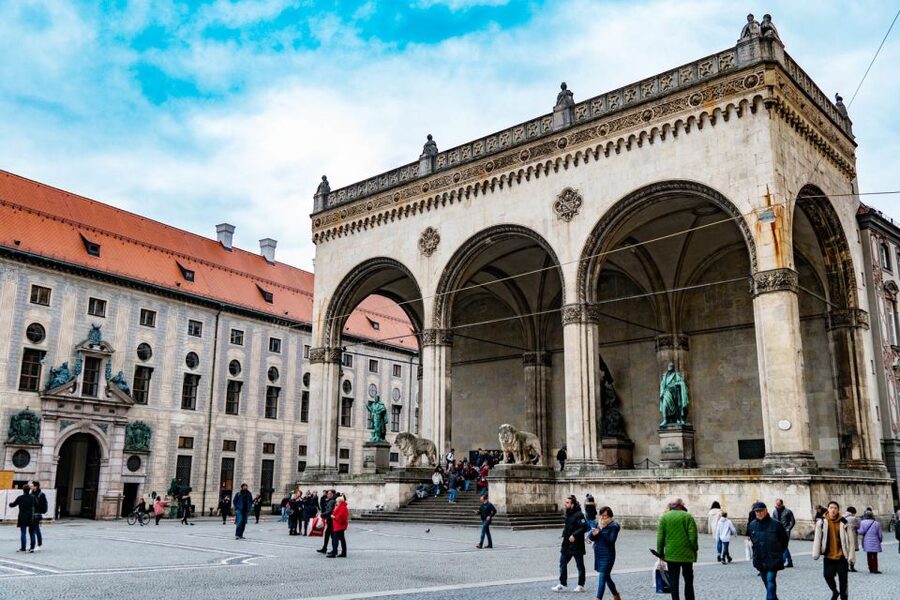
Another highlight is the chance to see the International Memorial and other religious memorials inside the concentration camp grounds.
This part of the tour is important because it shows remembrance in more than one form. Concentration camp memory is not only about dates and buildings. It is also about how different communities acknowledge victims, grieve, and insist on human dignity.
If the first half of the tour focuses on the camp’s mechanisms, this section broadens your view. You begin to see how memory travels across borders and faith traditions. It is also a moment where the tone can shift from historical explanation to reflective acknowledgement, again with sensitivity and respect as the guiding principle.
The 5-hour schedule: how to use the time well
The tour runs for 5 hours. That is long enough to cover the exhibition and multiple exterior stops, but short enough that you are not exhausted into numbness. For a visit this heavy, that balance matters.
Here is how I would think about the time allocation:
- The exhibition gives you the map and the language to understand the site.
- The walking stops bring the history into the physical world through roll-call, bunkers, barracks, and the crematorium.
- The international and religious memorials close the loop with reflection beyond the camp’s walls.
One consideration: the tour rules include no food and drinks. Plan around that so you are not stuck hungry while trying to stay focused. If you eat before you go, you can better handle the emotional weight of the day.
Also, there are restrictions on luggage. Leave large bags and anything that is awkward at home or at your accommodation. The goal is to keep movement smooth and respectful, without distractions.
Who this Dachau tour is best for
This is not a casual tour, and it will not fit everyone. It works best if you:
- Speak Spanish and want the historical context delivered in a way that keeps nuance intact
- Prefer a guide-led format over a purely self-guided visit
- Are prepared for an emotionally serious experience
- Want a structured 5-hour visit that covers major parts of the memorial site
It is not suitable for children under 13. If you are traveling with kids, you will need a different plan.
If you are someone who tends to get lost in big sites, the official guide helps you stay oriented. And if you are the type who wants a “why” with your “what,” the guided explanations around victims and camp history are exactly the point.
Price and value at about $40 per person
At $40 per person for a 5-hour guided tour, you are paying mainly for two things: the official guide and the Spanish-language interpretation. In situations like this, that is usually the best value you can buy.
Transport ticket is not included, and food and drinks are not included. That means your total day cost may be higher once you add train fare and whatever you eat outside the tour. Still, the $40 feels fair because the guide’s work is the heart of the experience, and the tour is set up to visit both the exhibition and the key camp locations.
If you have ever tried to visit Dachau on your own without context, you already know the problem: you can see the buildings and spaces, but you might miss the relationships between them. This tour is designed to prevent that, with a guide who explains what you see as you go.
In short, you are not just buying entry to a memorial. You are buying understanding, delivered with care and structure.
Practical rules to plan around before you go
A few details can make your day easier, and they are worth taking seriously.
You should bring:
- Comfortable shoes, because you will be walking between parts of the memorial
You cannot bring:
- Pets
- Luggage or large bags
- Food
Language rules:
- This tour is exclusively in Spanish
- Non-Spanish speakers cannot book
Age rules:
- Children under 13 are not allowed
One more operational detail that affects your expectations: the tour requires a minimum of four participants to operate. If the minimum is not met, the local partner contacts you and offers an alternative. That means you are not gambling completely, but you should still check your timing.
Should you book this Spanish Dachau memorial tour?
Book it if you meet the basics: you speak Spanish, you want an official guide, and you are ready for a respectful, emotionally serious visit. The structure is solid, because you learn first in the permanent exhibition, then you walk the core camp sites with explanations that connect the history to the spaces.
Skip it if Spanish is not your working language, or if the age limits do not work for your group. Also skip it if you are looking for light sightseeing. This is a memory and reflection experience, and it deserves your full attention.
If you do book, show up early under Karlstor Gate. Wear good shoes. Keep your bag situation simple. Then let the guide do the heavy lifting, because at Dachau, context is not optional. It is part of honoring the victims and understanding what the site represents.
FAQ
How long is the Dachau Memorial Site tour from Munich?
The tour duration is 5 hours.
Is the tour in Spanish?
Yes, the tour is exclusively in Spanish. Non-Spanish speakers cannot book this tour.
Who provides the guide?
You will be accompanied by an official Dachau Memorial Guide who speaks Spanish.
Where do I meet the guide in Munich?
Meet under Karlstor Gate at Karlsplatz about 10 minutes before the activity starts.
Is hotel pickup or drop-off included?
No, hotel pickup and drop-off are not included.
Is transport ticket included?
No, the transport ticket is not included.
What is included in the tour price?
The tour includes a Spanish-speaking official Dachau Memorial guide.
Are children allowed?
Children under 13 years old are not allowed to participate in the guided tour.
Are pets, luggage, or food allowed?
Pets are not allowed. Luggage or large bags are not allowed. Food is not allowed.
What stops are included during the visit?
The tour includes the permanent exhibition and visits to areas such as roll-call, bunkers, barracks, and the crematorium, plus the International Memorial and other religious memorials.
Can I cancel for a refund?
Yes. You can cancel up to 24 hours in advance for a full refund.
Fresh reviews out of Munich
- Munich: Christmas Markets Food & Drink Tour★ 4.6 · 50 reviews
- Munich: Walking tour of the old town with all your senses★ 4.5 · 51 reviews
- Munich: Scavenger Hunt Self-Guided Tour★ 4.1 · 51 reviews
- Hidden Architectural Gems of Munich (Max. 16 guests)★ 4.9 · 52 reviews
- Shared Departure Transfer: Munich Central Station to Munich Airport★ 3.5 · 54 reviews
- Hard Rock Cafe Munich with Set Lunch or Dinner★ 3.5 · 54 reviews
- Quatsch Comedy Club München: Die Live Show★ 4.6 · 56 reviews
- From Munich: Royal Fairytale Tour★ 4.9 · 56 reviews
Dachau Memorial Tours, compared.
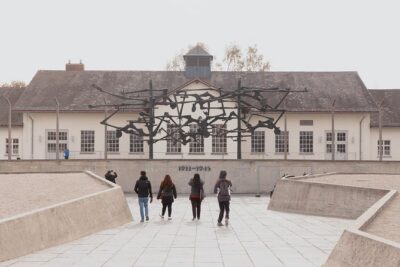
Dachau Concentration Camp Memorial Site Tour from Munich by Train
Read our review →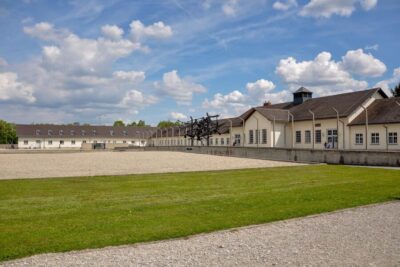
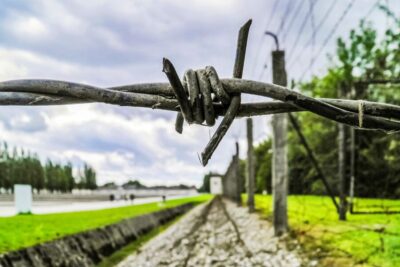
Dachau Concentration Camp Memorial Tour with Train from Munich
Read our review →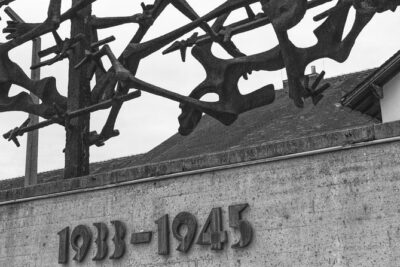
Early-Start Dachau Memorial Half-Day Tour from Munich
Read our review →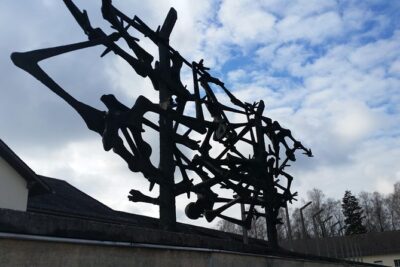
Guided Dachau Concentration Camp Memorial Site Tour with Train from Munich
Read our review →
Full-Day Dachau Concentration Camp Memorial Site Tour from Munich
Read our review →Browse the lists this tour appears in