
Reviewed · JAPAN
EUMETSAT – weather data for the world “made in Darmstadt”
What makes this tour interesting is that it takes you inside EUMETSAT in Darmstadt, where meteorological satellites are operated every day of the year. I love the hands-on feel of seeing full-size satellite models up close, not just photos. I also like that the tour connects everyday weather forecasts with bigger questions like climate monitoring and global warming.
One thing to plan for: access is strict. You’ll need a valid ID, bags are limited, and parts of the guided walk happen outdoors, so dress for real weather and be ready for security checks at the gate.
Key Things That Make This Tour Worth Your Time
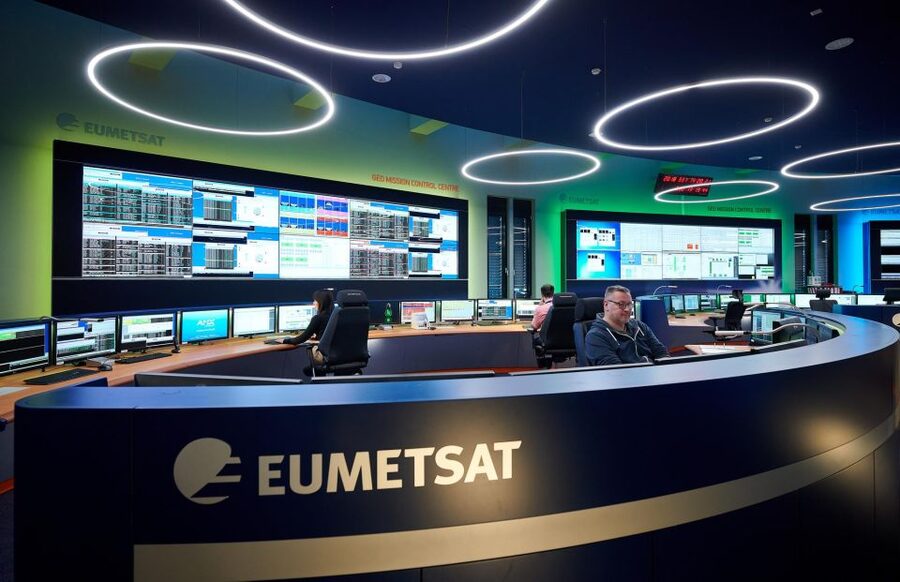
- Real satellite operations, explained clearly: You learn how data from space turns into information used on Earth.
- Full-size models (1:1 scale) on site: Seeing the hardware at actual size is the wow factor.
- Science with a Q and A mindset: The guide answers questions and keeps it engaging.
- Weather today meets climate data: It’s not only forecasts, it’s also long-term monitoring.
- A tight 1.5-hour format: Enough time to get oriented without feeling like you’re stuck in a lab all day.
EUMETSAT in Darmstadt, where weather satellites get run like clockwork
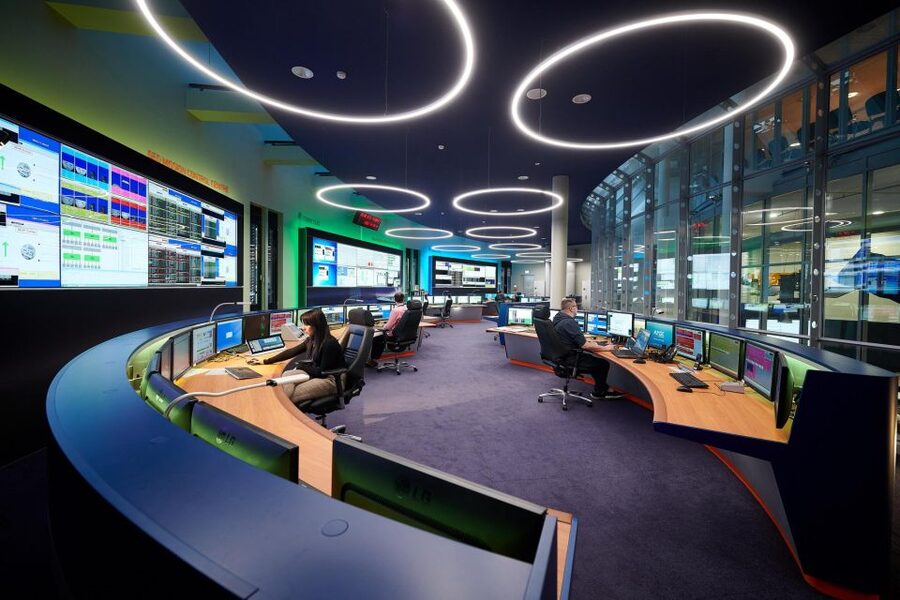
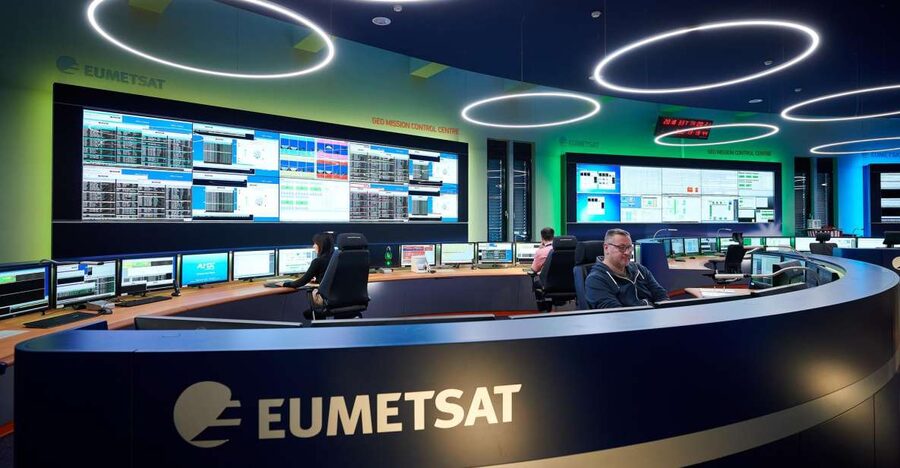
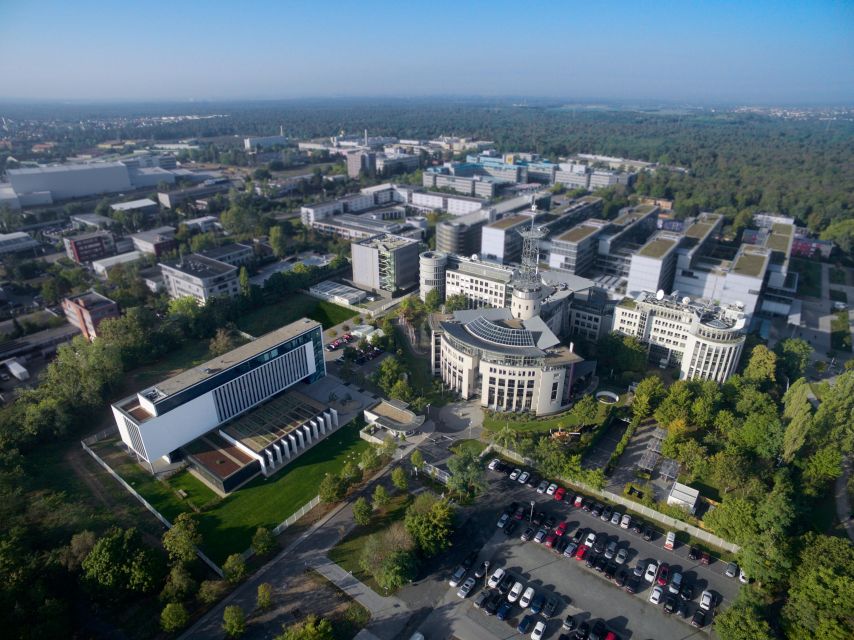
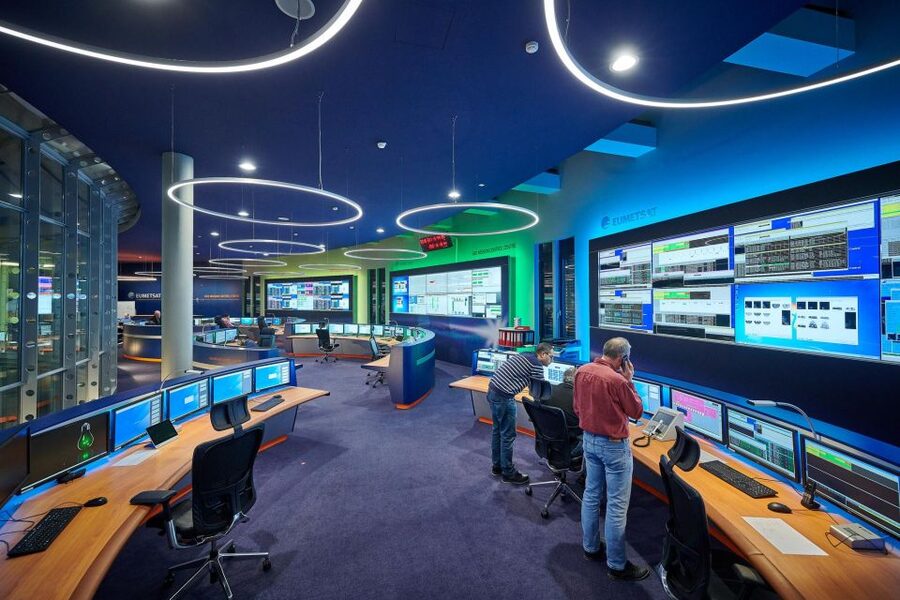
EUMETSAT, the European Organisation for the Exploitation of Meteorological Satellites, has its headquarters in Darmstadt. Since 1986, Darmstadt has been the control center where a satellite system is operated 24 hours a day, 365 days a year. That nonstop rhythm is the backbone of modern weather forecasting, because the information has to arrive, be processed, and be ready when forecasts are built.
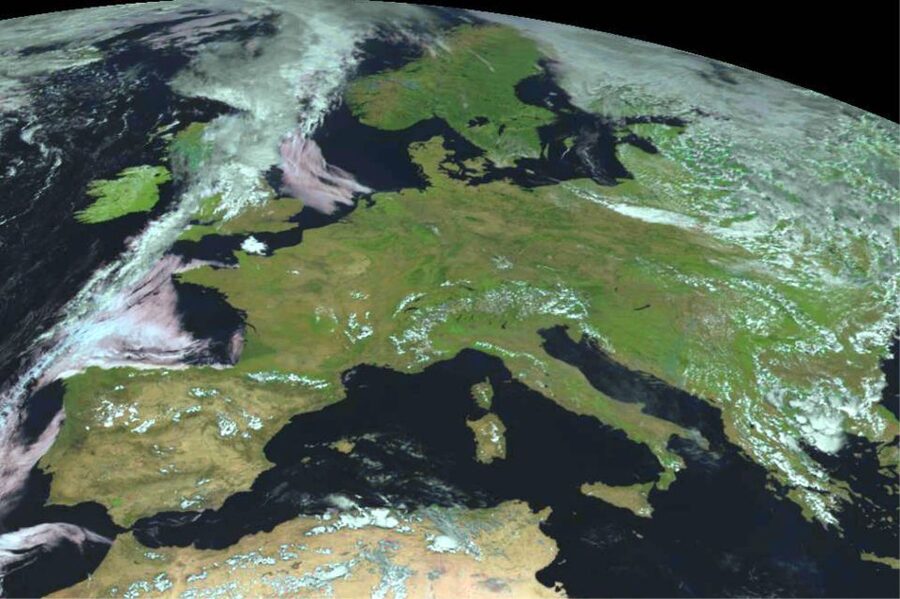
The tour gives you a rare angle on the science chain. You’re not just hearing that satellites exist. You’re seeing how the organization behind the satellites thinks about their role: support for daily forecasts, plus data used to measure climate change and global warming. If you’ve ever wondered where the “space weather” story meets your morning weather app, this is the bridge.
More to plan into a Darmstadt stay:
- Darmstadt: Mathildenhöhe UNESCO Site Guided Visit
★ 4.7 · 124 reviews - Darmstadt: Darmstadt Card – Public Transport and Admissions
★ 4.6 · 23 reviews - Darmstadt: City Highlights and History Guided Walking Tour
★ 4.0 · 23 reviews
Your 1.5-hour plan, what you’ll do from the visitors’ gate
The tour runs about 1.5 hours and starts at the Visitors’ gate, EUMETSAT-Allee 1. From the moment you arrive, the experience has an organized, security-aware feel. Before you go anywhere, you’ll go through the access process that comes with working at a real operational site.
Once inside, you’ll follow a guided route with a live guide speaking German. Expect a structured walk that mixes explanation with visuals. The big theme is “behind the scenes,” so you’ll hear how the satellite data is used, and how the organization supports the flow from space observations to Earth-based needs.
A key practical point: parts of the experience take place outdoors. That doesn’t mean you’re standing in the cold for the whole time, but it does mean your clothing matters. Bring a layer, and plan for quick exposure outdoors, especially if you’re visiting outside the warm months.
The full-size satellite models, why the 1:1 scale matters
The headline visual on this tour is the full-size satellite models. People get genuinely impressed by the scale because models are usually small and simplified. Here, you get something closer to the real-world size feeling. It helps your brain connect the idea of a satellite to something physical and engineered, not abstract.
This is where the tour becomes more than a lecture. When you see a large model on site and hear how it relates to what satellites do, you start to understand why the details matter. Weather and climate data depend on instruments that need space exposure, power, positioning, and continuous operation. A 1:1 scale model makes those constraints feel real.
If you like science that has moving parts, this is the section to lean into. Ask questions about the instruments or how satellite data is interpreted. Even if your German is only “good enough,” focusing your questions around key terms you already know can help you keep up.
How satellites support daily forecasts and climate change tracking
EUMETSAT’s work connects two time horizons. There’s the immediate one, the data needed for our daily weather forecasts. And there’s the long one, information used for measuring climate change and global warming.
That dual role is important because it changes what “success” looks like. For daily forecasts, accuracy and timeliness matter. For climate monitoring, consistency over time matters. You’re basically learning how the same general space-to-Earth system can support both short-term decision-making and long-term measurement.
During the tour, you’ll get the context for why meteorological satellites are so central. The organization has the advantage of operating a system around the clock, which supports continuous data collection. From a traveler perspective, the takeaway is simple: your forecast is not magic, and your climate stats are not just stories. They are built on repeated observations and careful processing.
Another way to spend a Darmstadt afternoon:
- Blick hinter die Kulissen – Führung: Staatstheater Darmstadt
★ 4.6 · 10 reviews
The science vibe, live guide in German and the value of questions
The tour is led by a live tour guide in German. That shapes the pacing and the kind of explanation you’ll get. It’s not a silent viewing experience. It’s an interaction.
The strongest parts of this format are the clarity and the way questions get handled. You should feel comfortable asking things like how satellite observations become usable data for weather forecasting, or why satellite coverage matters in different weather situations. The guide’s answers are part of what makes this tour feel less like a museum stop and more like a smart classroom.
If German is not your strength, plan accordingly. You can still enjoy the visuals and the overall story, but you’ll get the most if you can follow the main points or bring a short list of questions you can ask even with limited language.
What you’ll be told at the start about ID, security, and site rules
This tour is run in a real facility, so the rules are not decoration. They are part of how you actually get inside. Large bags and luggage are not allowed. Baby carriages are also not allowed.
You’ll need to bring a passport or ID card. Access is only permitted when you present it, and the identity documents are checked for authenticity and kept for the duration of your stay. Driving licenses and some other documents are not accepted as proof of identity, so don’t rely on a wallet-only situation.
You’ll also be issued a visitor ID that needs to be worn visibly at all times. And you’re not allowed to leave the group during the tour. The security staff rules are strict, and they can deny access or expel someone who doesn’t cooperate.
None of this is designed to ruin your day. It’s designed to keep a high-security science site running safely. The practical advice is to travel light, carry your ID, and treat the tour like a timed appointment rather than a casual stroll.
Price and value, why $17 can feel like a bargain
At about $17 per person for a 1.5-hour guided visit, this isn’t a “cheap experience,” but it also doesn’t try to charge museum-level rates for a standard attraction. The value comes from the access and the subject matter.
You’re paying for three things that are hard to replicate on your own:
- Guided explanation from a live staff member
- A behind-the-scenes look at the European organization operating meteorological satellites
- A chance to see full-size satellite models in a real setting
That combination matters. A satellite control story sounds theoretical until you stand near the hardware models and hear how data gets used. For most visitors, that shift from abstract to tangible is the real payoff.
This tour has a strong rating, 4.7 out of 5 based on 25 reviews. That lines up with what you can expect from the format: clear guidance, strong Q and A, and a memorable scale moment with the satellite models.
Who this tour is best for, and who should skip it
This tour is a great fit if you like space and science, but also if you like practical explanations. It’s especially good for people who want a reasoned connection between what happens in orbit and what shows up in weather forecasts and climate measurements.
It is suitable for visitors 12 years and older. It’s also wheelchair accessible. The language is German, so if you’re traveling with kids or teens who can’t follow German well, you might find the content harder to track, even if the visuals still work.
This tour is likely not ideal if:
- You’re expecting an English speaking experience
- You hate strict security rules and ID checks
- You need to bring large bags, backpacks, or baby carriages
Logistics you should handle before you go, so you don’t lose time
Pre-registration is required through Darmstadt marketing. You need to provide your full name and nationality for each participant. That matters because you’re not just booking a seat, you’re getting added to the entry process.
Also note the tour runs in German only, and the minimum age is 12. If you’re traveling with a group, double-check each person meets the age requirement and has the right ID on hand.
Plan to arrive at the meeting point at the Visitors’ gate, EUMETSAT-Allee 1 with time to handle security without stress.
Should you book EUMETSAT weather data made in Darmstadt?
I think you should book this tour if you want something more grounded than a typical space exhibit. It’s science with a real operating context, and you get to see large, physical satellite models that make the whole topic feel tangible. The guide-led Q and A approach is a big part of why this tour works, especially if you enjoy asking how things actually function.
Skip it if you need an English guide, or if you plan to bring items you can’t store on site, or if strict ID checks and group rules would feel like a hassle.
If your idea of a good day includes weather, satellites, and the kind of behind-the-scenes explanation that helps you connect the dots, this is a smart, time-efficient stop in Hessen.
FAQ
Where is the meeting point for the EUMETSAT tour?
The meeting point is at the Visitors’ gate, EUMETSAT-Allee 1.
How long is the guided tour?
The duration is 1.5 hours.
What language is the live guided tour in?
The live tour guide speaks German.
What is the minimum age for the tour?
The minimum age for guided tours at EUMETSAT is 12 years.
Do I need a passport or ID card?
Yes. You must bring a passport or identity card, and it is checked for authenticity at access.
Are large bags or luggage allowed?
No. Luggage or large bags are not allowed.
Is the tour wheelchair accessible?
Yes, the tour is wheelchair accessible.
Can I bring a baby carriage?
Baby carriages are not allowed.
What is the cancellation policy?
You can cancel up to 24 hours in advance for a full refund.
Fresh reviews out of Darmstadt
- Darmstadt: Darmstadt Card – Public Transport and Admissions★ 4.6 · 23 reviews
- Darmstadt: City Highlights and History Guided Walking Tour★ 4.0 · 23 reviews
- Darmstadt: Mathildenhöhe UNESCO Site Guided Visit★ 4.7 · 124 reviews
- Blick hinter die Kulissen – Führung: Staatstheater Darmstadt★ 4.6 · 10 reviews