
Reviewed · CITY TOURS
Discover the Heart of Frankfurt – City Tour in German
This German walking tour makes Frankfurt’s center feel human and walkable, not like a checklist. I love the way guide Dimitri teaches with humor and practical context, and I love the balance of big sights like the St. Paul’s Church area and Römerberg with smaller, less obvious photo moments.
One thing to consider: it’s designed as a short, moving tour, so you should expect mostly outside views and quick looks, not a long time inside buildings. St. Paul’s Church is generally outside on the walk, with the interior visit left as your optional next step.
Key highlights at a glance
- Guide energy that stays organized, with Dimitri tailoring stories to the group while walking safely through tight areas
- A fast 2-hour loop that hits the civic core, the Main River promenade, and the New Old Town
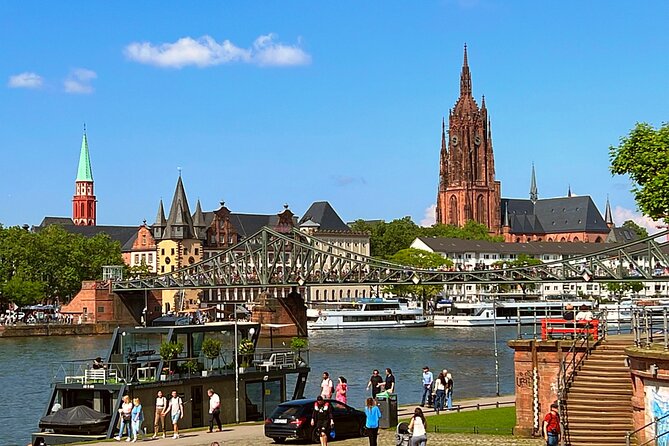
- Iconic landmarks plus side streets, including the Iron Footbridge and a rare look at older half-timbered architecture like Haus Wertheym
- Historic specifics you can picture, from the National Assembly era at Paulskirche to 19th-century and postwar rebuilding details
- More than just photos, with tips for what to do next after the walk, like where the best continued sightseeing flows
A short tour that gives you real bearings in Frankfurt
Frankfurt can feel split in two, business towers on one side, and a compact historic core on the other. This tour is smart because it starts in the civic heart and keeps moving, so you actually learn how the pieces connect. You see the Main River crossings, the town hall complex, and the square that anchored markets and imperial ceremonies.
The price is also reasonable for what you get. At $21.97 per person for about 2 hours, you’re paying for a guided route plus interpretation that would be hard to assemble on your own in a first visit. It helps that the group is limited, with a maximum of 25 travelers, so you’re not just shouting over a crowd.
The biggest “value” isn’t the number of stops. It’s that the tour explains why each place matters, then points you toward what to do next, so your day in Frankfurt doesn’t become aimless walking.
More City Tours in Frankfurt
- From Frankfurt: Heidelberg, Castle and Old City Guided Tour
★ 4.5 · 677 reviews - Heidelberg Castle and City Day Tour from Frankfurt
★ 4.5 · 292 reviews - Frankfurt: Discover the heart of Frankfurt – a city tour in German
★ 5.0 · 196 reviews
Price, time, and how to judge the value
Let’s talk like a planner. This experience runs about 2 hours, is a walking tour, and is offered in German. You’re also moving between landmarks close together in the center, so you get momentum without burning time on long transit.
At nearly $22, you should think of it as a guide service plus a curated route. If you prefer guide talks and want context while you walk, that’s a good match. If you want extended time inside buildings, or you hate moving from stop to stop, you may feel rushed.
Good news: the tour includes a couple of potential inside moments, depending on whether spaces are open. When open, you get short tours connected to the Imperial Hall in the Roman Empire and the Palatinate Franconofurd. If those are not available on your date, the tour still works because the outside sights are strong, and the route is dense with meaning.
Where you meet and how the route ends
You start at St. Paul’s Church (Paulskirche), Paulsplatz 11, 60311 Frankfurt am Main. The tour ends at Römerberg, in the Innenstadt area.
That start and end matter more than you might think. Paulskirche is a natural anchor for understanding modern German democracy and postwar rebuilding. Römerberg is a natural finish because it’s the historic “center square” where you can keep wandering, grab a bite, or connect to other sights from there.
Also, the location is near public transportation, which makes this easy to plug into a wider day. Since transportation to and from the meeting point is not included, I’d plan to arrive early enough to find the group without stress.
Stop-by-stop: what you’ll see and what to notice

This route is built like a story, moving from democratic symbolism to imperial town hall power, then down to river life, and back up into old streets and reconstructed neighborhood fabric.
Weigh these Frankfurt picks against each other
- Frankfurt: River Main Sightseeing Cruise with Commentary
★ 4.3 · 5,127 reviews - Frankfurt: Hop-On, Hop-Off Grand or Express Bus Ticket
★ 3.9 · 2,088 reviews - Frankfurt: 1-Hour Panorama Boat Cruise on the river Main
★ 4.4 · 1,822 reviews - From Frankfurt: Rhine Valley Day Trip
★ 4.4 · 1,317 reviews
St. Paul’s Church (Paulskirche): a democracy symbol you can’t skip
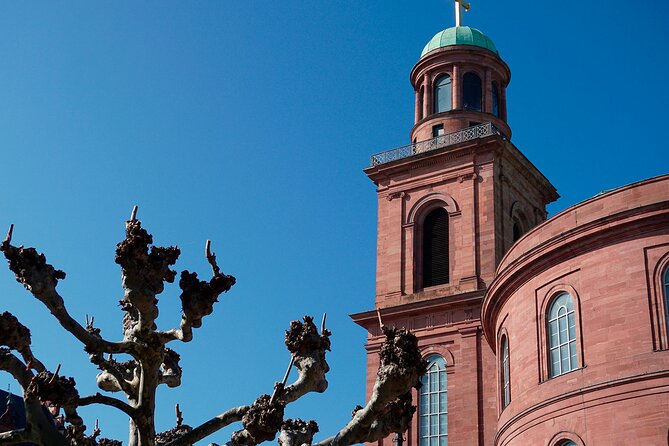
You’ll spend about 10 minutes here, mostly from the outside. Paulskirche is one of Frankfurt’s most important historical buildings, built between 1789 and 1833. It served the Evangelical Lutheran community, and in 1848 it became the meeting place of the Frankfurt National Assembly, often described as the first freely elected parliament in Germany.
It was destroyed in World War II and rebuilt in 1948, becoming Frankfurt’s first historic building restored after the war. Today it works as an exhibition, memorial, and meeting place, and it’s known for the annual Peace Prize of the German Book Trade.
If you care about modern Germany, this stop gives you the emotional context for everything else you’ll see. My practical advice: after the tour, if you have time, check the interior on your own because the exterior alone can’t show how the building is used today.
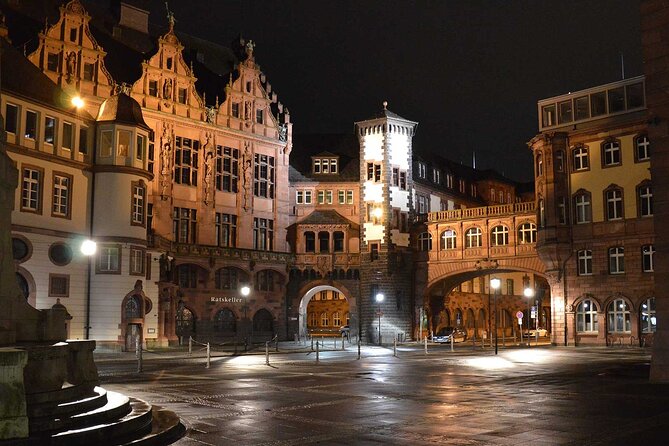
Römer complex: Frankfurt’s town hall and imperial stage
Next is the Römer area, including a tour of the inner courtyard for about 5 minutes. The Römer is the historic town hall complex in the Old Town and has served as the town hall since 1405.
Look closely at the stepped gable façade. That silhouette basically defines the look of the Römerberg skyline. Inside, the Kaisersaal has historically been tied to imperial coronation ceremony culture, and today the Römer is used for official events and receptions.
If you’ve seen other German town halls, you’ll recognize the idea. This one feels extra because Frankfurt historically balanced city status, trade power, and political symbolism.
Römer Kaisersaal: the ceremonial room, when access is possible
The tour includes about 15 minutes on the Römer Kaisersaal. This is described as the jewel of the Römer, a ceremonial hall for receptions, medal ceremonies, and social events.
Even if you’re only getting a brief look, this is where the town hall shifts from civic building to something closer to a theater for power. If you get any inside time here, take it seriously. It’s a rare chance to see a room designed for prestige, not just administration.
Mainkai: the river promenade that makes the city feel live
You then walk along the Mainkai area for about 5 minutes. The Mainkai is a street on the right bank of the Main between the Old Bridge and the Untermainbrücke.
In the Middle Ages it was tied to mooring and landing. The big transformation came in 1826, when it became a modern street by filling in and widening. Today it’s a promenade for pedestrians and cyclists, and you’ll also hear about major river shipping connections, including passenger shipping and river cruise starts.
What to notice here is the contrast. The Old Town gives you stone and institutions. The Mainkai gives you movement, daily city rhythm, and an easy way to keep your sightseeing rolling toward the water.
Iron Footbridge (Eiserner Steg): engineering with a history of rebuilding
The Iron Footbridge stop is about 15 minutes. It opened in 1869 after an effort funded by a citizens’ initiative, because the Old Bridge couldn’t handle rising traffic.
The bridge was destroyed during World War II, rebuilt in 1946, and then renovated in 1993 with a slight height adjustment to meet modern requirements. Today it’s both a practical crossing and a photo magnet, often seen as a symbol of Frankfurt’s civic energy.
This is a great moment to pause, take a few pictures, and think about how people shape cities during crises and afterward. Frankfurt’s story is not only about architecture, it’s about repair.
Haus Wertheym: half-timbered survival from around 1600
About 10 minutes are spent on the exterior of Haus Wertheym, where you also get short stories tied to Frankfurt sweets like Frankfurter Kranz and Bethmännchen.
This half-timbered house dates to around 1600 and is described as the only half-timbered house in the Old Town that survived the air raids of World War II almost unscathed. It originally served as a customs house and accommodation for the city guard.
After a renovation in 1926, the first floor became a café and restaurant. Today it’s a listed building and a popular destination for historic architecture.
If you like food culture tied to place, this is more than window dressing. Frankfurt treats dessert like a local identity, and the guide’s quick candy-and-history links make it memorable.
Historisches Museum Frankfurt: a short look at the Stauferhafen area
The tour includes a brief look at the Stauferhafen wharf, roughly 5 minutes, described as a spectacular archaeological find displayed in the museum foyer.
There’s no full interior museum visit here, so don’t expect a gallery crawl. Instead, it’s a taste, enough to tell you that Frankfurt’s ground has layers you can literally see.
For museum lovers, this is the kind of stop that can spark a longer follow-on visit later if the building is on your list.
Römerberg: the historic square and why it still matters
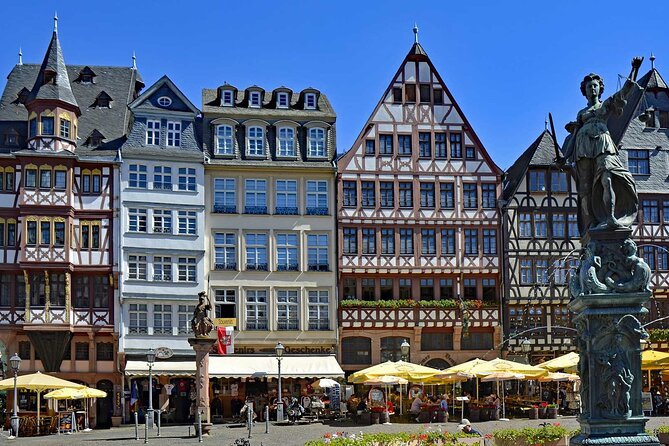
You spend about 10 minutes at Römerberg, Frankfurt’s historic heart. The square served as a central market area in the Middle Ages and was a setting for important events, including imperial coronations.
In the 16th century, it was considered one of the most beautiful squares in the Holy Roman Empire. It was heavily damaged in World War II and rebuilt after the war. Today it’s a popular place for locals and tourists, and it’s also tied to the annual Frankfurt Christmas market.
This stop is important because it teaches you what “center” means in a city. Römerberg is not only scenic. It’s a recurring stage for civic life, from ceremonies to seasonal gatherings.
More Römer storytelling: the balcony, speeches, and celebrations
Back near the Römer, the tour includes about 3 minutes focused on outside stories. The Römer has been the town hall since 1405, and the facade you see today relates to patrician-house origins like the Römer, the Goldener Schwan, and the Kleiner Römer.
The Römerbalkon is highlighted as famous for public speeches and celebrations. The guide mentions that emperors were crowned there, and that successful soccer teams have also been welcomed.
This is where the tour becomes more than architecture. It shows how public spaces keep adapting to new eras, from imperial pageantry to modern sports celebrations.
Alte Nikolaikirche: the late Gothic church that weathered the war
The exterior-only view of Alte Nikolaikirche takes about 2 minutes. It’s a late Gothic church originally built in the 12th century as a court chapel. It later became the city’s council chapel in the 15th century.
Surrounding old town areas were badly destroyed in World War II, but the church remained largely undamaged. After restoration, it serves as a monument and as a venue for church services and cultural events. The carillon has 51 bells, and you can hear it regularly.
If you want a quick “still standing through change” moment, this fits perfectly. And the bell detail gives you a hook for later, when you’re walking and the sound becomes part of the street map.
Schirn Kunsthalle and Saalgasse: modern art and postwar street design
The tour walks past Schirn Kunsthalle Frankfurt from the outside, and also has time for Saalgasse, about 10 minutes. Schirn opened in 1986 and is one of Europe’s leading contemporary art exhibition halls, with changing exhibitions and major artists.
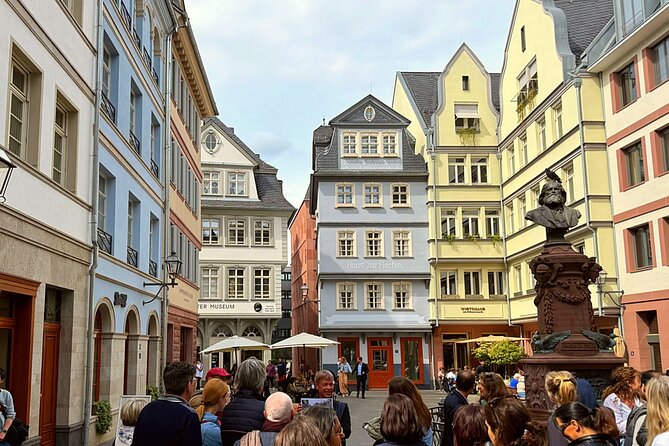
Saalgasse runs parallel to the Main and was redesigned after the Second World War as part of old town reconstruction. It’s known for modern, colorful facades designed by various architects (as described).
This portion is a reminder that Frankfurt does not freeze time. It rebuilds, inserts new forms, and keeps the center usable for current life.
Cathedral of St. Bartholomew (Dom St. Bartholomaus): the skyline anchor
You get about 5 minutes for walking past the Cathedral of St. Bartholomew. The tour frames it as part of the Dom-Römer area context, positioned between the Römer and the cathedral.
Even if you don’t go inside, the value is getting your bearings relative to the historic core and the later New Old Town development.
Neue Altstadt (Dom-Römer-Quartier): reconstructed streets that mix old and new
The final big piece is the Neue Altstadt, sometimes called the Dom-Römer-Quartier, with about 25 minutes. This is a major development completed between 2012 and 2018 on roughly 7,000 square meters between the Römer and the cathedral.
The project includes 35 buildings, with 15 described as faithful reconstructions of historic houses and 20 modern buildings. Highlights named include Haus zur Goldenen Waage, the Rote Haus, and Goldene Lämmchen. The area mixes apartments, stores, and cafés.
This part is where you see Frankfurt’s approach to history: keep important visual memories, but also make space for today’s city life. If you like how cities handle reconstruction and authenticity debates, this is the clearest visual case study in the whole route.
Why the guide, Dimitri, is the real engine

This kind of Old Town walk can become a set of facts on autopilot. What makes this tour feel special is that Dimitri treats Frankfurt like a personal story.
He’s described as having lived in the Main metropolis for 35 years and calling Frankfurt the smallest city in the world. That mindset matters because it pushes you to notice scale and connections, not just big monuments. You get humor alongside deeper points, plus flexibility for questions as you go.
A small but meaningful detail: the tour includes printed pictures to show how the Old Town looked before rebuilding. That’s a smart trick. When you can compare then and now while standing in front of the reconstruction, the city stops being abstract.
Some of the reviews also note restaurant tips and small gifts. Even if you don’t count on gifts, the practical food and next-steps advice is worth the price if you like planning your evening before it gets late.
What I recommend you do right after the tour
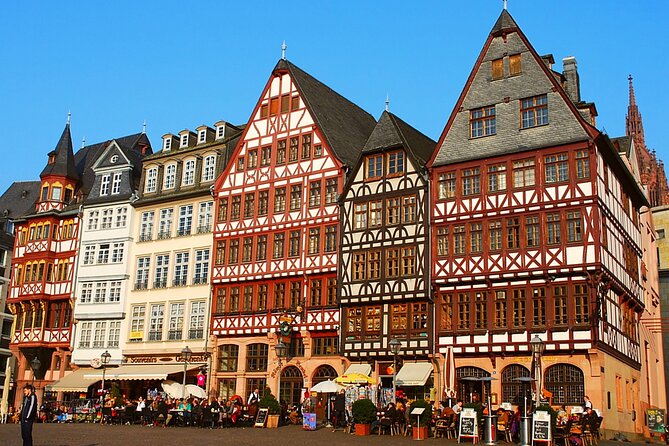
Because the walk ends at Römerberg, you’re positioned perfectly for follow-on sightseeing. If you’re visiting during the Christmas market season, that’s an obvious next step. If not, you can still use Römerberg as your starting hub to connect to river views and the Dom area.
And don’t ignore the Paulskirche interior suggestion. Since Paulskirche is usually outside during the walk, it’s a great “bonus” visit if you want to linger a bit longer on democratic symbolism and memorial context.
Who this tour suits best
This tour fits best if you want:
- A German guided walk that helps you orient fast in Frankfurt’s Old Town
- A mix of major landmarks and side streets, without getting lost
- A guide who can answer questions and bring the places to life with humor
It may not be ideal if:
- You only want interior museum time and long stops inside churches or halls
- You’re uncomfortable with a steady walking pace, since it’s built as a loop within about 2 hours
- You need to bring a pet, since pets are not allowed (with exceptions for assistance or medical dogs)
Should you book this Frankfurt city tour?
Yes, I’d book it if your main goal is to understand Frankfurt’s historic core in one organized hit, and if German interpretation is your preference. The route is packed with places that would take you much longer to research properly on your own, especially the smaller story-driven stops like Haus Wertheym and the Iron Footbridge rebuilding timeline.
If you’re on a tight schedule, this is a strong value play: 2 hours, a group cap of 25, and major civic sights plus river-facing context. Also, with free cancellation up to 24 hours in advance, you can book confidently and adjust your plan if your day changes.
If you want an easy recommendation in one line: book it for your first or second day in Frankfurt when you still need bearings, then build the rest of your day around what the guide points out.
Fresh reviews out of Frankfurt
- Fairytale Rüdesheim and Monastery Eberbach Tour★ 5.0 · 9 reviews
- Arrival Transfer from Frankfurt Airport FRA to Frankfurt by Sedan★ 5.0 · 9 reviews
- A Frankfurt Meander: A Self-Guided Audio Tour in Germany’s Cradle of Democracy★ 4.5 · 9 reviews
- Frankfurt: Guided walk between palm trees and skyline★ 4.8 · 9 reviews
- from Frankfurt: historic treasure Rothenburg, private 1 day Tour★ 5.0 · 9 reviews
- Frankfurt: Old Town Horror Stories Walking Tour in German★ 2.9 · 10 reviews
- Airport Transfer: Airport FRA to Frankfurt by Luxury Van★ 4.0 · 11 reviews
- Heidelberg and Baden-Baden Tour from Frankfurt★ 3.5 · 11 reviews
City Tours, compared.
1-Hour City Tour by Boat with Guaranteed Seating
Read our review →
City History Canal Sightseeing Tour on a Motorboat
Read our review →
Browse the lists this tour appears in