Reviewed · BERLIN TOURS
Berlin Battlefield Tour – Operation Berlin 1945 (Small Group)
Berlin in 1945 feels like a city you can almost hear, and this tour makes that idea real by walking the same ground where the battle’s momentum shifted. I like that it turns big WWII headlines into specific street-level locations you can stand in and make sense of. I also like the small-group format, where questions actually fit into the rhythm of the walk.
One thing to consider is that this is a serious, heavy topic, and you’ll be outside for a good chunk of the 2.5 hours. Bring layers and be ready for weather changes, since the tour requires good weather to run as planned.
Key highlights to look for
- Moltke Bridge orientation to the Soviet 3rd Shock Army’s axis of advance
- The Himmler House stop at the then Interior Ministry, after point-blank artillery
- Platz der Republik as no-man’s-land for the approach toward the Reichstag
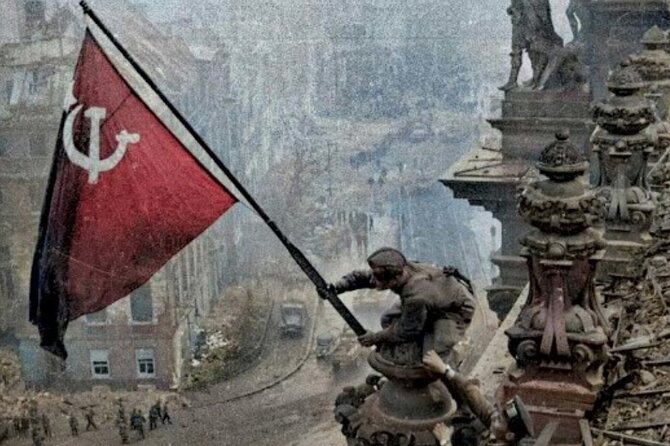
- Reichstag roof story featuring Sergeant Yegorov and Sergeant Kantariya, banner No. 5
- Wiedendammer Brücke as one of the few remaining intact Spree crossings during final days
Berlin’s Battlefield Route, Hauptbahnhof to Wiedendammer Brücke
If you want a Berlin WWII experience that doesn’t feel like a museum lecture, this format works. You start at Berlin Central Station, then keep moving through key sites until the tour ends at Wiedendammer Brücke, near S+U Friedrichstraße. That end point is handy because you can roll right into dinner or your next stop without a long commute.
The tour runs about 2 hours 30 minutes, and it is designed for groups up to 15. That size matters. In a city like Berlin, where walking time adds up fast, you want a guide who can manage the pace while still letting you ask questions when something clicks. You’ll also get a mobile ticket and, if needed, bottled water plus rain ponchos. Little things like that reduce friction, especially on a gray day.
One more detail that’s easy to overlook: the stops are arranged so you’re not just “seeing famous buildings.” You’re doing orientation. You get repeated pauses to connect what you see with what happened, so the route feels logical instead of random. If you’ve ever felt lost in Berlin’s modern layers, this is the kind of tour that helps you get your bearings fast.
Weigh these Berlin picks against each other
- Berlin: Reichstag, Dome and Government District Guided Tour
★ 4.7 · 18,288 reviews - Berlin: 1-Hour City Tour by Boat with Guaranteed Seating
★ 4.3 · 16,993 reviews - Berlin: TV Tower Standard Entrance Ticket
★ 4.4 · 15,883 reviews
Meeting at Ella-Trebe-Straße and Getting Oriented at Berlin Central Station
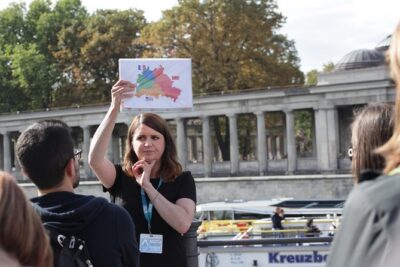
Your first official moment is at Ella-Trebe-Straße 9, 10557 Berlin on the southern side of the modern Hauptbahnhof. The guide gives about a ten-minute introduction, which I consider the secret sauce of a battle walk like this. Without that setup, you’d be looking at stone, steel, and street corners while the history stays abstract.
Then you head toward Moltke Bridge. The tour keeps each stop relatively short, around ten minutes at most locations before the bigger moments near the Reichstag. That pacing is practical. It keeps you from burning out, and it also helps the guide move between viewpoints where each story makes sense.
You’re also in a smart transit zone from the start. Berlin Central Station is a major hub, and being near good public transportation usually means fewer stress delays. If you’re building your day around this, plan to arrive early enough to settle in. The tour is short enough that being rushed can knock the enjoyment down quickly.
Moltkebrucke: Where the City Becomes a Battlefield Map
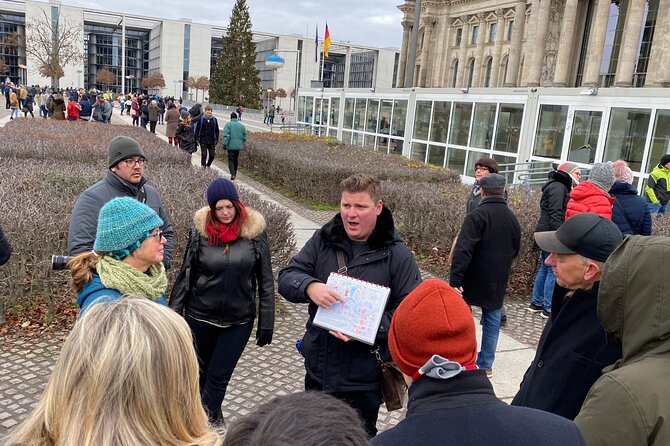
The Moltke Bridge stop is where the tour starts doing real battlefield geography. This red sandstone structure became a focal point of brutal fighting, and the guide uses the bridge area to orient you to the Soviet 3rd Shock Army’s axis of advance.
Here’s what I like about this approach: the guide doesn’t treat the bridge as a pretty photo stop. You’re taught to imagine direction and movement, what it meant for attackers approaching across water, and what defenders faced in the surrounding streets. Even if you already know the battle outline, the bridge’s layout helps you understand why some positions mattered more than others.
The practical downside? You might find this stop emotionally intense. The tour doesn’t shy away from the severity of the fighting, and it can be a lot if you’re trying to keep the tone light while sightseeing. If you’re sensitive to wartime detail, just pace yourself and remember you can take a breath. The guide’s pacing and the group size help here.
Bundeskanzleramt and the Himmler House Stop: Room-to-Room Fighting
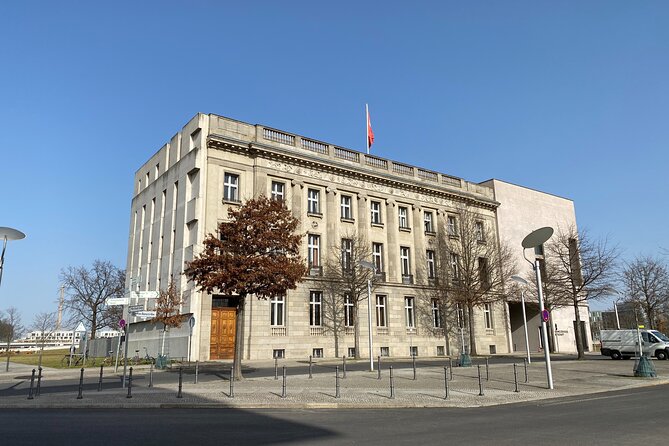
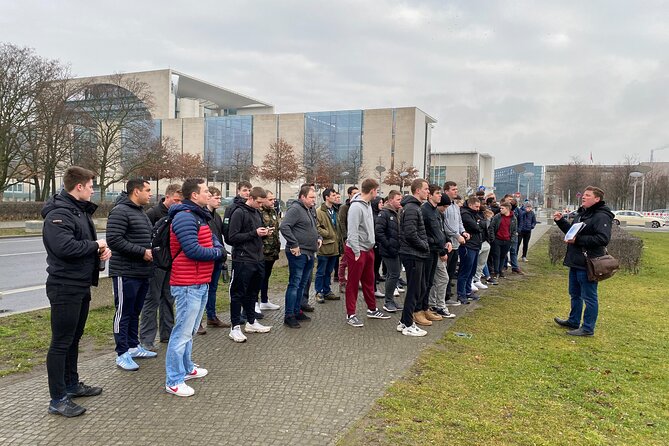
From Moltke Bridge, you cross into the area of the then Interior Ministry, nicknamed the Himmler House in the old diplomatic quarter. This is a strong stop for visual and narrative reasons. The guide connects the physical setting with the kind of pressure that comes from attacking and defending a major administrative building during the final days.
The key story element is that it was hit after a Soviet artillery barrage at point blank range. Then you get the sense of how the violence turned into horrific room to room fighting. On paper, that phrase can sound generic. On-site, it makes more sense because you can picture how quickly corridors, stairwells, and doors would become choke points.
The stop also benefits from timing. Because this is a walking tour, you’re not just standing and staring. You’re in motion and the guide keeps framing what to notice: the building’s role, why it would be targeted, and how conflict changes when it shifts from open ground to interior spaces.
If you’re hoping for a “walk fast, take photos, done” tour, this isn’t that. The focus here is meaning. That’s also why people rate the guide experience so highly when they get someone like Jochen, who is known for keeping questions alive and conversation detailed.
Another way to spend a Berlin afternoon:
- Berlin: Boat Tour Along the River Spree
★ 4.4 · 11,252 reviews - Discover Berlin Half-Day Walking Tour
★ 5.0 · 9,624 reviews - Berlin: Government District around the Reichstag Guided Tour
★ 4.7 · 8,447 reviews - Berlin: Reichstag, Plenary Chamber, Cupola & Government Tour
★ 4.6 · 8,422 reviews
Platz der Republik: No-Man’s-Land and the 300-Meter Approach
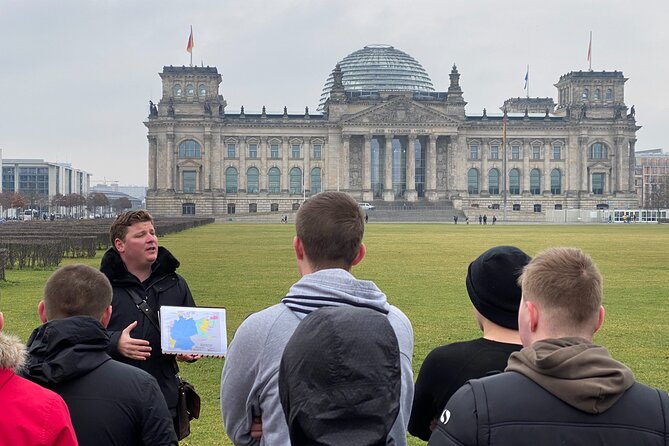
Continuing onward, the tour moves into an area the guide frames as a kind of modern reading of old no-man’s-land. You stand on the former Königsplatz and the discussion turns to distance, exposure, and what it means to cross an open stretch with units trying to reach the Reichstag.
You’ll hear about the scale of what attackers faced, including a 300m moonscape over which specific rifle divisions, the 207th and 150th, would have had to move. The tour uses that distance as a mental tool. It helps you picture why tactics and terrain decisions matter, even when the buildings look calm today.
This stop can be a reality check if you only think of battles in terms of maps or dates. Here you feel how narrow a margin can be when you’re imagining people moving across an open strip under fire. You don’t have to be a WWII expert to get the point. You just have to stand in the spot and listen to the guide connect distance to danger.
The one consideration is exposure. Because this part is less about looking at one building up close and more about standing in an open area, weather affects comfort more. If it’s cold or rainy, the poncho helps, but you’ll still feel it. Plan layers and keep your footwear comfortable because the tour is walking-based.
The Reichstag Footsteps and the Banner Moment on the Roof
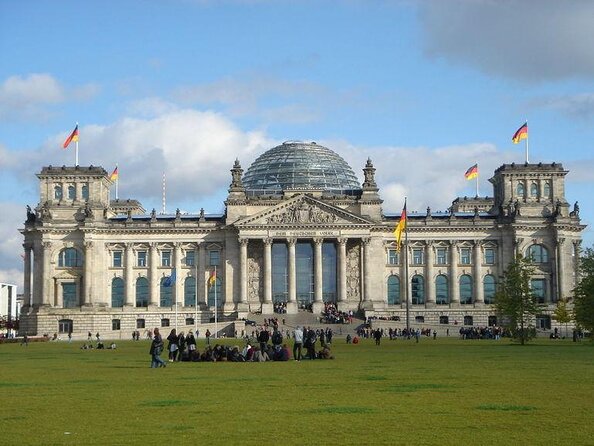
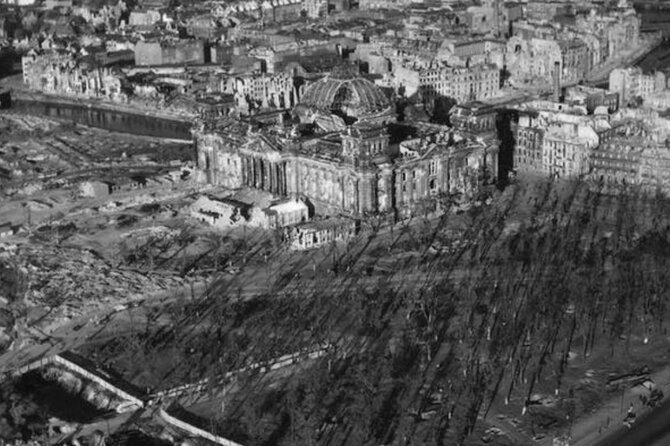
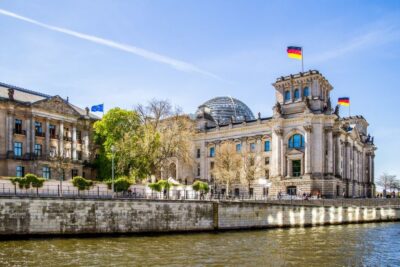
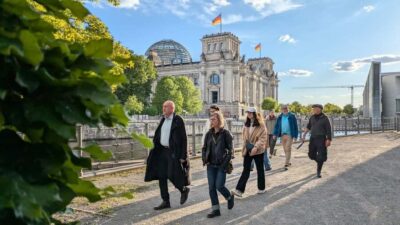
Next comes the Reichstag Building approach, and this is where the tone shifts into the final phase of the battle. As you walk toward it, the guide discusses Hitler’s final moments in the Führer bunker, described as only a few hundred meters away. That proximity detail is useful because it stops the story from feeling like it happened somewhere else, far away.
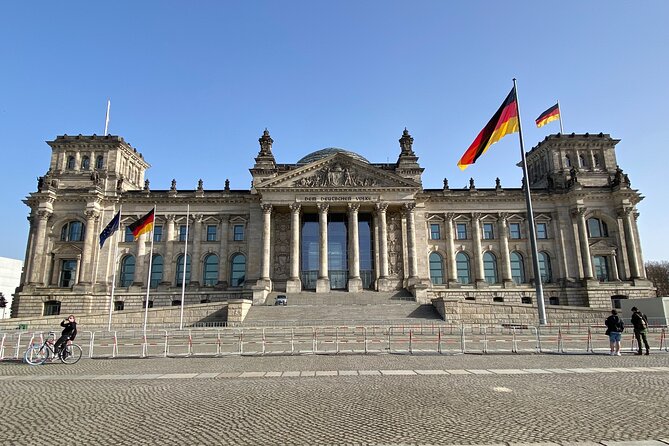
Once you reach the foot of the Reichstag, you get the moment that many people remember most: the stories of Sergeant Yegorov and Sergeant Kantariya, and how they raised special banner No. 5 on the roof to signify the end. This is the kind of detail that makes history feel concrete. You’re not just told the battle ended, you’re shown the specific symbolic act that marked the transition.
What you should expect here is time for the story. This stop has the longest stretch on the walk, around 20 minutes at the Reichstag area. That extra time makes a difference. It lets you ask questions, and it gives the guide space to connect the banner moment to the broader battle sequence you’ve been hearing all along.
A balanced note: if you came mainly for architecture, the tour is still about battle orientation first. The Reichstag is central and important, but the focus is on the wartime meaning of the moment. For people who love politics, symbols, and the way buildings carry national narratives, it’s a strong fit.
Wiedendammer Brücke: One of the Last Spree Crossings in the Final Days
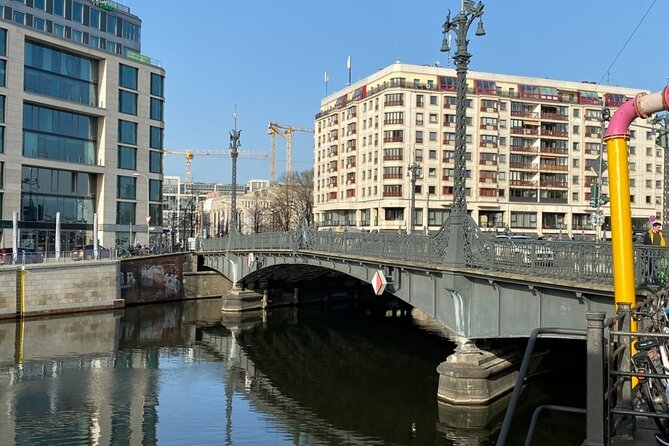
The ending stop is Weidendammer Brücke. During the final days of the Battle of Berlin, this bridge was described as one of the few still intact crossings over the Spree. That detail matters because bridges are like lifelines in city fighting. If you lose crossings, everything slows, splits, or collapses.
The story here centers on the night of May 1st, 1945, when the bridge became the scene of terrible carnage after a breakout attempt from the Führerbunker. You end the tour at this exact location, which makes the route feel complete. You start at the main transport gateway, and you finish at a crossing point tied directly to the bunker’s final desperate push.
This ending setup is also practical for your day. The bridge is close to the S+U Friedrichstraße station (around 50 meters from the stop). That means you can move on quickly, whether you want to head back to your hotel or keep exploring Berlin’s layered neighborhoods.
As with other stops, this isn’t a light finish. The tour’s final story is sharp. If you want to keep your evening calmer, consider planning a quiet meal right after, not a high-energy sprint across the city.
Timing, group size, and what the 54.01 price really buys you
Let’s talk value, because $54.01 per person for a 2.5-hour, small-group battlefield walk can either feel fair or pricey depending on what you compare it to.
Here’s the value case I see from the structure:
- The route is focused on multiple major sites, including Moltke Bridge, the Himmler House area, the Reichstag, and Wiedendammer Brücke.
- The guide provides context at each stop, with a repeated pattern of orientation and explanation.
- You get water and rain ponchos if weather shifts.
- Admission is free at the stops listed as included, so you are not constantly paying extra at each location.
Also, the tour is typically booked about 27 days in advance on average. That doesn’t mean you must book immediately, but it does suggest a steady demand. If your travel dates are fixed, it’s smart to reserve sooner rather than later.
The one possible drawback about value is that it’s not a long multi-day deep study. It’s a tight, human-paced walk through key points. If you want hours and hours of classroom-style context, you might want to pair this with additional reading or another museum visit. But if you want a guided route that turns landmarks into an understandable story, the time and group size are in your favor.
If you’re the kind of traveler who likes asking questions, the small group size is a real benefit. In a group under 15, you’re more likely to get answers that match your interests rather than waiting your turn forever.
Who should book this Operation Berlin 1945 tour?
This tour is best for you if you:
- Want a guided battlefield route in central Berlin with clear stop-by-stop context
- Like history that connects to geography, not just dates
- Appreciate a small group setting where you can ask questions
- Prefer an English tour with a focused timeframe, about 2.5 hours
It can also be a great pick for someone who is traveling with a history enthusiast. One guide name that comes up in people’s positive experiences is Jochen, specifically praised for in-depth conversations and letting both adults and younger history buffs connect with the story.
Who might not love it? If you’re not comfortable with wartime subject matter, or if you hate walking in the elements, you may find the pace and tone harder. The tour requires good weather, so if your dates are in a stormy window, you may face rescheduling or a refund.
Practical tips to get the most from the walk
A few things will make your experience smoother:
- Wear shoes you trust for uneven pavement and steady walking.
- Layer up. Even in mild seasons, Berlin can change fast.
- If the sky looks questionable, plan to use the rain ponchos provided rather than improvising.
- Save energy for the questions. The best moments tend to happen when you ask something you genuinely want to understand.
Also, because the tour ends at Weidendammer Brücke near a major rail connection, you can keep your day efficient. Think of the tour as your “spine” for the afternoon, then build the rest around transit.
Should you book this Berlin Battlefield Tour?
I’d recommend booking if you want a structured, small-group walk that connects major Berlin WWII sites into one understandable route. The strongest reason to choose it is the way the guide uses each stop for orientation, from Moltke Bridge’s advance axis to the banner moment at the Reichstag roof, ending with the breakout story at Wiedendammer Brücke.
You should probably skip it or reschedule if you know you won’t handle the subject matter well, or if weather on your dates is likely to be poor. Since the tour needs good weather, it’s not the best “set it and forget it” option.
If you want Berlin history with meaning you can see under your own feet, this is a solid, efficient choice. And with a max of 15 people, you’re not just watching. You’re participating in the story.
FAQ
How long is the Berlin Battlefield Tour – Operation Berlin 1945?
The tour lasts about 2 hours 30 minutes.
What does the tour cost?
The price is $54.01 per person.
Is the tour offered in English?
Yes, it is offered in English.
How big is the small group?
The tour has a maximum of 15 travelers.
Where do I meet, and where does the tour end?
You meet at Ella-Trebe-Straße 9, 10557 Berlin, Germany. The tour ends at Weidendammer Brücke, 10117 Berlin, Germany.
Do I need to buy separate admission tickets for the stops?
The tour information lists admission tickets as free for the included stops.
What if the weather is bad, or I need to cancel?
The experience requires good weather. If it is canceled due to poor weather, you will be offered a different date or a full refund. You can cancel for a full refund up to 24 hours before the experience start time.
Fresh reviews out of Berlin
- All-in-One Berlin Highlights on Foot: Private Walking Tour★ 5.0 · 22 reviews
- Berlin: Private Bike Tour of the Berlin Wall and Third Reich★ 5.0 · 23 reviews
- Sky Walk – 120 Meters above Berlin★ 4.2 · 23 reviews
- Berlin Photography Masterclass – Private Photography Lesson★ 4.5 · 23 reviews
- Private Tour: Daytime Food Tour Trends & Classics★ 5.0 · 24 reviews
- Potsdam Walking City Tour★ 4.0 · 24 reviews
- Scavenger Hunt through Berlin’s Government District★ 4.7 · 24 reviews
- Small-Group Berlin Sightseeing and Food Tour of Prenzlauer Berg and Mitte★ 5.0 · 25 reviews
Berlin Tours, compared.
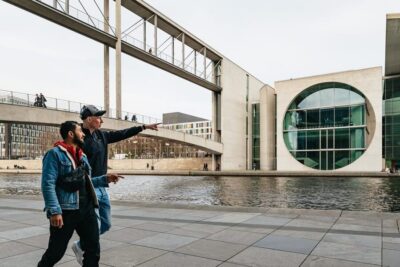
Reichstag, Dome and Government District Guided Tour
Read our review →
1-Hour City Tour by Boat with Guaranteed Seating
Read our review →
Government District around the Reichstag Guided Tour
Read our review →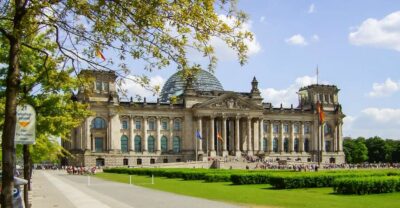
Reichstag, Plenary Chamber, Cupola & Government Tour
Read our review →