
Reviewed · JAPAN
Premiumstadtführung (historische Altstadt und Schlossberg)
Quedlinburg has a way of feeling like a living museum, and this UNESCO focused walking tour makes it easy to connect the dots in just 2 hours. I love how the route threads 1,100 years of history through real streets, squares, and landmark buildings, and you also pick up stories tied to famous figures from Quedlinburg that help the town make sense. The main thing to watch is the footing: expect cobblestones plus a steeper section on the Schlossberg.
I also like that the tour starts at the practical place you want to be, right by the Quedlinburg city information on the Quedlinburger Marktplatz. You get a live German guide, and people seem to value that the pacing keeps room for questions, not just a monologue.
One more consideration: because it runs in rain or sunshine, your plan should include weather-appropriate clothing. If conditions are slippery on the Schlossberg, the guide may change how things run for safety.
Key highlights worth showing up for
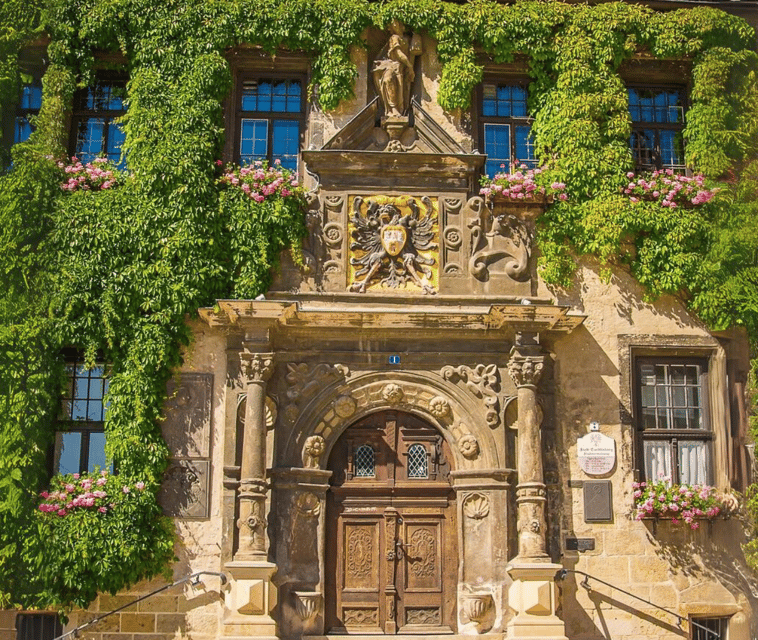
- UNESCO World Heritage Site right at walking level, not something you only admire from far away
- Schlossberg viewpoints and buildings that give the town its dramatic “why here?” context
- Half-timbered architecture in multiple locations, so you can actually compare styles
- Iconic stops like the town hall and key churches, which anchor the story
- Quedlinburg personalities connected to the places you pass, including Klopstock-Haus
- Kids free up to age 16, making this one of the better value history activities in town
Quedlinburg’s UNESCO core, and why the Schlossberg matters
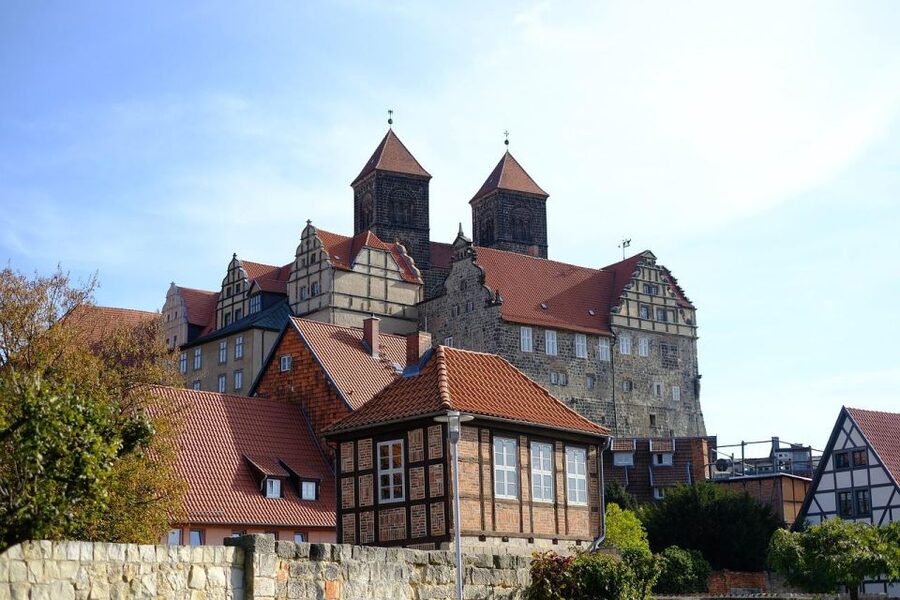
If you’ve ever stood in a historic German town and thought, OK, but where do I start, this tour answers that. Quedlinburg’s historic center is a UNESCO World Heritage Site, and the experience is built for first-timers. Instead of throwing dates at you, the guide points out the main landmarks and the street patterns that hold the town together.
The big win is how quickly you see the shape of the place. In about two hours, you move from civic Quedlinburg to church Quedlinburg, then up to the Schlossberg, where the town’s power and pride show up in stone, views, and the feel of the hill itself.
And yes, half-timbered houses are part of the payoff. You do not just see one pretty facade. You walk past several examples through different neighborhoods, which makes it easier to notice details and not just “it’s old.”
More to plan into a Quedlinburg stay:
- Night Watchman Tour through Quedlinburg
★ 4.5 · 1,040 reviews - Quedlinburg: Guided City Highlights Walking Tour
★ 4.5 · 353 reviews - Quedlinburg: Historical Old Town Evening Walking Tour
★ 4.5 · 148 reviews
Where the tour starts at Quedlinburger Marktplatz
The meeting point is right by the Quedlinburg city information on the Quedlinburger Marktplatz. Look for the green sign, arrive at your agreed time, and have your ticket ready to show your city guide.
This matters more than you might think. Walking tours succeed or fail on the first five minutes. Starting at a central information point helps you orient yourself quickly, then you’re off on a route that stays easy to follow on foot.
The tour is guided live in German. If you are not fluent, you can still enjoy it, but come prepared with a translation app or plan to catch the main takeaways through context and key terms.
Old town stops: town hall, St. Benedikti, Schuhhof, and the named streets
The tour’s first phase focuses on Quedlinburg’s old town fabric, beginning with the town hall and then moving through landmark religious and street-level spots.
The town hall stop is a smart starting anchor. Even without getting lost in specifics, it helps you understand the town as a civic community, not just a collection of old buildings. It’s the kind of place that sets a tone for everything else you see: Quedlinburg was not only church-centered, it was also governed and organized.
Next you’ll visit St. Benedikti, the market church. A market church makes practical sense. It ties together daily life, public gathering, and local identity. You’ll also pass Schuhhof and Hölle. These may sound like just street names, but they give you something valuable: a map in your head. After the tour, you’ll be able to point to where you were, instead of only remembering the overall “pretty old town” feeling.
Then the route includes Blasii Church and stops that connect the religious landmarks to the broader town story. This is where the guide’s explanations become the glue. The buildings are the visuals. The guide gives you the logic for why these places sit where they do.
Tip for enjoying the old lanes
Go slow through the narrower passages. Cobblestones can make you rush without meaning to. If you keep a steady pace, you’ll have time to look up and spot details in the timbered facades as the route bends and opens into small spaces.
The Half-Welfare Museum and why “small stops” often hit hardest
One of the included stops is the Half-Welfare Museum. Museums can be hit or miss when you do them on a tight schedule, but this one fits the tour because it supports the human side of the town story.
When you walk through Quedlinburg’s historic center, it’s easy to treat it like a backdrop for photos. A stop like this helps you remember that medieval towns had systems for social support and care, not just trade and architecture. It adds texture to what you’ve already been seeing in church and civic buildings.
The museum stop also works as a reset during a walking tour. After a couple of street segments and church exteriors, you get a change of pace that can make the rest of the climb feel more manageable.
Schlossberg tour: Klopstock-Haus, Lyonel-Feininger, Schlossgarten, and Stiftskirche St. Servatii
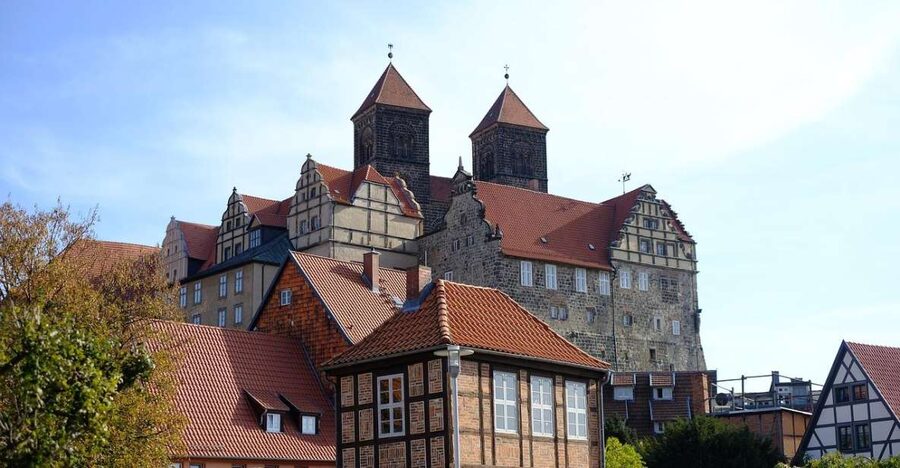
Then comes the part that makes the tour feel like more than a flat stroll: the Schlossberg segment. This is the steeper section, and the guide includes a route through key Schlossberg-area sites.
Two stops you should know by name are Klopstock-Haus and the Museum Lyonel-Feininger. Even if you do not already know these names, they matter because they link the hill and its institutions to specific personalities connected to Quedlinburg. That helps your brain store the place as a story, not only a view.
After that you’ll move through the Schlossgarten area and then to Stiftskirche St. Servatii on the Schlossberg.
Important detail: the tour does not include the church interior. You’ll see the church as part of the outdoor route and the big picture, but if you specifically want to go inside, plan that separately.
What makes the Schlossberg portion worth it
This is where you feel the town’s hierarchy. Up on the hill, the route stops being only about charming facades. You get scale. You get perspective. You get the sense of why certain buildings were placed where they were, and why Quedlinburg looks the way it does from the right angles.
Safety note for shoes
Because the tour includes a steeper section on cobblestones, wear shoes with grip. In winter especially, the Schlossberg can be slick, and there is at least one example where the tour was adjusted because conditions were too slippery. The practical takeaway: if you book during snowy or icy weather, dress for traction and consider a flexible plan.
Half-timbered art: what you should actually look for
Half-timbered buildings are the star feature people expect in Quedlinburg, but this tour makes them easier to appreciate because you see them in different contexts.
As you walk, look at three simple things:
- Timber framing patterns: The shape and thickness of the beams can vary by building and era.
- The way facades face the street: Some houses feel built for the sidewalk and daily life, others look more staged.
- How the buildings repeat and then change: Repetition is part of what makes historic districts feel coherent, but the differences are what make it interesting.
When the guide connects the half-timbered details to the places on the route, the architecture becomes more than a pretty backdrop. It turns into evidence.
And that is where the tour earns its price.
Value and price: is $10 for 2 hours a fair deal?
At about $10 per person for a 2-hour guided walk, this tour is priced like a practical local history option. The value comes from three things.
First, it is not only a quick highlights loop. You cover a cluster of major sites in old town and then add the Schlossberg area, which means you get both street-level charm and the bigger viewpoint context.
Second, the guide also gives culinary hotspots and recommendations. Even if you already know where you want to eat, a guide tip can save time, especially when you arrive in a slower season.
Third, families get a strong deal. It is free for children and adolescents up to 16 years, which makes it easier to justify a paid activity when you are traveling with kids.
The one downside is not the price. It’s the timing risk in bad weather or icy conditions on the slope. If you are visiting during peak winter and you hate uncertainty, plan your day so you have a backup walking plan ready.
Weather runs the show, so plan like a local
This tour runs regardless of weather, rain or sunshine. That’s common for walking tours in northern Germany, and it means you should treat the forecast as a clothing decision, not a cancellation decision.
Still, be smart. Cobblestones plus rain means slick patches. Rain also makes it harder to see details if you are rushing to keep dry. Keep your eyes up, go slower on turns, and bring a rain layer you can move in.
For winter trips, be extra cautious on the Schlossberg. Based on an experience reported with this exact tour style, slippery conditions can lead to refunds or schedule adjustments. Your job is simple: wear grippy shoes and keep your expectations realistic.
Language, group pace, and when you will feel most comfortable
The guide is German. That will shape how you experience the tour.
If you speak some German, you’ll catch a lot more. If you do not, you can still get value from:
- visible landmarks (town hall, churches, museum stop)
- route names (Schuhhof, Hölle, Schlossgarten)
- the guide’s pacing and the chance to ask questions
Group size is not listed, but one thing stands out from the overall tone of the tour: it feels designed for conversation, not just passive listening. You should feel comfortable asking what something means, especially at the stops that are easy to recognize like the church exteriors and the hill landmarks.
Who should book this tour, and who might choose another plan
You should book this tour if you want a structured way to see Quedlinburg without wasting half a day guessing where to go. It’s also a strong fit if you like history that connects buildings to people and place names.
You’ll especially enjoy it if you:
- love half-timbered architecture and want to compare examples
- want a short, high-impact walk that covers civic and religious landmarks
- are visiting as a couple or family, with kids under 16
You might want a different plan if:
- you have trouble walking on cobblestones or on steeper slopes
- you dislike any chance of schedule changes due to winter slipperiness
- you expect the church interiors to be included, because St. Servatii is not included inside
Should you book Premiumstadtführung: historical old town and Schlossberg?
If you like guided structure and want to get from landmark to landmark in a tight schedule, I think this is a great buy. The combination of old town highlights, the Schlossberg climb, multiple church stops, and a museum visit gives you variety without turning it into an all-day commitment.
Book it if your goal is to leave with a clearer mental map of Quedlinburg, plus a few named places you can still point out later. Skip or pair it with flexibility if you are traveling with mobility limits or if you are visiting in peak icy conditions and need zero uncertainty.
Overall, at $10 for 2 hours, with kids free up to 16 and a live guide in the middle of UNESCO territory, this is exactly the kind of tour that pays off when you want to spend less time planning and more time actually seeing the town.
FAQ
How long is the Premiumstadtführung tour?
The tour lasts 2 hours.
Where do I meet the guide for the tour?
Meet at Quedlinburg city information directly on Quedlinburger Marktplatz. There is a green sign you can look for.
What is included in the tour?
The tour includes the historical old town route with stops including the town hall, market church of St. Benedikti, Schuhhof, Hölle, Blasii Church, and Half-Welfare Museum, plus a Schlossberg route including Klopstock-Haus, Museum Lyonel-Feininger, Schlossgarten, and Stiftskirche St. Servatii. It also includes culinary hotspots and recommendations.
Is the inside of St. Servatii included?
No. The tour does not include entering St. Servatii collegiate church inside.
Is the tour weather dependent?
No. The tour takes place regardless of weather in rain or sunshine.
What language is the tour guide?
The tour has a live guide in German.
Is there a refund if I cancel?
Yes. You can cancel up to 24 hours in advance for a full refund.
Fresh reviews out of Quedlinburg
- Quedlinburg: Historical Old Town Evening Walking Tour★ 4.5 · 148 reviews
- Quedlinburg: Guided City Highlights Walking Tour★ 4.5 · 353 reviews
- Night Watchman Tour through Quedlinburg★ 4.5 · 1,040 reviews