

Reviewed · CITY TOURS
Leipzig City Tour 2.0: entertaining on the go mobile projections
Leipzig City Tour 2.0 is interesting because it mixes a normal guided walk with mobile projections that explain what you’re seeing as you move. You don’t just hear facts in the abstract. You watch the city’s past and present overlap in real time, right on the street.
I love two things here. First, the multimedia projections make big moments feel concrete, from Leipzig’s transportation roots to the story behind 1989. Second, the experience uses modern headsets, so you can turn your head, point your camera, and not lose the narration.
One thing to think about: if you strongly prefer fully quiet sightseeing or you hate wearing any kind of headset, this format may feel like a lot. The tour is designed around listening plus viewing, not silence.
City Tour 2.0 at a Glance
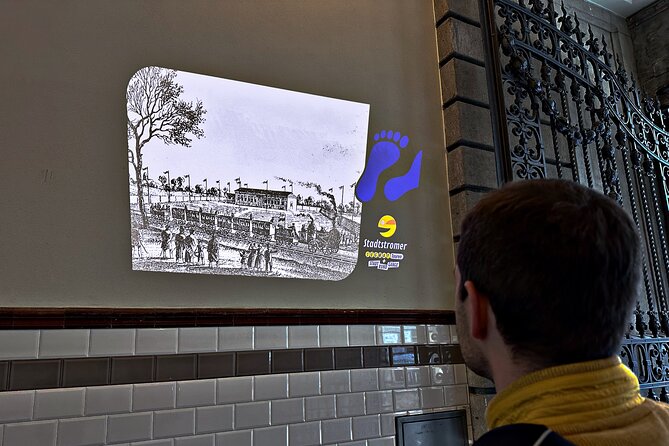
Mobile projections that attach stories to specific places, so the city makes sense as you walk.
Modern headsets for comfortable listening and easy photo moments.
A tight 90 minutes that covers major highlights without dragging.
No church stop for the 1989 story, so the revolution angle stays moving and practical.
Stops tied to everyday Leipzig such as passages, courtyards, and places where you can still grab a snack.
Maximum group size of 30, which keeps it lively and manageable.
Why Leipzig City Tour 2.0 Feels Different on the Street
This tour works because it’s not trying to be a museum show you stand in line for. It’s built for the sidewalk. You’re walking Leipzig city centre, and the narration is paired with visual projections that help you instantly connect the spoken details to the exact corner, square, or building in front of you.
That matters in Leipzig. The city has layers. There are older streets and passages, signs of commerce and civic life, and then the post-war era and the German history of the 20th century. If you only read a sign, you might miss how those layers connect. If you only listen to a guide, you might lose the location. This tour tries to fuse the two.
The best part for me is pacing. You don’t sit for long, and you don’t get shuffled through a checklist. You move. You look. Then the story lands.
More City Tours in Leipzig
- Leipzig: City History Canal Sightseeing Tour on a Motorboat
★ 4.7 · 7,671 reviews - Combo Tour in Leipzig: Guided City Tour & City Sightseeing
★ 4.7 · 2,317 reviews - Leipzig: 90-Minute Trabi City Tour
★ 4.9 · 728 reviews
Timing, Route Pace, and Where You Meet
The tour lasts about 1 hour 30 minutes. That length is a sweet spot. It’s long enough to cover meaningful ground and still short enough to keep your legs fresh. In practical terms, you can fit it into a half-day plan without needing a nap afterward.
You meet at Richard-Wagner-Straße 13, 04109 Leipzig and the tour ends back near the same point. That back-to-start layout is helpful if you’re planning dinner, hopping on public transport, or just want a predictable finish.
The group is capped at 30 people, which usually means you’re not stuck behind a wall of shoulders. Also, the tour is near public transportation, so getting there is straightforward.
One small detail that makes a difference: you get a mobile ticket, so you’ll want your phone charged enough to check in and keep the ticket handy.
The First Stops: From Railway Origins to the City’s Passages
The tour starts with a setup moment, where you’re shown Leipzig in a unique way. It’s the kind of opening that helps you get your bearings fast. You’re not thrown into trivia right away. You get an anchor for what the tour will do: connect story to place.
Then you head to a spot tied to the start of the first German long-distance railway. Even if you don’t consider yourself a transport-history person, this stop pays off. Railway history is city history. It helps explain why Leipzig grew into an important hub and why commerce, movement, and communication mattered here.
Next comes a set of city-centre details that many visitors walk past without noticing: the passages and courtyards that shape Leipzig’s look. This is the part where the projections and narration work together nicely. Passages are easy to underestimate until someone points out what they do for daily life, foot traffic, and the feel of the city. You get a sense of the architecture and the function at the same time.
Practical tip: this portion is where you’ll likely want to slow down. If you’re racing for photos, you might trip over the flow. Let the guide talk first, then take pictures while you still understand what you’re photographing.
The 1989 Story Without a Church Stop
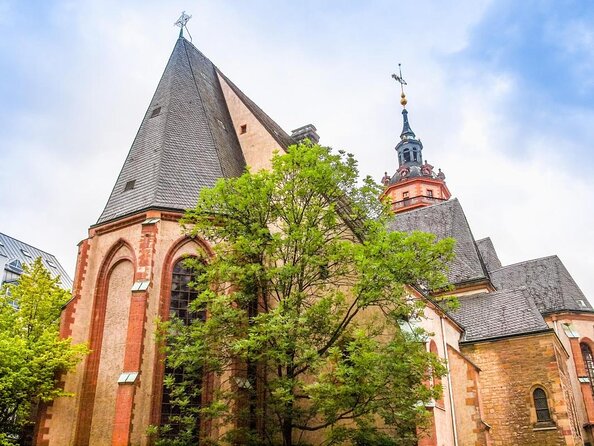
One of the tour’s most pointed decisions is how it handles the origin of the peaceful revolution in 1989. You’re told this story, and you get it without stopping at a church. That keeps the tour moving and helps avoid the feeling that you’re being routed through a single type of historic site.
This matters because 1989 is not just an emotional topic. It’s also about space, gathering, and how public life shifts. Hearing it in an outdoor city setting helps you connect the idea of people and momentum with real streets and squares.
The projections also help here. Visuals can do something spoken words alone often can’t: they can show cause and effect across time. You’re not just hearing about an era. You’re seeing how the city’s physical setting relates to that change.
If you’re the type who likes history that explains how normal city life changed, this stop will land well.
Weigh these Leipzig picks against each other
- Leipzig: 1.5-Hour Public Tour with Night Watchman Bremme
★ 4.6 · 3,116 reviews - Leipzig: 1.5-Hour Historical Walking Tour in German
★ 4.7 · 2,217 reviews - Leipzig: 2-Hour Guided Walking Tour in German
★ 4.8 · 1,612 reviews - Leipzig: 13-Stop Hop-on/Hop-off Bus Ticket
★ 4.6 · 1,468 reviews
A Column Question, Leipzig’s First Skyscraper, and a Surprise Sculpture
After the revolution story, the tour gets into smaller but memorable mysteries.
You’ll hear why a column is there. That type of stop might sound minor when you first read it, but these are often the best kind of guide moments. A column in a square can feel decorative until someone tells you the logic behind it. You start looking at monuments differently, asking what they were meant to communicate at the time.
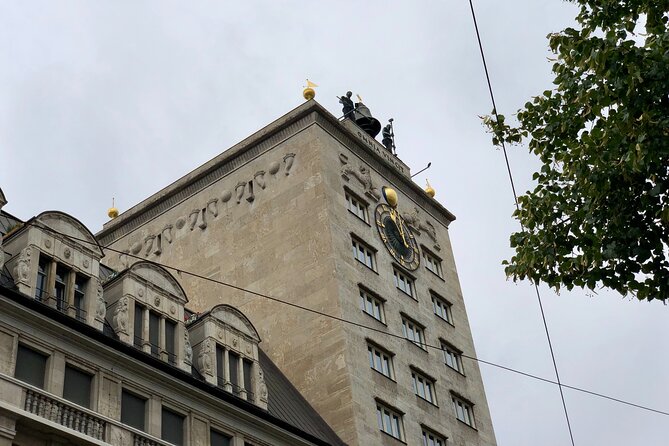
Then you get Leipzig’s first skyscraper, and the guide explains why it still feels special today. Again, this is one of those places where projections can turn a building into a timeline. You aren’t just standing at a tall structure. You’re learning what it represented and how it fits into the city’s evolution.
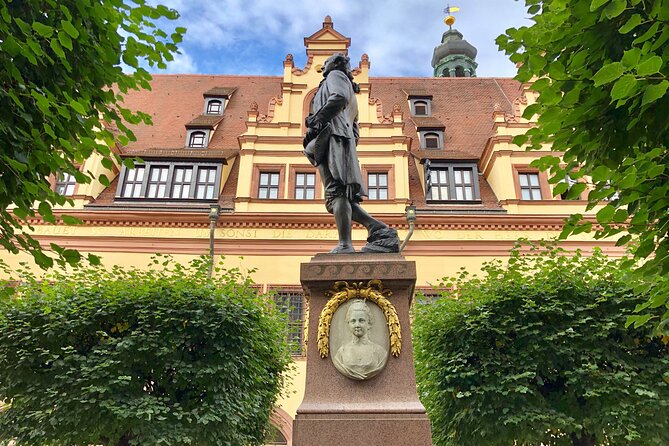
One more stop sticks because of how it’s framed: a sculpture that seems astonishing that it was erected during the era of the GDR. The tour doesn’t treat this as a random art detour. It uses it to show how creative ambition and public form can survive in tight political times. Even if you’re not an art expert, the story gives the sculpture a reason to matter.
Augustusplatz and Marktplatz: More Than Just a Connection
You then move into the area around Augustusplatz and Marktplatz, where the tour treats a route link between them as more than just a path.
You’ll learn how this connection matters historically and how it functions now. For you, this is where the city starts to feel like a system instead of a collection of landmarks. Leipzig doesn’t just have one famous sight. It has lines between important places, and people travel those lines constantly.
The tour also points out the largest inner-city square in Germany. If you’ve only seen big squares in capital cities, this one is a good reality check. It shows how Leipzig’s scale and planning shape everyday movement, not just sightseeing.
Take a minute here, step back, and look around before you rush to your next photo. The narrating plus projection setup works best when you let your eyes adjust. The space is big enough that you might otherwise miss what the guide is directing you to notice.
Passenger Systems, Hansa-Hof, and the Snack Moment
Some tours focus only on grand buildings. This one nods to how Leipzig runs day-to-day.
You’ll get a stop tied to the Leipzig Passenger System today, connected to Hansa-Hof. That’s a practical theme. It reminds you that public life continues, and modern transit is part of the city’s ongoing story. It’s not a separate chapter.
There’s also a moment where you’re told you can still enjoy a snack here. I like these tiny, real-life cues because they make the experience feel usable. You’re not only learning. You’re being pointed toward what a place is good for right now.
In my view, these kinds of stops are where you get the most value after the tour ends. You leave knowing not just what happened in Leipzig, but where you can realistically pause, eat, and keep exploring.
Stock Market, Old Town Hall, and Hidden Marketplace Stories
As the tour continues, you shift from civic space to commerce space.
In a city of commerce, the stock market was important, and the tour explains why. It’s easy to assume commerce history lives only in big museums or textbooks. Here, you get it placed into a walkable context. You can almost feel how trading and meeting places shaped the street layout.
Right in front of the Old Town Hall, the tour talks about how the marketplace has hidden lots. That phrasing is a hint that something is not obvious just by glancing around. It’s the kind of detail that makes you look down, around, and think about what lies under the surface.
Then you get another practical twist: a stop where you learn the area is built on old foundations, and you can see that too. When a guide points out how the city reuses or sits on older layers, the whole experience becomes more meaningful. Leipzig isn’t a clean slate. It’s a stack of different eras you can still read if you know what to look for.
The Finish: Market Square to the Tin Can
Near the end, the tour connects the market square with the tin can and then returns you to the meeting point.
Even without a long pause for a big event, this last segment matters. It ties together the themes you’ve heard earlier: how Leipzig’s movement lines connect major civic and commercial places, and how odd-looking landmarks often have stories behind them.
The finish back near where you started is also a big convenience win. You’re not forced into a complicated plan for getting back. You can keep walking on your own, take transit, or eat without worrying about where the tour drops you.
What I’d Expect You to Like Most
If you like guided storytelling that points to real details in real locations, you’ll probably enjoy this format a lot. The combination of headsets and mobile projections keeps you from drifting into generic talking points.
Also, the human factor is real. One guide, Mario Jung, has a reputation for a warm welcome and friendly explanations. In one case, he also gave extra info related to Segway use, which tells me the guide pays attention to what people actually want to do in Leipzig, not only what they came for.
The other big plus is the time. 90 minutes can feel like a sprint, but the way the stops are arranged keeps the walk feeling purposeful instead of chaotic.
Price and Value: Is $18.97 Worth It?
For $18.97 per person, you’re paying for three things at once: a guided route, headsets, and the tech layer that makes projections possible.
If you were just paying for a standard walking tour, you might think it’s average pricing. But the projections are not decoration. They’re what lets the guide explain multiple time periods without you needing to leave the street. You get a lot of story density for a relatively short amount of walking time.
So I’d treat it as good value if you want your history explained in context, not in a classroom. If you only want a quick look at landmarks and you don’t care about interpretive storytelling or tech-supported visuals, you could find cheaper options. But if you’re the kind of visitor who likes to understand what you’re standing in front of, this price is easier to justify.
Who This Tour Fits Best
This works well for:
First-time visitors who want a strong orientation of Leipzig city centre.
People who like history but get bored with long lectures.
Travelers who enjoy photos and want to keep looking around without removing gear.
Anyone who appreciates the connection between past events and how the city functions today.
It might not be the best fit if you:
Want a fully self-guided stroll with zero electronics.
Prefer deep research style tours that last several hours.
- Have sensory issues that make headsets uncomfortable.
Should You Book Leipzig City Tour 2.0?
I’d book it if you want Leipzig to feel understandable, fast. The mix of mobile projections, headsets, and a tight route around major squares and key stories is exactly the kind of setup that helps you leave with more than a few photos.
Book it sooner in your trip if you can. The tour gives you a mental map of themes, so the city keeps paying you back after you’re done. If you’re short on time, this is a strong use of it.
If you’re not sure, pick based on one question: do you want your sightseeing to come with guided explanations tied to what you’re seeing right now? If yes, Leipzig City Tour 2.0 is a solid choice.
FAQ
How long is Leipzig City Tour 2.0?
It’s about 1 hour 30 minutes.
How much does the tour cost?
The price is $18.97 per person.
Where does the tour start?
The tour starts at Richard-Wagner-Straße 13, 04109 Leipzig, Germany, and it ends back at the meeting point.
Is there a mobile ticket?
Yes, the tour uses a mobile ticket.
What is the maximum group size?
The tour has a maximum of 30 travelers.
Do I need to book through a provider that offers more than walking tours?
The provider offers tours that can be done on foot, plus other options like Segway and Scuddy, and your specific experience here includes the mobile projections format.
Is the tour near public transportation?
Yes, it’s near public transportation.
Do you visit a church for the 1989 part?
No, the 1989 story is covered without going to a church.
Can service animals join?
Yes, service animals are allowed.
What is the cancellation window?
You can cancel up to 24 hours in advance for a full refund.
Fresh reviews out of Leipzig
- Private guided tour of the historic south cemetery in Leipzig★ 5.0 · 10 reviews
- Leipzig exclusive : Guided bike tour for a private group★ 5.0 · 11 reviews
- Leipziger Westen originell entdecken auf eigene Faust★ 4.7 · 11 reviews
- Wittenberg Private Walking Tour With A Professional Guide★ 5.0 · 12 reviews
- Leipzig: Private Walking Tour with a Professional Guide★ 4.6 · 12 reviews
- Mulled wine ride in the Leipzig New Zealand★ 4.6 · 12 reviews
- City tour on foot, by S-Bahn and tram★ 4.5 · 12 reviews
- Leipzig: Segway tour, driving fun along sights with headsets★ 5.0 · 13 reviews
City Tours, compared.

1-Hour City Tour by Boat with Guaranteed Seating
Read our review →
City History Canal Sightseeing Tour on a Motorboat
Read our review →

Browse the lists this tour appears in