
Reviewed · HEIDELBERG TOURS
Heidelberg: The University in the Old Town
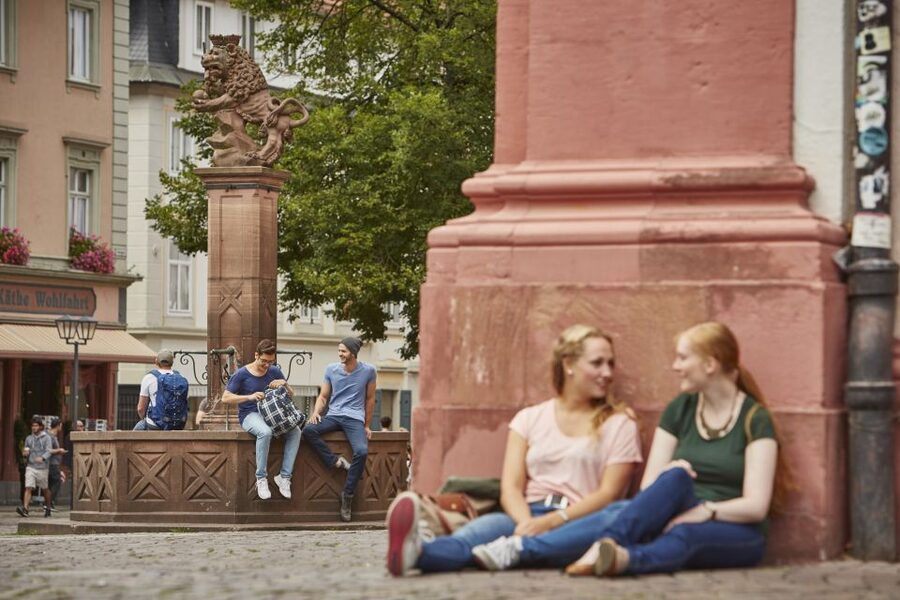
This Heidelberg walking tour is interesting because it explains how a medieval university shaped student life in real, sometimes uncomfortable, ways. You’ll move through the Old Town with the university at the center, not just buildings for photos.
I love the way the tour connects ideas to places. The Karzer student prison makes the university feel human and specific, and the Codex Manesse at the library gives you a rare link to medieval music culture.
One possible drawback: the tour is live and guided in German, and parts of the walk happen outdoors, so you may need to focus a bit more if your listening is rusty or the street noise is up.
Key highlights you will care about
- Karzer students’ prison: see how discipline worked for minor offenses (1778 to 1914)
- Old Auditorium (Alte Aula): learn what this space meant for teaching and student culture
- St. Peter’s Church: step into the oldest church in Heidelberg’s Old Town
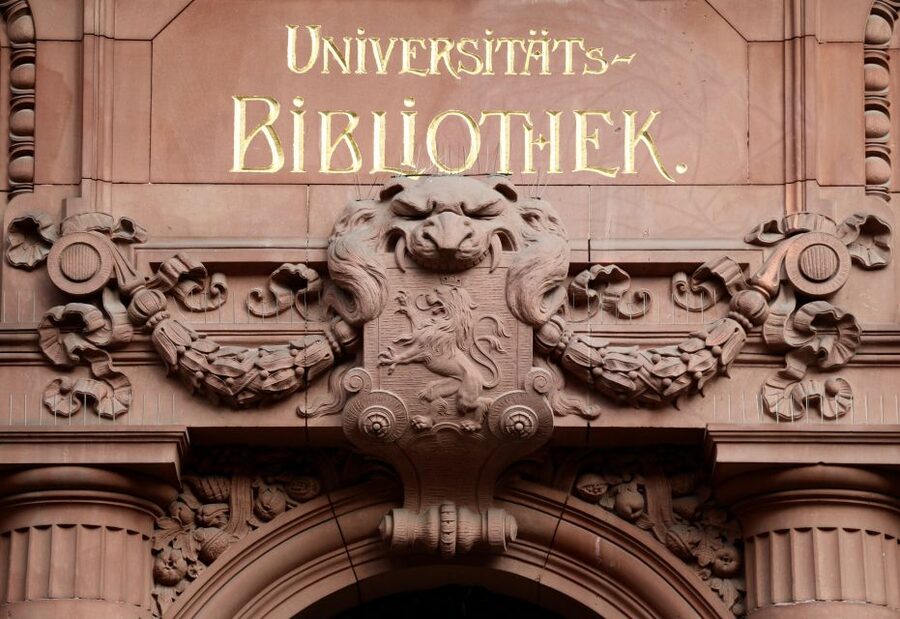
- University Library stop: get context for the Codex Manesse, famed for medieval song tradition
- Guides can vary: one guide (Hans-Jörg) is known for mixing humor with serious facts, while others may speak more quietly outdoors
Heidelberg University’s old-street story, not just a museum walk
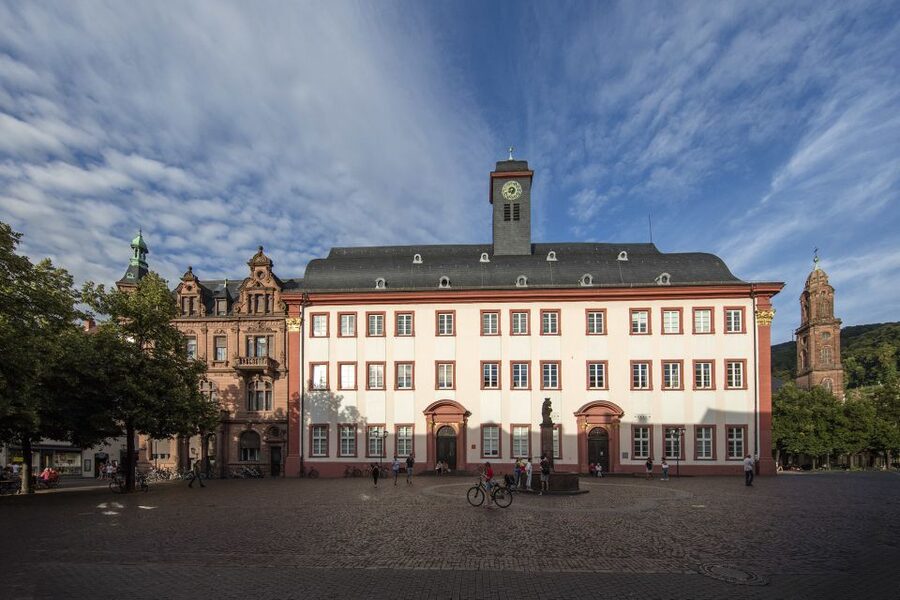
Heidelberg’s university story is not abstract. It has street corners, chapel walls, and an old auditorium where real students once gathered. The tour you’re considering focuses on the Ruperto Carola (founded 1386), described as the oldest university in Germany, and you feel that age in the route more than in lectures.
What I like most is that the experience is built around student life, not just academic milestones. You’re shown how learning and rules collided. That is where the Karzer fits in. It’s easy to tour grand institutions, hard to tour the parts that make you think, what was it like to be a student back then?
You’ll also get a clean overview of how Heidelberg’s Old Town grew around the university. Even if you know little about German history, the tour gives you enough context to connect the dots without turning into a textbook.
Weigh these Heidelberg picks against each other
- Heidelberg: Neckar River Sightseeing Cruise with a Drink
★ 4.2 · 1,974 reviews - Heidelberg: Walking Tour of the Old Town
★ 4.6 · 1,742 reviews - Heidelberg: Night Watchman Historic Adventure Tour
★ 4.7 · 1,186 reviews
Meeting at Neckarmünzplatz and pacing through 1.5 hours
The tour meets at Neckarmünzplatz, in front of the tourist information office, Obere Neckarstraße 33, 69117 Heidelberg. This matters because it places you at the edge of the Old Town core, right where you can start walking immediately and keep your day efficient.
It lasts about 1.5 hours, which is a sweet spot. Long enough to explain the meaning of each stop, short enough that you won’t feel trapped indoors or rushed through history. You’ll be walking between key university and church locations, so wear shoes that handle uneven Old Town surfaces.
Because you’ll be outside for portions of the route, treat this as a “listen closely” experience. One helpful clue from real feedback: when the group is small, the guide’s delivery can still be hard to catch if they speak softly and the environment is noisy. If you care about hearing every detail, pick a spot near the front and keep an eye on the guide’s instructions for pauses.
University Library and the Codex Manesse: why medieval song matters
The walking route takes you to the university’s library, where the Codex Manesse is associated with the collection of medieval songs. Even if you’ve never heard of it, you’ll leave understanding why it’s famous and why it belongs in a university setting.
Here’s the practical value: the Codex Manesse helps you see medieval culture as something organized, copied, and studied, not just vague “old times.” You’re not only seeing a building. You’re getting the context of what kind of knowledge universities preserved.
I also like that the library stop is presented as part of a student-centered campus story. It’s easy for visitors to think of universities as modern. This stop quietly shifts that idea by showing that universities have long been places where texts, music, and scholarship were collected and protected.
One note for your expectations: the tour description emphasizes learning and context. So plan for interpretation and explanation, not a long museum-style viewing of every object. You’ll get the big picture, then move on.
St. Peter’s Church in the Old Town: the anchor point for the walk
After the library, the tour crosses the road to St. Peter’s Church, described as the oldest church in Heidelberg’s Old Town. This is a smart sequencing choice, because it reminds you that the university did not grow in isolation.
Religious buildings like this often functioned as community anchors, and older churches are usually tied to the earliest layers of a city’s identity. Even if your focus is the university, stopping here helps you understand the backdrop students studied within.
What you’ll likely appreciate most is the contrast. The university library links you to scholarship and written culture. St. Peter’s Church brings in an architectural and cultural continuity that predates the “student prison” story by centuries.
If you enjoy walking tours that connect everyday city geography to major institutions, this stop does real work. It gives the route a center of gravity so the university buildings don’t feel scattered.
Another way to spend a Heidelberg afternoon:
- Heidelberg: Riverboat Tour to Neckarsteinach with Drinks
★ 4.6 · 1,069 reviews - Heidelberg: On the trail of the Night Watchmen
★ 4.6 · 546 reviews - Heidelberg: Scary Tour with Hangman’s Daughter
★ 4.6 · 533 reviews - Heidelberg: KÖRPERWELTEN Museum Entry Ticket
★ 4.6 · 401 reviews
The Alte Aula Old Auditorium: where teaching became tradition
The tour includes a stop at the Alte Aula, also called the Old Auditorium. This is one of those places where the building shape tells part of the story even before the guide begins speaking.
Think of an old auditorium as a machine for collective learning. It’s where groups gathered, where ideas were delivered in a shared space, and where the university experience became more than private reading. In other words, it’s where a campus identity starts to form.
What makes this stop valuable on this specific tour is that it sits between the library and the student-life elements. So the auditorium isn’t treated as a random “pretty room.” You’re being shown how the university functioned day to day, and how public instruction connected to private discipline and student routines.
If you’re the type who likes buildings that have clear function, you’ll appreciate this one. Even without a lot of art history knowledge, the logic of the space helps you follow the story.
The Karzer student prison: minor offenses and major consequences
The Karzer is the headline stop, and for good reason. This historic students’ prison is part of Heidelberg University’s story, and between 1778 and 1914 students were punished there for trivial offenses.
That phrase is the emotional spark of the tour. It forces you to rethink what “trivial” meant in a student community where rules and reputation carried real weight. The Karzer makes the university feel like a living system, not a distant monument.
You’ll learn how the Karzer fit into discipline and campus authority, and you’ll also pick up why this matters for modern visitors. It’s a window into how institutions handled behavior and maintained order, long before today’s ideas about student life and rights took shape.
If you like history that has consequences and not just dates, you’ll enjoy this stop most. It’s also a good check for your own curiosity: if stories about how people really lived in the past grab you, the Karzer will land.
A possible consideration: because this stop deals with punishment, it can feel more intense than purely architectural tours. If you prefer light city walking, it might be the emotional high point rather than the whole vibe.
Getting the most from a German live guide
This tour is run by a live tour guide in German. That’s great if you’re comfortable enough to follow along, and it’s still manageable if you’re not fluent. You don’t need perfect language skills to track the main story, but you should be prepared to work a little.
One standout from real-world feedback is that a guide named Hans-Jörg led with humor alongside serious facts. That style can help you remember details, because jokes and timing make the information stick.
At the same time, there’s a practical caution: outdoors plus a guide speaking relatively low can make every word harder to catch. If German is not your strong suit, do two things:
- Walk slightly closer and try to watch the guide’s mouth when they stop speaking.
- Accept that you might catch the gist even if you miss a few specifics, then let the places themselves do the rest of the work.
Also, the tour seems to work well in smaller groups. One experience described a group size of about eight, which usually helps you hear instructions and keeps the pace from turning into a shuffle.
Price and value, $23 for 1.5 hours with admissions
At about $23 per person for 1.5 hours, you’re paying for two things: a guided story and access that helps you reach places you might not prioritize on your own.
The tour is listed as including:
- Admission to university institutions
- A tour with a qualified tour guide
That combination is where the value comes from. Heidelberg’s Old Town is walkable, but the university specifics, the connections between stops, and the admission piece are what make a paid tour feel worth it. Without a guide, you can still visit the general area, but you may miss the meanings behind the Alte Aula and the Karzer’s student-prison context.
So the real question for you is simple: do you want interpretation and access packed into 90 minutes? If yes, the price is reasonable. If your travel style is more “wander and read signs,” you might feel less urgency to book.
Who this Heidelberg tour fits best
This experience fits best if you want a university tour that feels like a city story. It’s a strong match for:
- People who like student culture history, not just “founding year” trivia
- Visitors who enjoy walking tours with multiple meaningful stops in one compact route
- Anyone interested in how scholarship and everyday life intersected in historical Europe
It may not be ideal if you want a long, museum-style university deep dive or a route focused mainly on art and architecture without the student-discipline angle.
Language is another filter. Since the guide is in German, you’ll enjoy it more if you can follow spoken German at least loosely, or if you’re okay relying on context and key place names.
Should you book this tour?
I think you should book it if you want Heidelberg in one focused slice: the university from 1386 onward, anchored by St. Peter’s Church, explained through the Alte Aula, and made real by the Karzer student prison. At $23 for 1.5 hours with admissions, it’s a practical way to get meaning out of old buildings without spending half a day coordinating access.
I’d pause before booking if you need everything explained in English, or if being outdoors for parts of the walk will make listening difficult for you. In that case, you may prefer a different format or a language match.
If you do book, show up on time at Neckarmünzplatz, walk near the guide, and treat it like a story walk. You’ll come away with a sharper picture of Heidelberg University, not just a list of famous stops.
FAQ
Where does the Heidelberg University in the Old Town tour meet?
The meeting point is Neckarmünzplatz, in front of the tourist information office at Obere Neckarstraße 33, 69117 Heidelberg, Germany.
How long is the tour?
The tour duration is 1.5 hours.
How much does it cost?
The price is listed as $23 per person.
What are the main highlights of the tour?
The highlights include learning about the Karzer (historic students’ prison), seeing the Old Auditorium (Alte Aula), and visiting St. Peter’s Church.
What is included in the price?
The tour includes a tour with a qualified tour guide and admission to university institutions.
What is not included?
The tour does not include tip or meals.
What language is the tour guide?
The live tour guide is German.
Is there free cancellation?
Yes. You can cancel up to 24 hours in advance for a full refund.
Can I reserve without paying right away?
Yes. The booking option is Reserve now & pay later, so you can reserve a spot and pay nothing today.
Fresh reviews out of Heidelberg
- Romantic Heidelberg: Private Tour With Professional Guide★ 4.5 · 9 reviews
- Get Pfalzed – wine tour to unique wine region to taste Red wines★ 4.5 · 9 reviews
- Heidelberg Scavenger Hunt and Highlights Self Guided Audio Tour★ 4.0 · 9 reviews
- Black Forest Day Tour★ 5.0 · 10 reviews
- Virtual Tour of Heidelberg★ 5.0 · 11 reviews
- Heidelberg: Heidelberg Castle Garden & Outside Private Tour★ 4.9 · 18 reviews
- Heidelberg: Old Town Tour Including Castle Visit★ 4.9 · 23 reviews
- Heidelberg: 2-Hour Crime Tour with Costumed Guide★ 3.7 · 23 reviews
Heidelberg Tours, compared.


Night Watchman Historic Adventure Tour
Read our review →



On tour with a friend and his luxury van
Read our review →Browse the lists this tour appears in