
Reviewed · SPEICHERSTADT & HAFENCITY TOURS
Hamburg: City Tour by Bike with Elbphilharmonie
Hamburg is fun to see by bike because the city changes every few minutes, from water views to working port history to new architecture. I love the way this route strings together Alster panoramas and UNESCO Speicherstadt in one smooth ride, and I also like how the guide ties the details together so you know what you are actually looking at. The one real thing to watch is that Elbphilharmonie access can be restricted on major event days, so your photo-time near it depends on what is allowed.
You meet at the Fahrradstation of the University of Hamburg, then roll out from Rotherbaum through classic neighborhoods and back toward the docks and piers. The best part is the live guide, and in particular, Bernhard has gotten strong notes for being engaging and sharing lots of city context that makes the stops feel connected instead of random. With a 3.5-hour pace, it is a great sampler, but it is not a slow, lounge-around kind of tour.
Key Points Worth Knowing
- Full “old port to new port” storyline with Alster, Speicherstadt, and HafenCity in one loop
- Stop-and-go photo breaks at major viewpoints like Alster Lake and the Elbphilharmonie area
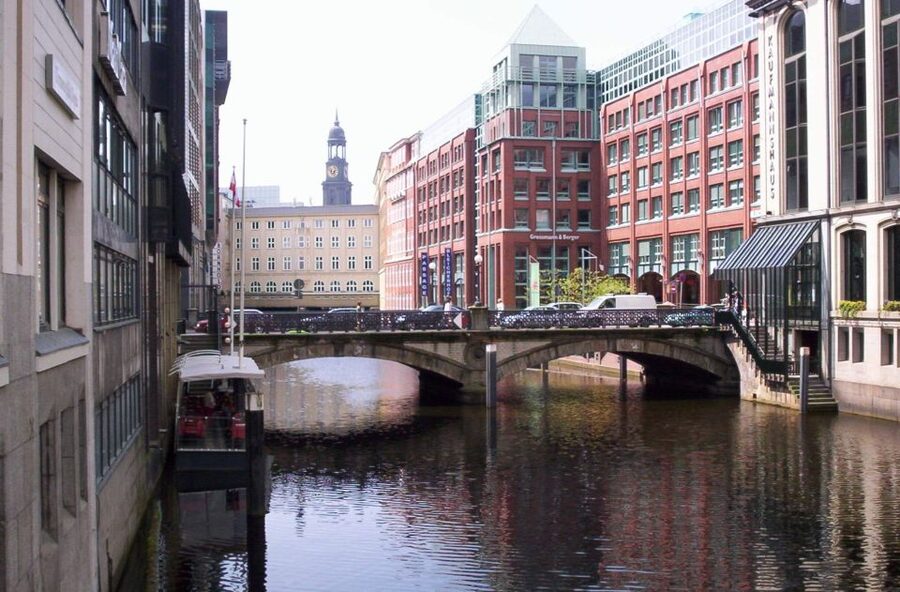
- Architecture details you can actually spot including brick warehouses in Speicherstadt sitting on oak piles
- A guide who explains what you are seeing (Bernhard is specifically praised for lots of interesting talk)
- You get real waterfront perspective from street level and from lower viewpoints near the flood protection system
- Ends back where you started, so you avoid a last-mile scramble
Price and Time: What You Get for $39
At $39 per person for about 3.5 hours, this bike tour is priced like a serious city highlight package, not just a casual ride. The value comes from three things: you get a live guide, a bicycle, and organized stops tied to the places most visitors only see from one angle.
The timing matters here. Hamburg is spread out, and on a bike you can cover a lot without feeling like you are stuck in traffic or waiting around. This tour’s structure also helps you avoid the most common mistake in big cities: wandering into the photogenic spots without understanding why they matter.
One more practical note: starting times can vary, so check availability for the departure options that fit your day. If you are trying to stack this with another museum visit, build in a little buffer, because the Elbphilharmonie area can be affected by events.
More Bike Tours in Hamburg
- Hamburg 3-Hour Bike Tour
★ 4.8 · 1,583 reviews - Guided Hamburg City Bike Tour
★ 5.0 · 642 reviews - Hamburg: Downtown, Alster & Creative Neighborhoods by Bike
★ 4.5 · 217 reviews
Getting Started at Rotherbaum: The Ride That Sets the Tone
You start at Schlüterstraße 11, meeting outside the Fahrradstation of the University of Hamburg. From the first stretch, the route is designed to get your bearings fast, with easy access to the water and the core “two Hamburgs” story, older maritime Hamburg and newer waterfront redevelopment.
Rotherbaum is a smart starting choice. You are close enough to the main sights to keep the riding time efficient, and the route naturally leads you toward both the Alster waterways and the port districts. If you like tours where the first 30 minutes already feel worthwhile, this one delivers.
Alster Lake to Binnenalster: Where the City Looks Like It Wants to Be Photographed
The tour rides along the Außenalster and into the Binnenalster. This is one of the best parts of Hamburg to see by bike because you get that mix of open water, promenades, and skyline views without needing to climb anything.
At Alster Lake you get a photo stop plus a guided segment. Then you reach the Binnenalster panorama, where you can see the old and new town together. That contrast is not just a pretty view. It’s the city’s personality in a single glance: Hamburg keeps its maritime identity while still upgrading its public spaces and architecture.
If you care about urban design, watch how the shorelines and waterways shape movement and sightlines. You are not just moving from one landmark to the next, you are learning how Hamburg organizes itself around water.
Through Gängeviertel and the Working-Class Story
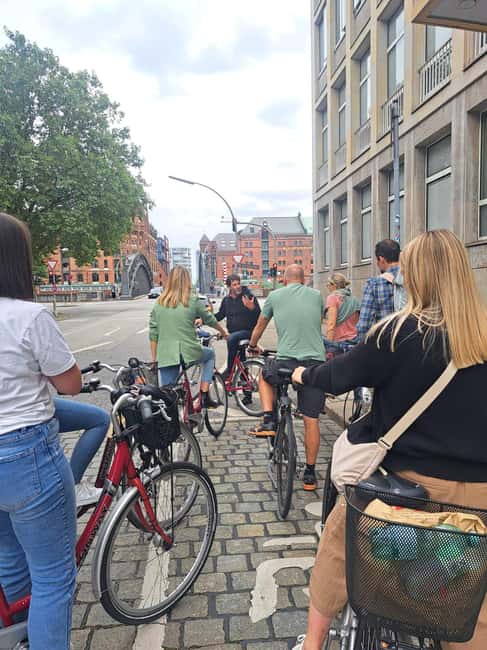
From the Alster, you roll into the Gängeviertel, a neighborhood tied to the preserved working-class character of an 18th-century area. Today, it is known for an art scene, but the tour points out the underlying roots, so you understand why this district feels different from the shopping streets and office areas.
One neat detail you will hear here is the memorial stone connected to the birthplace of Johannes Brahms. Even if you are not a classical-music superfan, it adds a human thread to the city. Hamburg is full of names you recognize, and the guide helps you place them in real locations instead of treating them like trivia.
This is also where a good bike guide makes the difference. Without the explanation, you might see a narrow side area and move on. With the commentary, it becomes part of the city’s long timeline.
More City Tours in Hamburg
- Hamburg: Hamburg City Card with Free Public Transportation
★ 4.5 · 2,004 reviews - Reeperbahn: Panik City Udo Lindenberg Multimedia Experience
★ 4.9 · 893 reviews - Hamburg: Hop-On Hop-Off Bus City Tour – Line F
★ 4.2 · 590 reviews - Hamburg: City Cruise on Alster Lake
★ 4.4 · 533 reviews
Neuer Wall and Townhall: The City Shows Its Modern Face
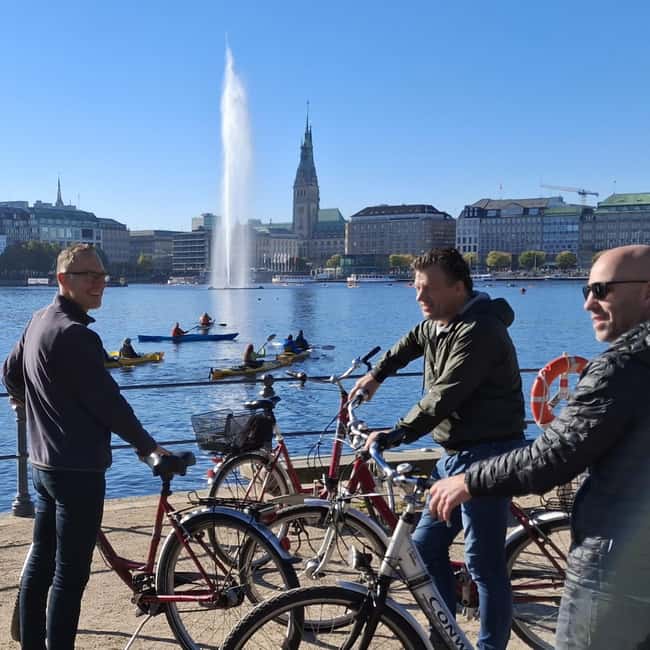
As you move through the inner urban areas, you pass through Neuer Wall, with passages and designer shops. This part of the ride gives you a different flavor from the maritime districts, more like the city’s commercial downtown rhythm.
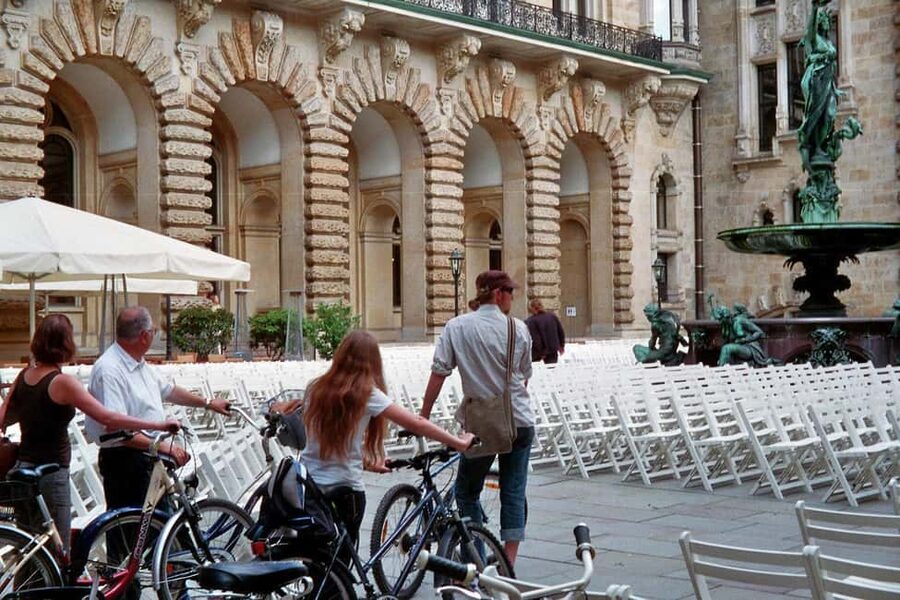
You also stop for photos and guidance at the Townhall of Hamburg. Seeing the Rathaus area on a bike works well because it keeps you close to the scale of the buildings. You get to look around from street level and soak up how the civic center sits within everyday city motion.
A small practical tip for this section: if you want the best angles for photos, use the guided photo stops instead of trying to chase the perfect view on your own. The stops are timed to where you can safely park the bike and look around.
Fleet Island and the 1842 Fire Thread
Next comes an important transition: you cross toward Fleet-Island, described as a former harbor area. The tour connects this section to the great fire of 1842, then carries you forward to what you see today.
This is more than a dramatic footnote. It helps you understand why certain districts feel built in layers. Cities rebuild after disaster, and the design choices that follow become part of the character. On a bike, you can feel this in how the streets and waterways guide movement.
If you like context, this is where you will appreciate the guide’s pacing. It keeps the story from turning into a list of unrelated stops.
Deichstraße to Speicherstadt: The UNESCO Waterfront That Smells Like a Port
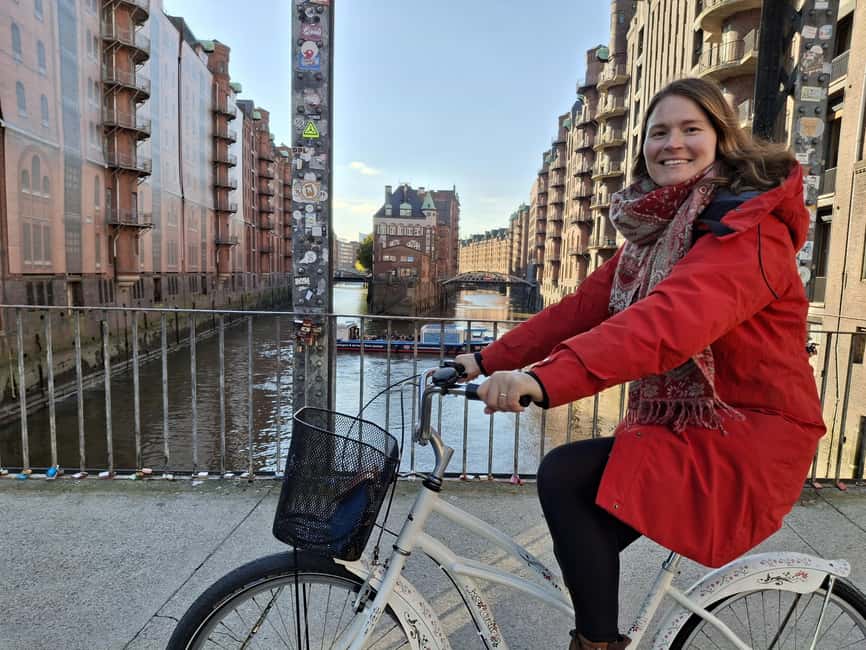
Deichstraße comes next, tied to the origin of port operations in Alt-Hamburg. This section is valuable because it explains that Hamburg’s waterfront identity was built to function, not just to impress photographers.
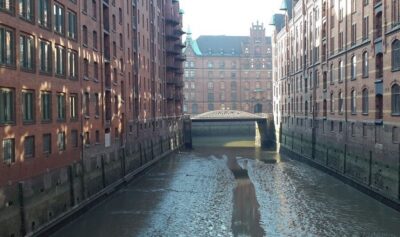
Then you reach Speicherstadt, and this is a major highlight for a reason. Speicherstadt is UNESCO World Heritage with massive 19th-century brick architecture, built on millions of oak poles. It sits in waterways called Fleete, so the whole district feels like warehouses were engineered as part of the water system.
The brick and water combination is exactly what makes Speicherstadt special. You can see the logic of the design: heavy building material for durability, and a canal network that supported maritime logistics. You also get the typical port atmosphere, the sense of water nearby and the contrast with the more modern districts you will see later.
One drawback to mention plainly: Speicherstadt is photogenic, but some areas can feel busy because it is a top visitor destination. The bike tour format helps, because you are guided and not stuck trying to fight the crowd flow without a plan.
HafenCity and the Elbphilharmonie: Modern Hamburg Up Close
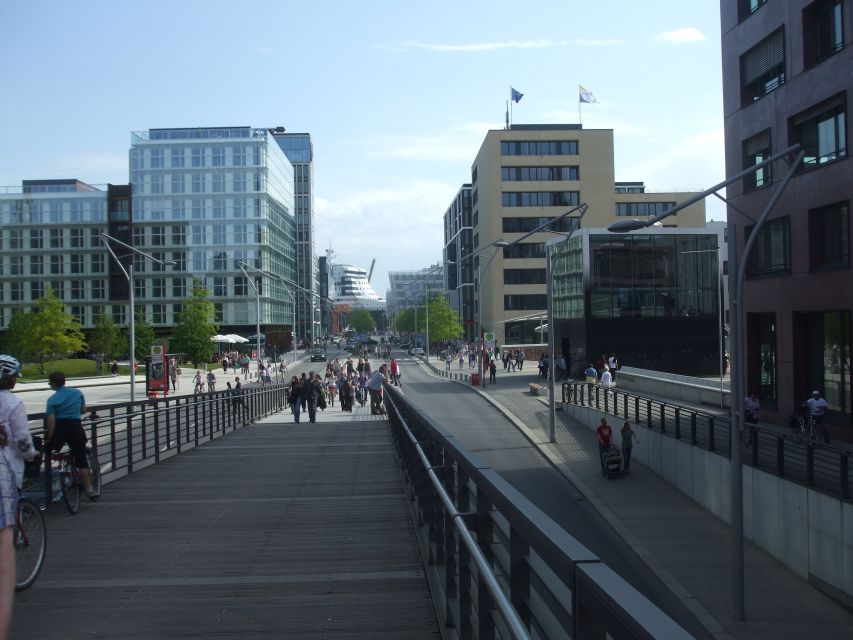
After Speicherstadt, you roll into HafenCity, the postmodern redevelopment of the former harbor area. HafenCity is where you see Hamburg making a clear bet on the future, and it is also where the tour sets you up for the main headline: the Elbphilharmonie.
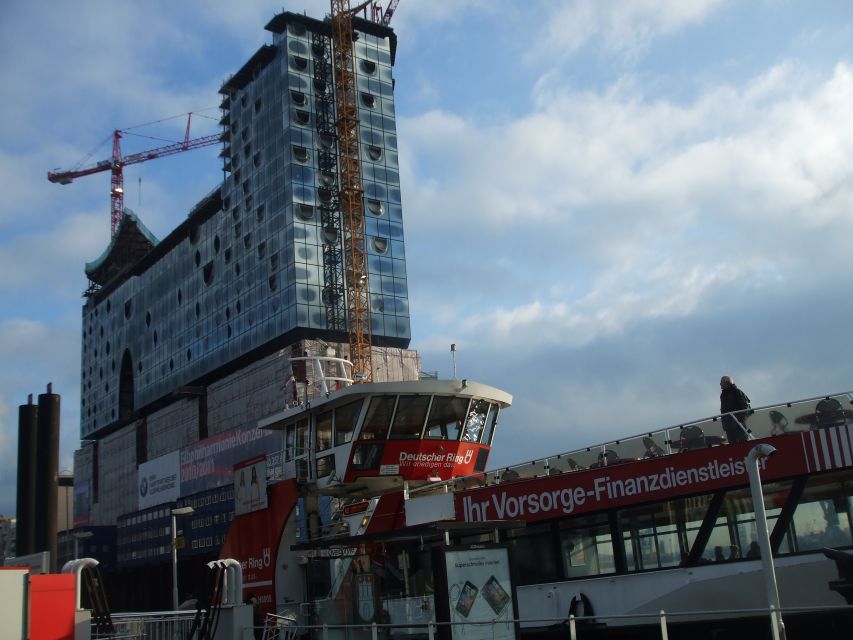
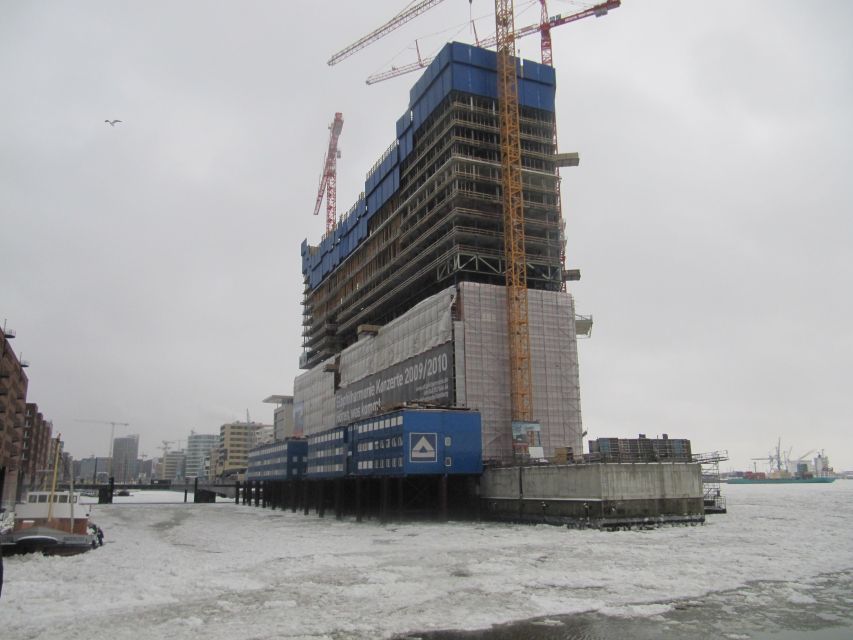
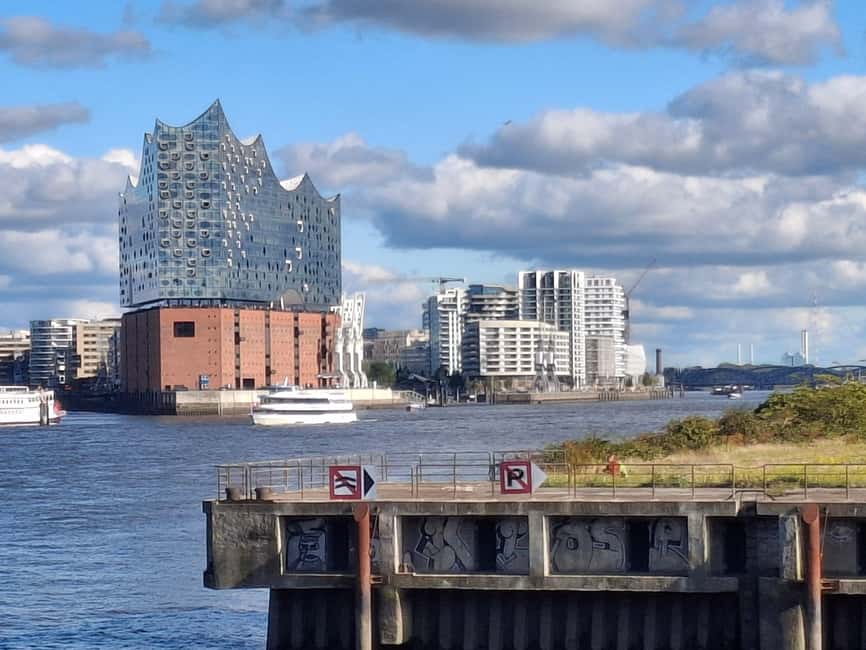
You get a photo stop and guided walk at the Elbphilharmonie. The tour also notes it as a 110-meter-high feature that can be controversial. That matters, because it means the guide does not treat it like a sacred object. You get context, and you can form your own opinion based on what you see and how it fits into the waterfront.
Then comes one of the most practical, satisfying parts of this tour. The route includes a path across the new flood protection system, which offers views of the Elbphilharmonie from below. That lower perspective changes the feel of the building. From street height, it can look like a statement. From below, you see it as a piece of infrastructure and design in a working waterfront environment.
The tour also passes the steel publishing building at Baumwall and stops near St. Michael’s Church. If you like architecture, you will enjoy how the route keeps bouncing between different eras and styles without needing to hop in and out of transit.
Neustadt, St. Michael’s, and the Brahms and Telemann Connection
The tour moves on through Neustadt and continues toward St. Michael’s Church. You get photo stops and guided details here as well, which helps connect the church landmark to the city’s port and redevelopment story rather than treating it as a standalone sight.
You also follow historic Peterstraße, tied to the Brahms and Telemann Museum. This is a smart inclusion for two reasons. First, it keeps the Brahms thread alive after the Gängeviertel memorial stone. Second, it reminds you that Hamburg’s cultural identity is not only about big opera and concert halls. It’s also in the neighborhoods and streets where composers and artists have been commemorated.
St. Pauli Piers: The Hamburg Water-Edge Finish
Finally, you reach St. Pauli piers. This stop rounds out the “maritime flair” part of the tour, shifting the mood toward the working waterfront vibe near the docks.
Piers are one of those things that look different depending on where you view them from. On foot, you often see them from a single viewpoint. From a bike route, you move along the edge and get a wider sense of layout and distance. You end back at Schlüterstraße 11, so it feels like a loop, not a one-way trek.
How the Bike Tour Format Changes the Experience
This tour is not just a way to reach sights. It is the reason the experience works.
Riding gives you:
- Faster sight coverage without the stress of multiple transit transfers
- More viewpoints than a standard walking tour
- A sense of distance, so the city feels real, not just postcard-sized
The pacing is also important. You get planned photo stops at key points, so you are not constantly stopping, starting, and second-guessing where to stand. The guide keeps things moving while still giving you time to look and take photos.
What You Can Expect From the Guide
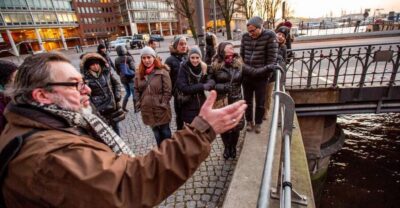
The quality of the guide is a standout theme. Notes highlight guides who are genuinely informative, and Bernhard is specifically mentioned as great, with lots to say about the city in a super interesting way.
That matters because this route is loaded with details, like Speicherstadt’s brick warehouses on oak piles, the Fleete waterways, and the story threads linking districts through time. If a guide just points at buildings, the tour can feel like a photo parade. With a stronger guide, it becomes a guided explanation of why Hamburg looks the way it does.
Included Extras: City Map and Email Photos
In addition to the bike and guide, you get a city map and a photo series sent by email. That is surprisingly useful. It gives you reference material for later, especially if you are trying to remember which skyline view came from which district.
There is also time to drive to the plaza of the Elbphilharmonie, subject to its accessibility. So even if you cannot get into every exact area on event days, the tour still aims to get you to the right spot when possible.
Who This Tour Suits Best
This Hamburg bike tour is a strong match if you:
- Want a 3.5-hour highlight loop without complex logistics
- Like water and port scenery, plus architecture from different eras
- Prefer guided context over browsing alone
- Plan to return later for museums, because this tour helps you choose what to prioritize
If you dislike bikes or are not comfortable riding in a city setting, then this might feel like work rather than fun. Also, if you are traveling strictly on a schedule tied to events at the Elbphilharmonie, keep flexibility, because access can change.
Should You Book This Hamburg Bike Tour to the Elbphilharmonie?
I would book it if you want the “Hamburg in one loop” feeling, Alster to Speicherstadt to HafenCity, with real guidance at the stops that matter. The $39 price feels fair for the combination of a live guide, bike, structured photo moments, and the added education that turns landmarks into understanding.
Skip or reconsider if Elbphilharmonie access is critical to your plans on a major event day. If you can handle that uncertainty and you want a practical, ride-through-the-city overview, this is a smart way to spend half a day.
FAQ
Where is the tour starting point?
You meet outside the Fahrradstation of the University of Hamburg, at Schlüterstraße 11.
How long is the bike tour?
It runs for about 3.5 hours. Starting times can vary, so you should check availability.
What does the tour cost?
The price is $39 per person.
What is included in the price?
Included are the bike, a guide, a city map, and a photo series about Hamburg emailed to you. The tour also includes time to ride to the Elbphilharmonie plaza when access allows.
Are there photo stops during the tour?
Yes, there are photo stops at key points, including Alster Lake, Hamburg Old Town, the Townhall, Speicherstadt, HafenCity, and the Elbphilharmonie area, plus other stops along the route.
What languages are the live guides available in?
The live tour guide is available in English and German.
What if the Elbphilharmonie area is closed on the day of your visit?
On days with major events, access to the Elbphilharmonie may be restricted or closed, which can affect what you can access near the building.
Is there free cancellation?
Yes, free cancellation is available up to 24 hours in advance for a full refund.
Does the tour end at the starting point?
Yes, the tour ends back at Schlüterstraße 11, the same meeting point where you started.
More of the Speicherstadt and HafenCity
- Hamburg: 1.5-Hour Harbor and Speicherstadt Day Cruise
★ 4.6 · 14,200 reviews - Hamburg: Elbphilharmonie Plaza Guided Tour
★ 4.7 · 5,882 reviews - Hamburg: 1-Hour Harbor Sightseeing Cruise with HafenCity
★ 4.4 · 3,067 reviews - Hamburg: Elbphilharmonie Plaza, Highlights & Surroundings
★ 4.6 · 2,270 reviews
Fresh reviews out of Hamburg
- Hamburg: Neighborhood tour with a former dominatrix★ 4.7 · 51 reviews
- Hamburg: Ice-Cream Workshop★ 4.7 · 52 reviews
- Hamburg: Reeperbahn tour with Daniel Schmidt from the Elbschlosskeller★ 4.7 · 52 reviews
- Hamburg: Grand Harbor Tour by Traditional Barge★ 4.3 · 55 reviews
- Hamburg Private Walking Tour with a Local: Icons & Hidden Gems★ 5.0 · 55 reviews
- Dialogue in the Dark (German Tour)★ 4.8 · 56 reviews
- Hamburg: 3-Hour Limousine Tour with Driver-Guide★ 4.5 · 56 reviews
- Ticket for the Emigration Museum BallinStadt Hamburg★ 4.0 · 57 reviews
Speicherstadt & HafenCity Tours, compared.
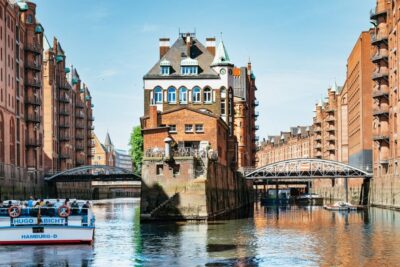
1.5-Hour Harbor and Speicherstadt Day Cruise
Read our review →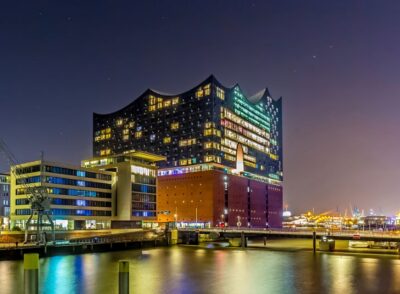
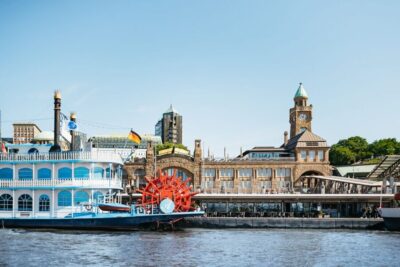
1-Hour Harbor Sightseeing Cruise with HafenCity
Read our review →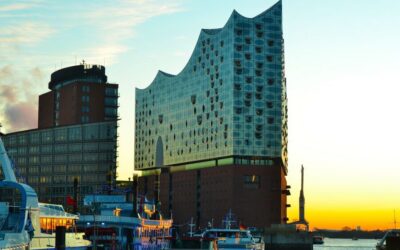
Elbphilharmonie Plaza, Highlights & Surroundings
Read our review →
Elbphilharmonie Plaza and HafenCity Food Tour
Read our review →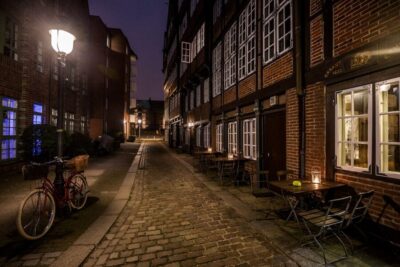
Speicherstadt and HafenCity 2-Hour Tour
Read our review →Browse the lists this tour appears in