
Reviewed · LEIPZIG TOURS
Federal Administrative Court Leipzig: A journey into the heart of German justice
What makes this Leipzig experience so gripping is that you tour German justice as something you can see, walk through, and notice in the details. I like how you get historic courtroom space plus practical context on landmark cases, including the Reichstag fire trial of 1933 and Karl Liebknecht’s October 1907 defense. I also love that the story connects architecture to how the court works today, not just old stone for old stone’s sake.
One consideration: it is only 1.5 hours, so there is a lot to cover and you will feel the time limit.
Key highlights you will not want to miss

- Historic courtrooms and meeting rooms where you can picture legal history in real space
- Reichstag fire trial (1933) and the October 1907 Liebknecht case tied into the building’s story
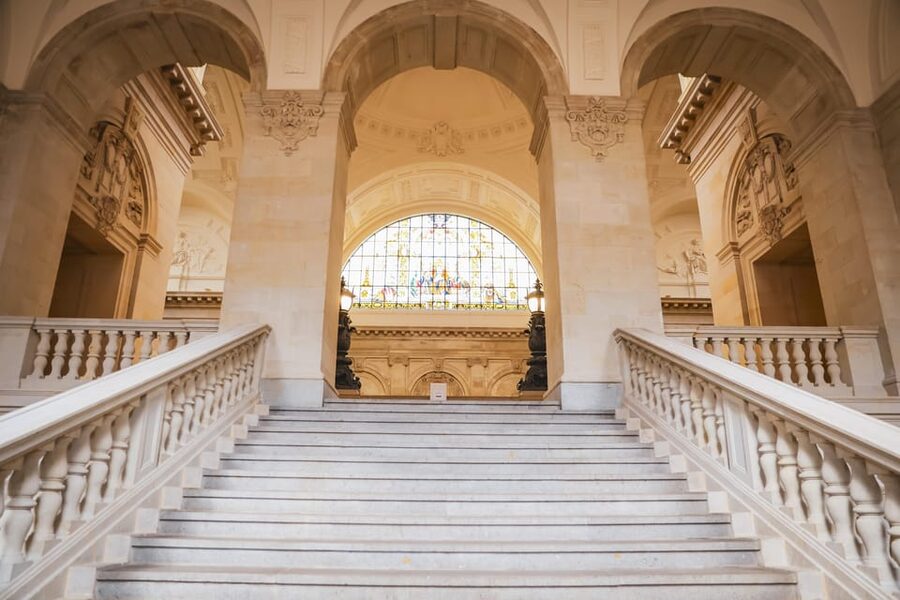
- Imposing Imperial-era design from the Wilhelmine period, built in 1879
- Judges’ official dress you can learn about, including the crimson robe and beret
- A former presidential apartment visit that adds a human, behind-the-scenes layer
- A building with changing roles, from GDR-era art museum use to its return as the federal court in 2002
Federal Administrative Court Leipzig: justice you can see in stone and paint

If you care about how countries function, the Federal Administrative Court is a smart stop. This is Germany’s highest administrative court. In 14 senates, judges decide disputes in administrative law and help shape how the law evolves. That mission sounds abstract, but inside the building the whole idea becomes physical: spaces designed for hearings, authority shown through design choices, and symbols that still read as official today.
I also like that this visit is not just lectures and photos. You are taken through historic meeting rooms and courtrooms, with the guide using them as anchors for the big story: how German jurisdiction developed, and why the building has mattered across different eras.
And yes, it is still a working seat of federal jurisdiction. That contrast makes the tour feel more grounded than a typical “look at the old stuff” experience.
Weigh these Leipzig picks against each other
- Leipzig: City History Canal Sightseeing Tour on a Motorboat
★ 4.7 · 7,671 reviews - Leipzig: 1.5-Hour Public Tour with Night Watchman Bremme
★ 4.6 · 3,116 reviews - Combo Tour in Leipzig: Guided City Tour & City Sightseeing
★ 4.7 · 2,317 reviews
How the 90 minutes usually flow inside the court
Expect a guided visit built around movement from room to room. You meet outside at Simsonplatz 1, in front of the Federal Administrative Court, then you head in and start with orientation. From there, the tour focuses on key interiors: courtroom spaces, meeting rooms, and areas connected to the court’s leadership.
The pace is designed to keep momentum. The most consistent theme in the way people talk about the tour is that it does not drag. The guide links architecture to concrete legal moments, then moves you along before details get dry.
There is also a practical side to plan for. You should arrive 10 to 15 minutes early so you are not rushed. And since the tour content is provided in German, plan to follow along best if your German is at least basic. English is available on request, which can help if you want a fuller grasp of the courtroom and history connections.
Entering the Imperial-era building: built in 1879, still commanding
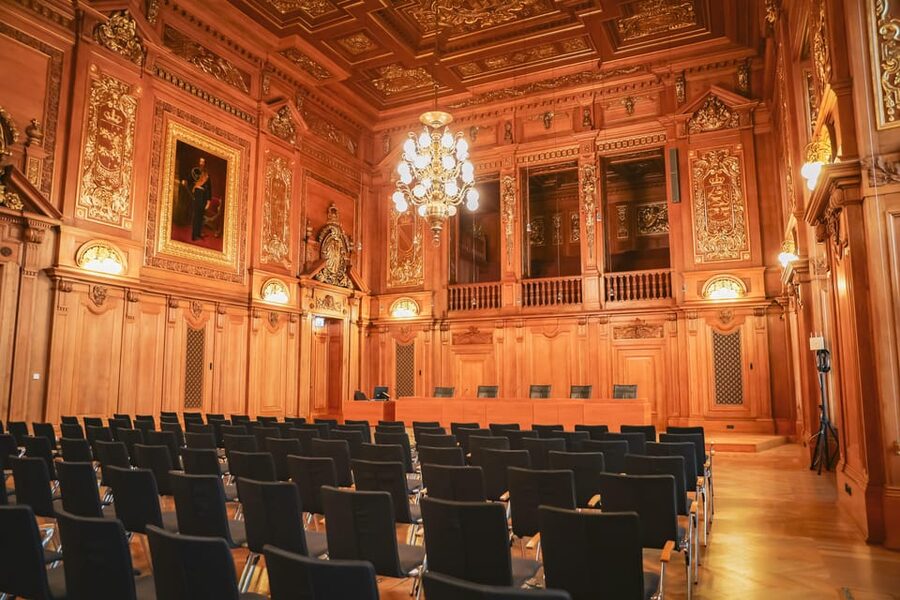
The court building you see today has roots in the Wilhelmine era. It was built in 1879 as the Imperial Court of Justice. That time period shows in the scale and the seriousness of the design. You do not get a sleek, anonymous government building. You get something meant to project authority.
Inside the large courtroom, the tour highlights the visual program: national coats of arms and imperial paintings that reinforce the idea that law sits above ordinary life. It is the kind of space that makes you understand why courts need credibility in public view. Even if you are not a legal nerd, your brain gets the message quickly.
I love that the guide turns this from mere decoration into meaning. It is easier to remember a symbol once you understand where it belongs in the legal story of the place.
One note: the building is architectural and formal. If you prefer museums that let you wander at your own pace, this is more structured. You will get value from it by paying attention as you move, not by lingering for long alone.
The judges’ crimson robe and beret: a uniform with meaning
One of the most memorable details is the discussion of official dress. The tour explains the clothing federal judges still use to remain recognizable in the courtroom. You will hear about the crimson robe and the beret, and why uniforms matter in settings where legitimacy and authority are on display.
This kind of detail sounds small until you see how often legal systems depend on public trust. Court clothing is part of that trust. It signals continuity and role clarity, and it makes the courtroom feel separate from everyday life.
It is also a rare chance to learn about the court as a living institution. You are not only touring history. You are seeing how tradition and current practice overlap.
Another way to spend a Leipzig afternoon:
- Leipzig: 1.5-Hour Historical Walking Tour in German
★ 4.7 · 2,217 reviews - Leipzig: 2-Hour Guided Walking Tour in German
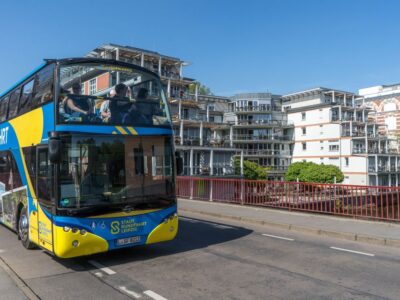
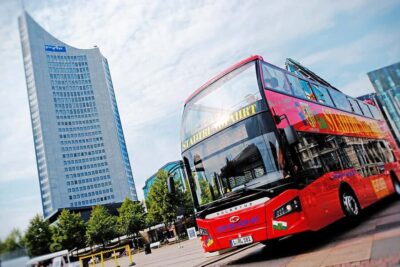
★ 4.8 · 1,612 reviews - Leipzig: 13-Stop Hop-on/Hop-off Bus Ticket
★ 4.6 · 1,468 reviews - Leipzig: Bus Tour
★ 4.5 · 1,457 reviews
Historic court cases explained through real courtroom space
This tour’s strongest ingredient is the way it ties legal history to specific landmark events. The guide brings in famous cases and historical decisions, then uses the courtroom environment to help you visualize what was happening.
Two cases get singled out for good reason:
- The Reichstag fire trial of 1933
- The October 1907 trial in which Karl Liebknecht defended himself for the publication of his writings
It is the combination that matters. If you only read about these events, you get dates and names. If you see them connected to a courtroom designed to project seriousness, the story becomes more than a historical footnote. You start to understand the stakes of courtroom procedure, public perception, and how legal decisions can shape politics.
This is also where the guide’s pacing pays off. People commonly say the tour never feels long or boring, and that is because the cases keep giving you a reason to pay attention to the rooms. You look up, you connect details, and you keep moving.
GDR-era art museum, then back to federal court in 2002
A building can survive many political eras, but it rarely survives unchanged. This one has had multiple lives.
During the GDR era, it was used as an art museum. Later, it returned as the seat of the Federal Court in 2002. That shift matters. It reminds you that architecture can be repurposed, but the meaning of the space changes with each era.
I like this part because it prevents the tour from becoming a straight line of “then and now.” Instead, you learn that the same walls can host very different kinds of authority. An art museum and a federal court are both public facing, but they do different work. One frames culture and memory. The other frames legal judgment.
By the time you reach the present role of the court, you feel the continuity more clearly. The tour helps you connect how the building’s identity was reactivated when it became a seat of jurisdiction again.
Visiting the former presidential apartment: power in everyday rooms
Among the most interesting inclusions is the visit to the former presidential apartment. It adds a quieter, more personal layer to the experience.
Court leadership offices often feel distant when you only think of courts as public hearings. Seeing the former presidential residence helps you picture the day-to-day human side of governance. It is not just a tour of public spaces where decisions happen. You also get a glimpse of where the court’s top role existed beyond the courtroom.
This stop is valuable because it shifts your perspective. You start thinking about how institutions operate in practice, not only in dramatic legal moments.
If you like history that feels grounded in real routines, this part will likely be a highlight.
What the tour includes, and what you should prepare mentally
You are paying for a guided tour that includes:
- Visits to historic courtrooms
- A look at important meeting rooms
- An included visit to the former presidential apartment
- A guided explanation tied to judicial history
So you should go in expecting a mix of architecture, legal history, and institution-level context. It is not a general stroll through a landmark building, and it is not a courtroom observation experience with seating and proceedings.
Your best preparation is mental, not physical. Tell yourself you are there to connect rooms to stories. If you do that, the tour becomes much easier to follow, and you retain more afterward.
Also, content may appear in its original language for some parts. If German is not your strongest suit, consider requesting English in advance when possible, so you can fully catch the courtroom and case context.
Price and value: is $14 for 1.5 hours actually worth it?
At $14 per person for about 1.5 hours, the value feels strong for three reasons.
First, you get access to places that are not always on a casual sightseeing route: historic courtrooms, meeting rooms, and the former presidential apartment. These are interior stops tied to the building’s original function.
Second, the guide provides structured interpretation. A building like this can be impressive even if you know nothing about law. But with a guide, it turns into an explanation of why the architecture and symbols matter, and how major legal moments fit into the space.
Third, the time is tight in a good way. Some tours waste time on generic background. Here, the pacing seems designed around what you can realistically absorb in 90 minutes. When a tour gets praise for never feeling boring, it usually means the guide is managing your attention and choosing details that land.
If you are the kind of visitor who wants a lot of reading time or slow wandering, you might find the duration short. That is the main trade-off. But for a focused, educational courthouse visit, it is a fair deal.
Who should book this court tour in Leipzig?
This fits best if you like:
- Architecture with a purpose
- Legal history told through real spaces
- Museum-style storytelling, but with a clear narrative and room-to-room progression
It is also a good option for travelers who want something different from the usual city highlights. Leipzig is rich in culture, but this gives you a distinct angle on how the country handles public authority and legal interpretation.
It is not designed for young kids. It is not suitable for children under 14. And the tour has rules that keep it from turning into a party scene: no alcohol and drugs, no party groups, and no bachelor or bachelorette party groups.
Wheelchair accessibility is listed, which is a big plus. And pets are not allowed, though assistance dogs are.
Practical tips: meeting at Simsonplatz 1 and handling German language
Plan around the basics so the tour feels smooth.
- Meet at Simsonplatz 1, in front of the Federal Administrative Court.
- Arrive 10 to 15 minutes early.
- Expect the live tour guide to speak German. English can be available on request.
- Dress for an indoor visit in a formal building. You are moving between rooms, so comfortable shoes help.
If you are worried about language, do not panic. The guide does more than name buildings and dates. They connect what you see to the case story. That structure helps even if your German is not perfect, especially for the architecture parts.
Should you book the Federal Administrative Court tour?
I would book it if you want an experience that is short, focused, and genuinely tied to real institutions. The best parts are the mix of courtroom history and architectural details that explain themselves as you go. The former presidential apartment adds a rare behind-the-scenes element that makes the place feel lived-in, not only ceremonial.
Skip it if you need a free-form, slow-paced museum wander. This is guided and timed, built to cover key highlights in 1.5 hours.
If you are in Leipzig for more than a day and you like seeing how Germany’s systems actually work, this tour delivers real value for the price and a story you cannot get from a simple exterior photo. Organized by Leipzig Food Tours, it is an efficient way to understand why this court building has mattered for so long.
FAQ
Where is the meeting point for the tour?
Meet at Simsonplatz 1 in front of the Federal Administrative Court.
How long is the guided tour?
The tour lasts 1.5 hours.
What is the price per person?
The price is $14 per person.
What language is the tour conducted in?
The tour guide speaks German. English is available on request.
Is the tour wheelchair accessible?
Yes, the tour is wheelchair accessible.
What will I see during the visit?
You will see historic courtrooms and meeting rooms, plus the former presidential apartment.
Is the tour suitable for children?
No, it is not suitable for children under 14 years.
Are pets allowed?
Pets are not allowed, but assistance dogs are allowed. Alcohol and drugs are also not allowed, and party groups are not allowed.
Can I get a refund if I cancel?
Yes. You can cancel up to 24 hours in advance for a full refund. You can also reserve now and pay later.
Fresh reviews out of Leipzig
- Leipzig: 3-Hour Guided Bike Tour★ 4.7 · 52 reviews
- Guided tour of the Federal Administrative Court in Leipzig★ 4.8 · 54 reviews
- Leipzig: Guided tour of the Federal Administrative Court★ 4.8 · 54 reviews
- Leipzig: Guided tour through the New Town Hall★ 4.8 · 59 reviews
- Leipzig: Private Tour of the Old City★ 4.7 · 61 reviews
- Leipzig: Guided Motorboat Sightseeing Cruise★ 4.9 · 63 reviews
- Tour on Lake Cospuden★ 4.7 · 68 reviews
- Leipzig Spirits Manufacture: Guided Tour and Tasting★ 4.8 · 79 reviews
Leipzig Tours, compared.
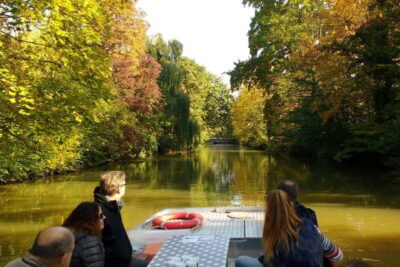
City History Canal Sightseeing Tour on a Motorboat
Read our review →
1.5-Hour Public Tour with Night Watchman Bremme
Read our review →
Combo Tour in Leipzig: Guided City Tour & City Sightseeing
Read our review →


Browse the lists this tour appears in