
Reviewed · HAMBURG TOURS
Titanic: An Immersive Journey
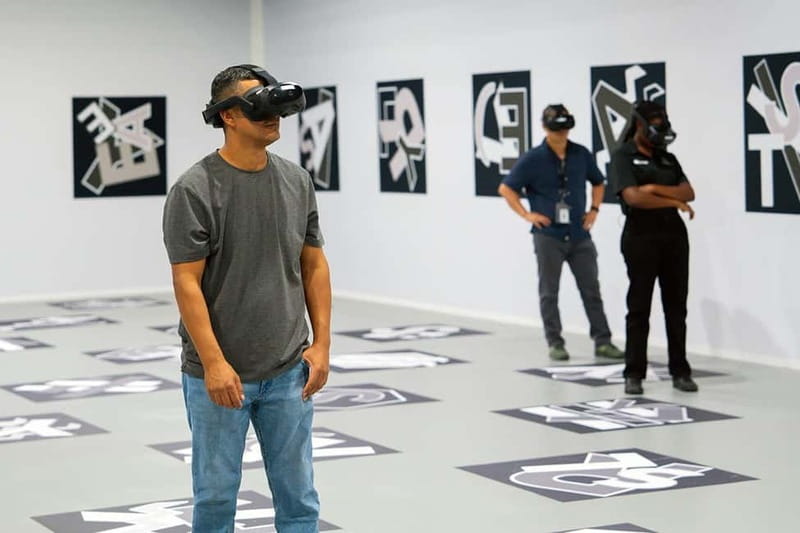
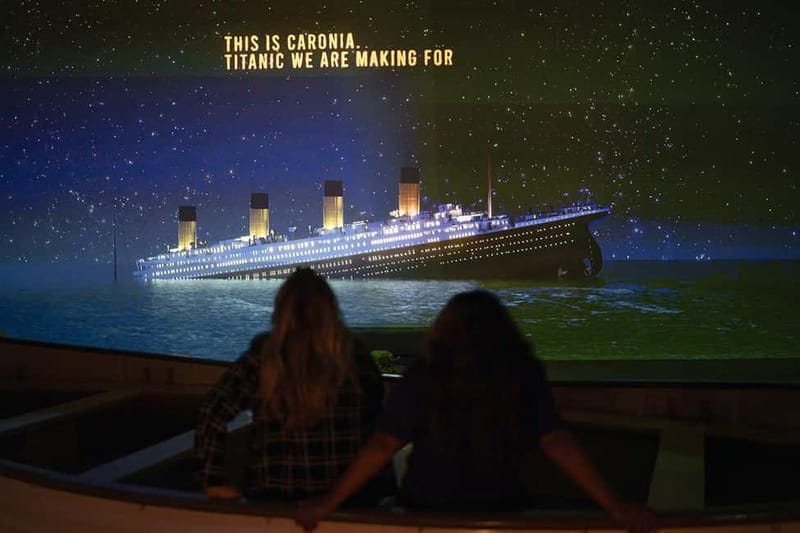
Titanic: An Immersive Journey is interesting because it tries to make the Titanic story feel physical, not just read and remembered. What I like most is the combo of room replicas that look almost staged and the VR segment that sends you to the wreck site atmosphere under the sea.
Two other things that help: you get clear, bilingual storytelling (German and English), and the experience includes interactive photo points, so you can actually pause without feeling like you are doing museum homework. One thing to think about first, though, is that the VR is not included with general admission, so you will want to plan for that extra add-on if you care about the wreck experience.
You will walk through the ship’s world using 360-degree projections, multimedia installations, and more than 300 items on display, plus a real-feeling boarding pass that sets the tone early. If you want history, but you also want it to move, this is a strong pick for a one-day stop in Hamburg.
Key things I think you will really notice
- Deceptively real room replicas that make the ship feel step-in-ready
- VR is 12 minutes and it is the closer, not a quick side show
- Interactive photo points so you can capture the moment without wandering
- 360-degree projections that help connect the ship’s layout to the story
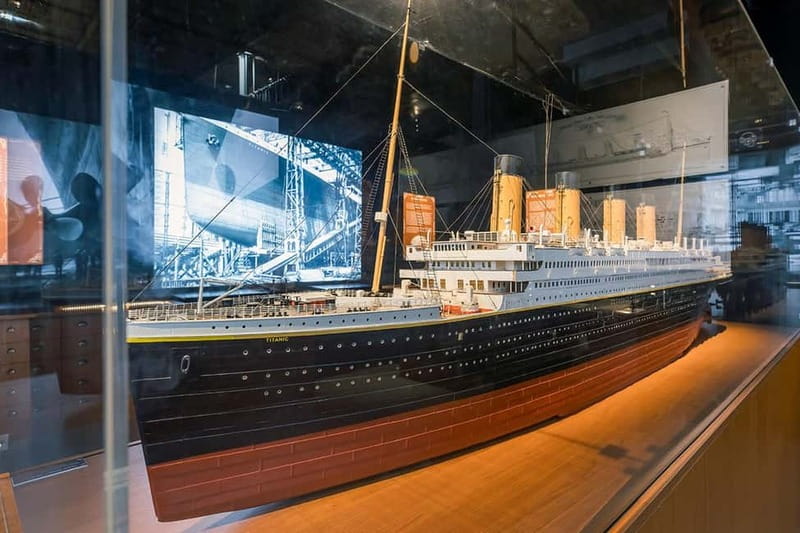
- 300+ carefully selected artifacts that keep it grounded in objects, not just effects
Titanic in Hamburg, but built like a walkthrough
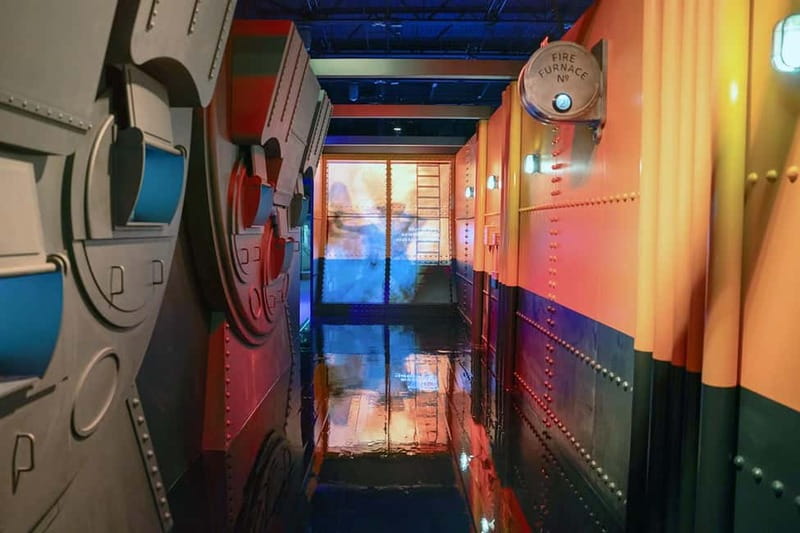
In Hamburg, Titanic: An Immersive Journey is not set up like a typical timeline exhibit where you shuffle past glass cases and move on. The whole design pushes you through the ship as a sequence, starting with that boarding pass idea. It is a small touch, but it does something important. It nudges you to treat the rooms like locations you are visiting, not just scenes on a panel.
The experience blends three tools: detailed room recreations, projection-based storytelling, and multimedia installations. The payoff is that you get the history in layers. You see how the ship looked, you hear/receive explanations in German or English via the multimedia guide, and then you spot period items that make it feel less like theater and more like evidence.
One smart detail is the focus on “relive the days at sea” and the “last night” as a narrative arc. That means you are not just looking at the Titanic as a famous tragedy. You are moving through the mood and spaces that existed before the end point.
This is presented by COFO, and that matters because the exhibit feels production-minded. You get the sense that the experience is built to control pacing. You are guided from room to room, and the technology is used to keep momentum without fully drowning the objects.
Weigh these Hamburg picks against each other
- Hamburg: Sex and Crime in St. Pauli Tour for Ages 18 +
★ 4.7 · 17,793 reviews - Hamburg: 1.5-Hour Harbor and Speicherstadt Day Cruise
★ 4.6 · 14,200 reviews - Hamburg: 90-Minute Evening Lights Harbor Cruise
★ 4.5 · 7,728 reviews
Room replicas and photo points, where your brain stops treating it as a museum
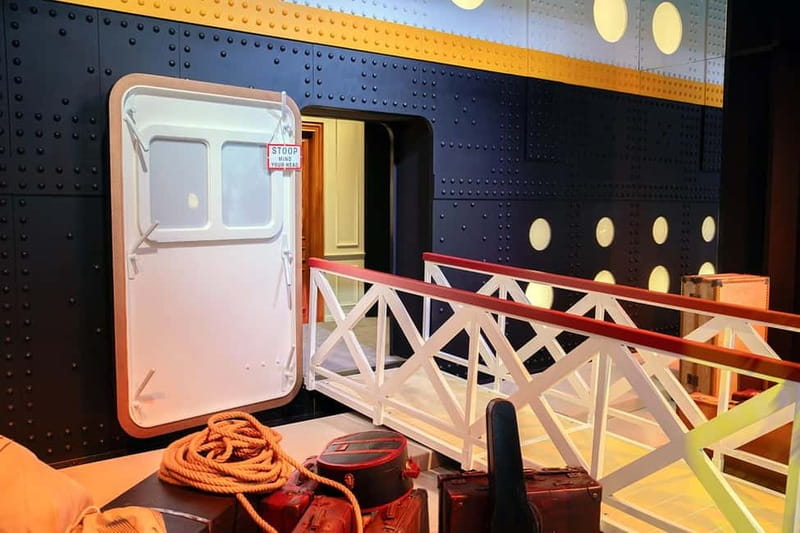
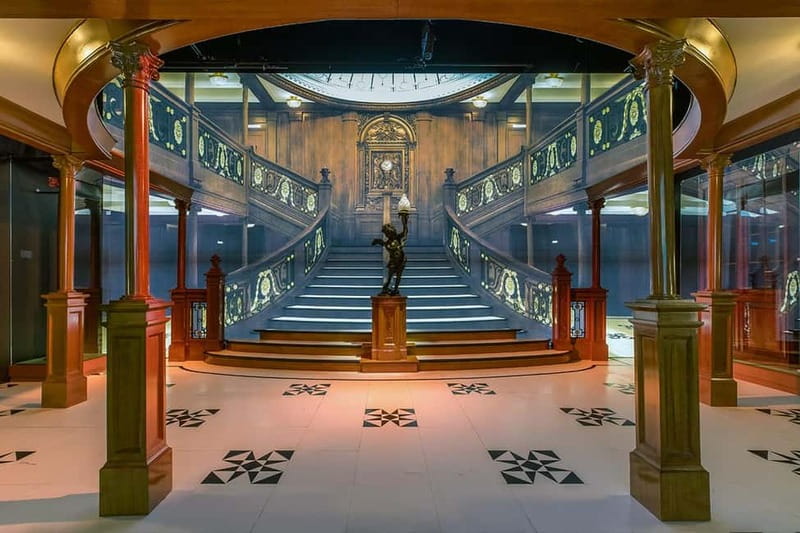
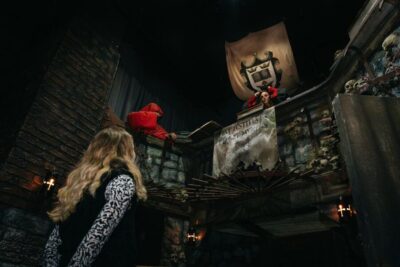
The standout part for many people is the way the rooms look convincingly real. The exhibit uses replicas that are deceptively convincing, so you can almost forget you are inside a controlled exhibition space. That is a big deal, because Titanic stories often live in photos, diagrams, and distance. Here, you can stand in front of a room-like setting and let your imagination do the rest.
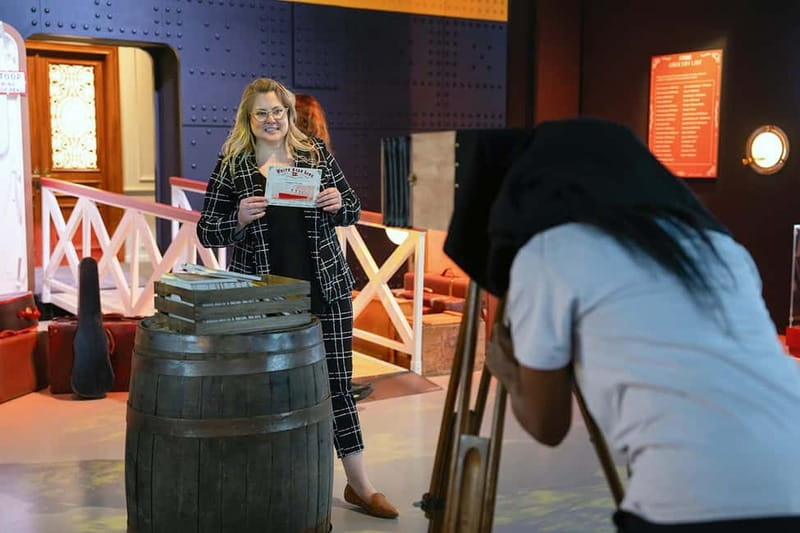
Then there are the interactive photo points. These are not random “pose here” spots. They are placed so you can connect what you see to the story being told in that area. If you like taking travel photos, this helps you take a break without feeling like you are wasting time.
Practical tip: keep your phone ready, but do not rush the moment. With room replicas, lighting and angles matter. Take one or two shots, then spend a few more minutes simply looking. The exhibit is designed so the longer you stay, the more you notice details on the surrounding displays and the way the multimedia ties into the setting.
If you are traveling with someone who prefers visuals over reading, these photo points can act like “anchor moments” that keep everyone engaged. And if you prefer quiet observation, you can ignore the camera part and still enjoy the rooms as staged, comprehensible spaces.
The 360-degree projections, and how they make the ship feel navigable
A lot of Titanic exhibits show images and let you interpret them. This one adds 360-degree projections, which changes your role. Instead of only staring forward, you start turning your head and noticing the environment around you. That small shift makes the ship feel navigable, like a place with direction and movement.
Why this is valuable: projections let the exhibit connect architecture to story beats. You are not stuck only with static visuals. The exhibit can show atmosphere, scale, and transitions between scenes. It also helps you keep the narrative straight, especially if you are going through in German and English audio or text modes and want to rely on visual cues.
There is also a practical rhythm here. You move from replica to replica, and then the projections reinforce what you just saw. It reduces the feeling of being lost in an entertainment layout. Even if the Titanic subject already feels heavy, the exhibit structure helps you follow the sequence.
If you get sensitive to strong audio and light, plan to take short breaks inside the quieter room areas before heading toward the more technology-heavy sections. The exhibit is built to be emotionally effective, so it can be intense when everything is on at once.
300+ artifacts that ground the spectacle
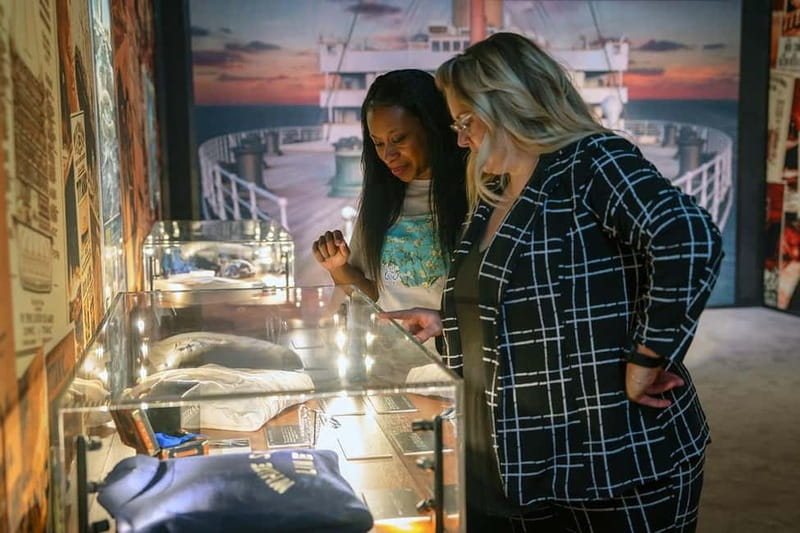
One promise you should take seriously here is the scale of the object collection: over 300 carefully selected artifacts. That number matters because it signals that the exhibit is not only a high-tech show.
In a good exhibit, artifacts do three things. They slow you down. They give you something concrete to study. And they help you connect the “story moments” to real material culture, not just dramatic images.
To get the most value, I recommend a simple approach as you walk:
- Pick a few artifacts that catch your eye in each area, then read their basic context.
- Do not try to read every label. Instead, choose objects that relate to the rooms you are standing in.
- When the multimedia is playing, keep an eye on how it references the physical displays nearby.
This is how you turn a “cool Titanic experience” into a “I understood what I saw” experience. The artifacts help prevent the exhibit from feeling like one long special effect. They give you touchpoints you can remember later.
Also, because the room replicas are convincing, the artifacts look even more meaningful. A recreated setting plus real objects can create a stronger mental image than artifacts alone.
Another way to spend a Hamburg afternoon:
- Hamburg: 2-Hour XXL Port of Hamburg Cruise Tour
★ 4.7 · 6,979 reviews - Hamburg: Line A Sightseeing Hop-On Hop-Off Bus Tour
★ 4.6 · 6,958 reviews - Hamburg: Elbphilharmonie Plaza Guided Tour
★ 4.7 · 5,882 reviews - Hamburg: Hamburg Dungeon Admission Ticket
★ 4.7 · 5,745 reviews
The 12-minute VR experience, and when it hits hardest

Toward the end of the journey, the 12-minute VR experience takes the story deeper. It is not a standalone attraction you pop into anytime. The timing matters because by the time you reach it, you have already built context through rooms, projections, and artifacts.
The VR component is described as sending you deeper into the historic passenger ship and also down to its icy grave underwater. I would treat it as the emotional “climax” portion of the exhibit. If you want the strongest impact, the VR is the segment you should not skip.
Important note for planning: VR is not included in the admission ticket. So when you decide on your visit, you should decide which type of experience you want:
- If you want a traditional museum pace with technology support, you might be satisfied with the exhibition admission alone.
- If you came specifically for a wreck experience with immersive tech, you will likely want to add the VR.
Practical considerations (no guessing, just reality): VR can be visually intense. Even if you handle motion and immersive formats well, give yourself a minute after taking the headset off before you rush into the next area, so your eyes and brain catch up.
Bilingual multimedia in German and English, plus wheelchair access
The exhibit includes a multimedia guided tour in German and English. That is useful because Titanic is for international audiences, and you should not have to choose between understanding and participation.
The other advantage here is that the exhibition is wheelchair accessible. That changes how you can experience it. The key is to plan your movement so you can take in both the room replicas and the projection-heavy areas without needing to backtrack.
My advice if mobility or pace matters for you:
- Start early in your time slot so you do not feel rushed.
- When you hit a room with lots of focus points, move slowly and then decide where to go next.
- If there is a VR segment you plan to add, factor it into your stamina and timing, since it is the most tech-heavy piece.
Because the storytelling is provided through multimedia, you can tailor your experience. You can spend more time letting the narrative guide you, or you can lean on visual cues and object displays when you want to move faster.
Hamburg value check: admission gets you the ship, VR is the extra
Let us talk value in a practical way. Your admission includes entry to the Titanic: An Immersive Journey exhibition. The VR experience is explicitly not included.
So the value question becomes: are you buying an exhibition ticket, or are you buying the full package including the wreck VR? If you care about the VR portion, the true value comes from deciding to add it, not just from the exhibition entry alone.
The good news is that the exhibition itself has multiple layers that do not depend on VR. You still get:
- room replicas that look convincingly real
- interactive photo points
- 360-degree projections
- more than 300 artifacts
That is a lot of content. It also supports a comfortable visit style. Even if you skip the VR option, you are not left with an empty tech experience. The object collection and the room-based storytelling still carry the day.
Given the VR is 12 minutes, it is also manageable. You are not committing to hours of headset time. It is a focused segment that is designed to land after you have built context.
Who this Titanic experience is best for
This works well if you fall into one of these categories:
- You like technology in museums, especially VR and projection-based storytelling.
- You want more than photos, and you like when a place feels like a setting you can stand inside.
- You appreciate exhibits that use objects, not just dramatized scenes, thanks to the 300+ artifact count.
- You want something that keeps you moving but still gives you places to pause, especially around the room replicas and photo points.
It is also a good fit if you are traveling with someone who likes different types of learning. The exhibit covers visual environments (projections and rooms) and tangible learning (artifacts). That means you are less likely to end up in the “you loved it, I waited” trap.
If you dislike crowds or strong audio and lighting effects, consider your timing. This kind of show-style museum can get busy because people are drawn to the VR and photo spots. Going when you can take your time will help a lot.
Should you book Titanic: An Immersive Journey in Hamburg?
Book it if you want Titanic in a format that feels like a guided world, not just a display. The combination of real-looking room replicas, interactive photo points, and 360-degree projections gives you multiple ways to engage. And the over 300 carefully selected artifacts keep it from becoming only spectacle.
Do not book it for the VR alone unless you are ready to treat VR as an add-on. Admission covers the main exhibition, and VR is the later, separate experience that lasts 12 minutes.
My final advice for decision-making is simple:
- If you are curious about VR and you want the wreck atmosphere, plan for the VR segment.
- If you just want a strong, artifact-based exhibition with high-tech support, admission alone can still be a satisfying one-day stop.
If you are in Hamburg and you like history told through rooms, objects, and smart tech, this is a very solid ticket.
FAQ
Where is Titanic: An Immersive Journey located?
It is in Hamburg (State), Germany.
How long is the VR experience?
The VR experience is described as 12 minutes.
Is the VR experience included with admission?
No. Admission to the exhibition is included, but the VR experience is not included.
What languages are available for the guided tour?
The multimedia guided tour is available in German and English.
Is the exhibition wheelchair accessible?
Yes, the exhibition is wheelchair accessible.
Can I cancel if my plans change?
Free cancellation is available up to 24 hours in advance for a full refund.
Fresh reviews out of Hamburg
- Hamburg Landungsbrücken: Outdoor Escape Game★ 3.6 · 9 reviews
- German guided insider tour of Hamburg’s Schanzenviertel★ 5.0 · 9 reviews
- Premium Party Hamburg: Celebrate Your Bachelor Party★ 4.6 · 9 reviews
- Pub Crawl Hamburg – Ladies Night★ 5.0 · 10 reviews
- Hamburg Scavenger Hunt and Sights Self-Guided Tour★ 4.5 · 10 reviews
- Hamburg Scavenger Hunt and Highlights Self Guided Audio Tour★ 4.5 · 10 reviews
- Hamburg: Reeperbahn Pub Crawl with Shots and Games★ 5.0 · 10 reviews
- Sex und Crime Tour auf St Pauli ab 18★ 4.5 · 10 reviews
Hamburg Tours, compared.

Sex and Crime in St. Pauli Tour for Ages 18 +
Read our review →
1.5-Hour Harbor and Speicherstadt Day Cruise
Read our review →




Reeperbahn Lust & Laster Tour for Adults Only
Read our review →Browse the lists this tour appears in