
Reviewed · CITY TOURS
Hamburg: Private Tour Down Town around City Hall
Hamburg’s downtown can feel like layers stacked on layers, and this private tour is a smart way to read them fast. I love the way the guide turns the Hanseatic city story into street-level details you can actually see, and I love the mix of famous architecture with lesser-known tech history like the pneumatic post. The only catch is it moves efficiently, so if you like a slow stroll and lots of free time, you might feel a bit rushed in the two hours.
This is a compact loop built around the places tied to Hamburg’s identity, from the city’s old town halls to the big modern face of commerce. You also get a guide who keeps things lively, with humor and real facts, which matters when the stops cover everything from churches to office districts to underground survival stories.
Key highlights, in plain terms
- Hanseatic center focus around major landmarks tied to Hamburg’s civic power
- Mönckebergstraße, including the local nickname Mö
- Chilehaus and the Kontorhausviertel office district feel, up close and photo-friendly
- Africa House for a surprising global-history stop in the middle of downtown
- Trostbrücke as a memorable end-of-walk photo and story beat
- Stories you can see in stone, plus the bunker network and the 1864 pneumatic post
A Two-Hour Private Walk Through Hamburg City Hall and the Hanseatic Core
If you want Hamburg in one tight package, this tour is built for you. It’s a private group experience for up to 15 people, and it lasts about two hours. That short time window is the whole point: you get the big-name sites, but also the connective tissue that explains why Hamburg looks the way it does.
You start with the downtown sweep, then you work your way through the city’s historic and civic heart. The guide explains how Hamburg grew into a powerhouse, and how events and engineering shaped daily life. Expect a mix of church grandeur, commercial-era architecture, and civic buildings that signal power and trade.
One practical note: since the tour is structured in multiple short guided segments, you are doing sightseeing on a schedule. The benefit is you cover a lot without spending half your day tracing locations on your own. The drawback is you should be ready to keep moving and listen while you walk.
This is also a strong choice if you like history but hate feeling like you are stuck in a lecture. The stops are real places, and the stories are meant to make those places click.
More City Tours in Hamburg
- Hamburg: Hamburg City Card with Free Public Transportation
★ 4.5 · 2,004 reviews - Reeperbahn: Panik City Udo Lindenberg Multimedia Experience
★ 4.9 · 893 reviews - Guided Hamburg City Bike Tour
★ 5.0 · 642 reviews
Getting Your Bearings on Mönckebergstraße, the Local Shortcut Called the Mö
The walk kicks off in the area around Mönckebergstraße, a main downtown shopping street that locals call Mö. It’s one of those streets where you can understand the whole city in miniature: commerce on the surface, history underneath, and the sense that Hamburg always expected to move.
Here, the guide’s job is to make the street more than a place to browse. You learn how Hamburg’s look shifted over time. The city went from narrower lanes and passageways with older-style buildings to a more modern commercial setup within a short span of time. That kind of change did not happen by accident, and the guide links it to the events that forced rebuilding and reshaping.
I like starting here because it sets the tempo. You are in motion, you are oriented, and the guide can point out how a shopping street ties into trade and urban planning. It also gives you a built-in photo buffer. Even if you only take a few quick shots, you will have plenty of moments where the street gives context to everything you see later, like the office district and the big civic buildings.
If you are the type who enjoys architecture but gets lost in names and dates, this is a good place to start. It puts the timeline into physical space.
St. James’ Church, St. Peter’s Church, and St. Nicholas’ Church: Why Churches Still Matter
Hamburg’s churches are not just pretty facades. On this tour, they function like landmarks of how the city understood community, authority, and survival through time.
You visit St. James’ Church early, and later you also see St. Peter’s Church and St. Nicholas’ Church. Each stop gives you a different angle on the same theme: Hamburg’s religious buildings sat at the center of civic life, even as commerce and modern development grew louder around them.
What you should expect from these church moments is not a list of trivia. It’s an explanation of why these structures held meaning. The guide connects them to the Hanseatic era vibe of a working city with rules, institutions, and responsibilities. Even if you do not go inside anywhere, you still get the payoff through narration and the visual scale of the buildings.
A practical tip: dress like you might be outside more than you think. Churches are great photo subjects, and downtown light can be tricky. If you take pictures, give yourself a few seconds to angle away from the densest foot traffic.
Also, these church stops are good for pacing. After shopping-street energy, the church stops slow you down just enough to reset your attention and absorb the bigger stories the guide is telling.
Kontorhausviertel and the Sprinkenhof: When Commerce Took Over the City Image
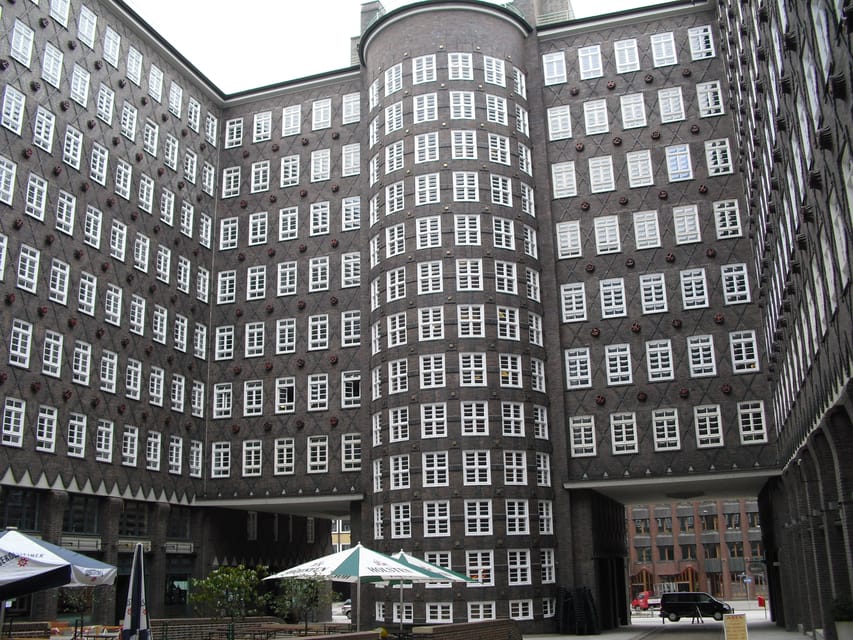
One of my favorite parts of this tour is how it treats the office district as more than background. The Kontorhausviertel area and the surrounding streets give you the feel of Hamburg as a modern commercial city, but still tied to the Hanseatic mindset.
You get guided time in this district, and the guide uses it to explain Hamburg’s transformation. It is the jump from older street patterns and half-timbered styles to a more direct, commercial-facing city. In other words, Hamburg didn’t just rebuild. It rebranded itself in stone, brick, and street layout.
The Sprinkenhof stop adds another layer to that idea. Even if you only notice it as a building at first glance, the guide helps you read it as part of the city’s commercial machinery. That makes your walk feel smarter, because you are not just looking at pretty architecture. You are tracking how a city organizes power and business.
If you are someone who enjoys contrasts, this section will work well. Churches signal tradition. Office districts signal the modern economy. Together, they explain why Hamburg feels both old-world and efficient at the same time.
Weigh these Hamburg picks against each other
- Hamburg: Sex and Crime in St. Pauli Tour for Ages 18 +
★ 4.7 · 17,793 reviews - Hamburg: 1.5-Hour Harbor and Speicherstadt Day Cruise
★ 4.6 · 14,200 reviews - Hamburg: 90-Minute Evening Lights Harbor Cruise
★ 4.5 · 7,728 reviews - Hamburg: 2-Hour XXL Port of Hamburg Cruise Tour
★ 4.7 · 6,979 reviews
Chilehaus: Hamburg’s Big Statement Building and a Photo Stop You Will Actually Want
Chilehaus is the kind of place where you can tell the city is proud of what it built. The guide gives it proper attention, and you get time to appreciate the imposing appearance up close.
This is also a perfect stop for photos because the building rewards angles. The lines and bulk make it look dramatic even when you are just standing on the sidewalk. You do not need perfect weather. You just need a few minutes and a willingness to look up.
What I like about this stop is that the guide ties it to the city’s story. Instead of treating Chilehaus as a random highlight, it gets positioned as part of Hamburg’s identity as a trade and office center. It is modern, but it is also anchored in the city’s way of thinking.
If you only have two hours and you want one architectural moment that feels unquestionably Hamburg, this is it. Chilehaus helps the tour land with a real sense of place, not just a checklist of stops.
Reichenstraßen and Africa House: A Global Feeling in the Middle of Downtown
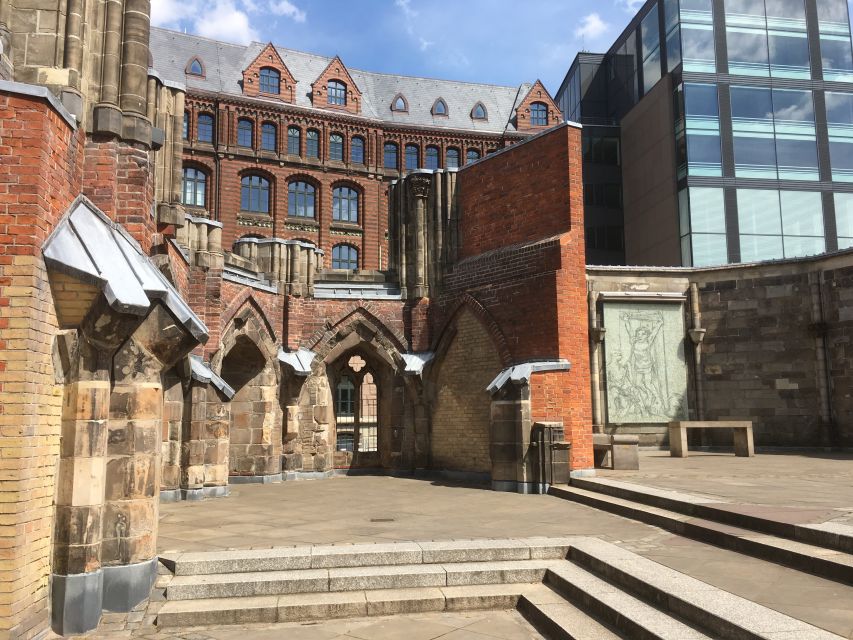
After the office district energy, you shift into streets like Reichenstraßen, where the city’s commercial flow continues. Then you get to a stop that adds surprise value: Africa House.
The tour frames Africa House as a “wanderlust” moment, and it works because it breaks the rhythm. In a downtown built for trade, Africa House adds the idea that Hamburg’s connections went far beyond Germany’s borders. The guide keeps it grounded by tying it back to the city’s larger historical patterns.
I like this kind of stop because it stops history from being only about local wars and local rebuilding. It reminds you that a port city thinks globally. Even if you are not a museum person, a guided visit like this gives you something to look at and something to carry with you for the rest of the walk.
A good strategy here: slow down for a minute. Take a photo if it catches your eye, then listen. You’ll get more out of it when you give your brain a chance to connect the building to the stories.
The Underground Stories: Bunkers, the Pneumatic Post, and Hamburg After the Great Fire
The most mind-opening part of the tour is how it treats the city as layered, literally. The guide talks about the largest German underground bunker system, with over 700 bunkers. You are not just hearing a scary number. You are learning how a port city prepared for modern threats, and how that preparation left an imprint on the city’s underground story.
Then there is the pneumatic post, Hamburg’s first known system, put into operation on 24 October 1864. It’s one of those details that makes you realize how modern Hamburg was in practical ways. Messages moved fast for a commercial city. That helps you understand the importance of trade speed, business coordination, and the logistics that underlie everything you see above ground.
The tour also covers the Great Fire of 1842, which raged for four days and destroyed large parts of the old town. This is crucial context for why Hamburg changed its look. When a city gets knocked back, rebuilding becomes an opportunity. In Hamburg’s case, the result was a shift from older narrow streets and passageways with half-timbered houses toward a modern commercial look in a relatively short time.
This is where the guide earns their keep. The stories make the architecture feel less like decoration and more like evidence. You start to notice patterns, like how downtown planning follows economic needs and how disasters change a city’s design language.
If you only read one thing into Hamburg, read this: what you see today is partly survival, partly reinvention.
Trostbrücke and the Rathaus: Ending With Civic Power and Strong Memories
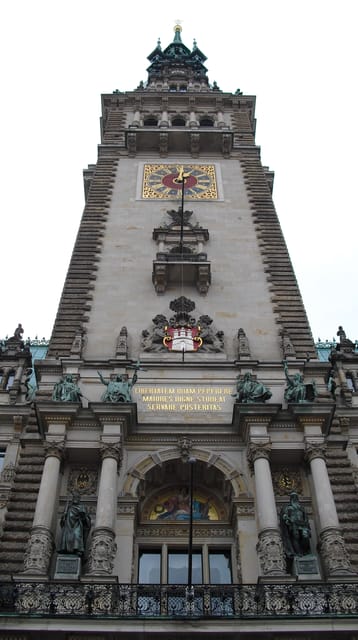
The last stretch brings you to Trostbrücke, then into the civic zone around the Chamber of Commerce and Hamburg Rathaus.
Trostbrücke is described as a place to wallow in memories, and honestly, that phrasing makes sense. It is not just another stop on a map. It acts like a bridge between the earlier downtown storytelling and the final “this is Hamburg” moment at City Hall. Even if you do not know the details yet, the guide’s explanation gives the location weight.
Next comes the Chamber of Commerce, which is a fitting anchor for everything you learned about commerce, coordination, and civic power. For a city built on Hanseatic trade, commerce was never separate from governance. You see that idea take shape as the tour heads toward the Hamburg Rathaus.
The Rathaus stop is where the tour ties together the Hanseatic city theme, the rebuilding story, and the “downtown as identity” idea. It is the payoff moment. You finish with a sense of what the city wanted to project and how it wanted to be seen.
If you want a final photo, this is a good time to take it. You’re likely to be tired, but the scene is worth it and the timing is designed for that last memory.
Price and Value: $294 Per Group for Up to 15 People
This tour costs $294 per group, for up to 15 people, and it lasts 2 hours. That price sounds steep if you think per person. But in private-group math, it can be a strong deal.
- If you book with a small group of 2 to 4, it can land closer to a premium-per-person experience.
- If you fill the group size toward the top end, the effective cost per person becomes much more reasonable.
You also get a real guide for the whole two hours, not just a quick meet-and-greet. The value comes from the way the guide connects multiple major stops into one coherent story, including the pneumatic post details, the bunker network, and the Great Fire context. Those are not the kinds of facts you usually pick up just by walking around yourself.
For value, I look at time saved and understanding gained. This tour scores well on both. You cover the Hanseatic core landmarks and learn why they matter without needing to research each stop first.
Who This Tour Fits Best (and Who Might Want Something Else)
This tour fits best if you want a downtown orientation plus history that connects directly to what you can see. It is also ideal if you enjoy a guided narrative with humor, because the guide style matters when you are covering many stops in a short window.
It’s a strong option for:
- First-timers who want to see the key downtown landmarks fast
- People who like history but want it explained through buildings and street corners
- Small groups who prefer private pacing over big group tours
- Anyone who finds it interesting that Hamburg had impressive logistics like the pneumatic post in 1864 and a huge underground bunker network
You might reconsider if:
- You want long museum-style exploration or lots of time sitting in one place
- You need a very slow pace with minimal walking and minimal listening
Should You Book the Private Downtown Tour Around City Hall?
I think you should book this if your goal is simple: get a smart two-hour overview of Hamburg’s Hanseatic center, then take photos knowing what you are looking at. The combination of Chilehaus, major churches, the Mönckebergstraße shopping corridor, and the finale around Hamburg Rathaus gives you a complete downtown portrait.
It also stands out for the kinds of stories the guide brings in, like the underground bunker network with over 700 bunkers, the 1864 pneumatic post, and the Great Fire of 1842 that shaped the city’s look. That blend of civic power, street-level architecture, and practical history makes the walking tour feel worth your time.
If you can share the group cost with friends or you like guided interpretation, it becomes an easy yes.
FAQ
How long is the Hamburg private downtown tour?
The tour duration is 2 hours.
How much does the tour cost?
It is priced at $294 per group for up to 15 people.
Is this tour private?
Yes, it is a private group experience.
What languages are offered?
The live tour guide is available in English, Spanish, French, and German.
Where does the tour go?
The route includes Hamburg Central Station, Mönckebergstraße, St. James’ Church, Sprinkenhof, Chilehaus, Reichenstraßen, Africa House, St. Nicholas’ Church, Trostbrücke, Chamber of Commerce, and Hamburg Rathaus.
Is there more than one meeting point?
Yes. The meeting point may vary depending on the option booked, and there are starting location options listed as StadtRAD. Drop-off locations are listed as Hamburger Rathaus.
Are there alternative tour times?
Alternative tour times are available and can be requested.
Is free cancellation available?
Yes. You can cancel up to 24 hours in advance for a full refund.
Can you reserve now and pay later?
Yes. The option listed is reserve now and pay later.
Fresh reviews out of Hamburg
- Hamburg Landungsbrücken: Outdoor Escape Game★ 3.6 · 9 reviews
- German guided insider tour of Hamburg’s Schanzenviertel★ 5.0 · 9 reviews
- Premium Party Hamburg: Celebrate Your Bachelor Party★ 4.6 · 9 reviews
- Pub Crawl Hamburg – Ladies Night★ 5.0 · 10 reviews
- Hamburg Scavenger Hunt and Sights Self-Guided Tour★ 4.5 · 10 reviews
- Hamburg Scavenger Hunt and Highlights Self Guided Audio Tour★ 4.5 · 10 reviews
- Hamburg: Reeperbahn Pub Crawl with Shots and Games★ 5.0 · 10 reviews
- Sex und Crime Tour auf St Pauli ab 18★ 4.5 · 10 reviews
City Tours, compared.
1-Hour City Tour by Boat with Guaranteed Seating
Read our review →
City History Canal Sightseeing Tour on a Motorboat
Read our review →
Browse the lists this tour appears in