
Reviewed · DACHAU MEMORIAL TOURS
From Munich: Dachau Memorial Site Full-Day Tour
Dachau is interesting because it is one of the clearest, most direct ways to understand how Nazi Germany built a system for terror and control, not just one horrific moment. You walk a real route through the camp, with interpretation that connects the physical places to what prisoners went through from 1933 to 1945. If you want history you can see and trace with your own eyes, this day trip is a strong choice.
I especially like the Memorial-qualified guide approach, since you are not left to guess what you are looking at. I also like the specific stop at the Jourhaus and its infamous Arbeit Macht Frei sign, then the way the tour continues into the spaces where prisoners were processed and punished. Guides like Marcin and Sam are singled out for their calm, respectful delivery, and for answering questions without rushing people.
One drawback to think about before you book: this is a hard subject, and the day is long enough that you should plan for emotions and fatigue. The tour is not suitable for everyone, and it is not designed for wheelchair users or people who cannot manage the walking and the limited practical breaks.
Quick take: what matters most on this Dachau day trip
- Memorial-qualified guidance for the full camp route, not a generic overview
- Jourhaus and entrance sites that help you orient fast, including Arbeit Macht Frei
- A structured visit that moves from registration and operations to punishment spaces
- Key stops like Appellplatz, the Bunker, and Barrack X
- Time balance: about 4 hours inside, with the rest spent on public transport
- Clear rules: no smoking, alcohol, drugs, or video recording, and no eating during the camp tour
A serious, well-paced Munich to Dachau day
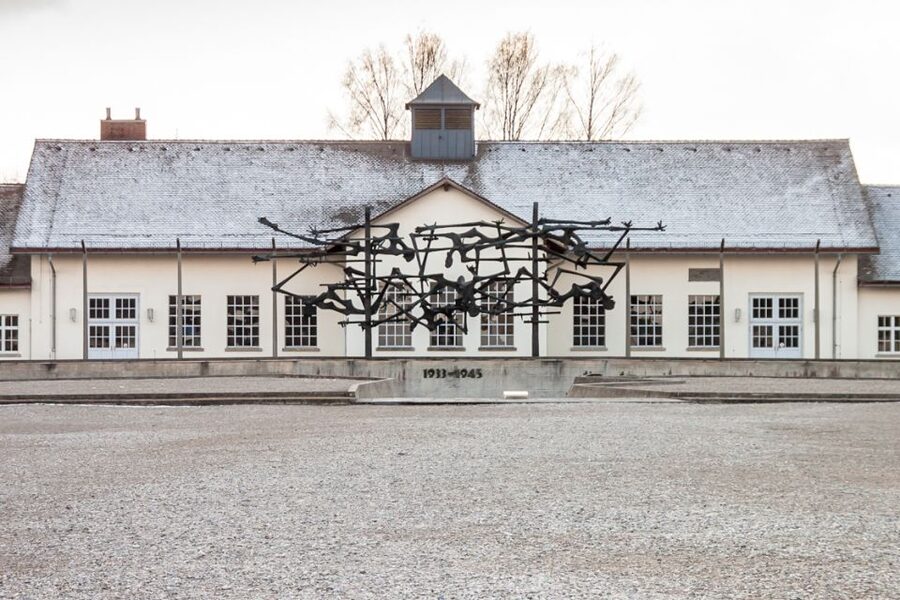
A Dachau visit is not something you do like a normal sightseeing errand. It works best when the route is guided, the pacing is steady, and you get enough context to understand why each building matters. This full-day tour from Munich is built around that reality, with a long guided visit inside the Memorial Site and public transport time wrapped around it.
I like that the tour is designed as a day trip you can actually manage. You meet in central Munich, you ride by metro and bus to Dachau, and you get back the same way in the late afternoon. That structure matters because it keeps your focus on the site, not the logistics.
Just keep your expectations grounded. You are there to reflect, learn, and remember. Expect hard history, walking, and a route that does not treat the camp like a museum attraction.
Other Dachau memorial visits:
- Dachau Concentration Camp Memorial Site Tour from Munich by Train
★ 4.5 · 5,637 reviews - From Munich: Dachau Memorial Site Day Tour
★ 4.8 · 2,723 reviews - From Munich: Dachau Memorial Site Half-Day Trip
★ 4.7 · 2,526 reviews
Getting from Marienplatz to the camp without stress
The tour starts at Marienplatz in front of the department store Ludwig Beck, at Marienplatz 11. Look for a white and blue umbrella and signs advertising the Dachau Tour, and if you are running late, the activity provides an emergency phone number to reach the local partner.
You spend about 40 minutes on the metro or subway, then around 10 minutes on a bus or coach to reach the Memorial Site area. The practical value here is that the tour includes the train and bus fees, so you do not have to price out and cobble together connections that can change depending on the day.
Inside the day, the pace is controlled. You get a short break after arrival, then you join the guided portion inside the Memorial Site for roughly 3 hours and 50 minutes. That timing helps you avoid the most common problem on day trips, which is showing up to Dachau tired, rushed, and without enough mental space for the places you are about to see.
Inside Dachau: the route you are actually able to follow
The most important thing you get is not a list of buildings. It is a guided walk that explains how the camp operated and how the camp developed over time. Your guide covers the reasons the camp opened, the first prisoners who arrived, and three phases of the camp, then connects that history to what you are seeing in front of you.
You also get commentary on the everyday machinery of the system. The tour explains the process from registration onward, and it describes the reality of imprisonment, trials, torture, and punishment. Even if you already know the basics, you will likely find the camp’s logic becomes clearer when a guide points you from one functional space to the next.
For orientation, you start at major points near the entrance and gateway areas. From there, the route leads you through places tied to processing and control, and then into sites that reveal the darker side of how the Nazis ran the camp. It is heavy, but it is not random.
The Jourhaus and the entrance gateway moment
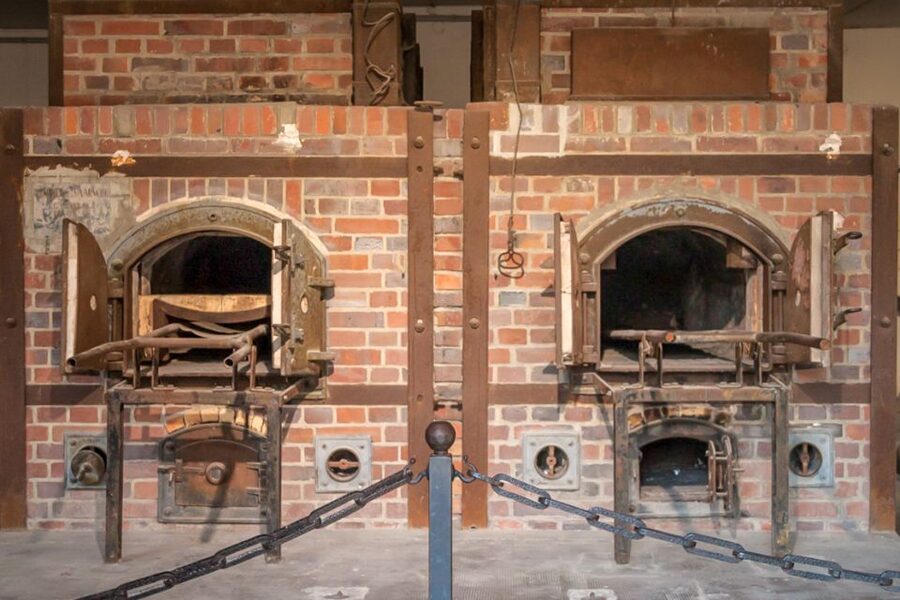
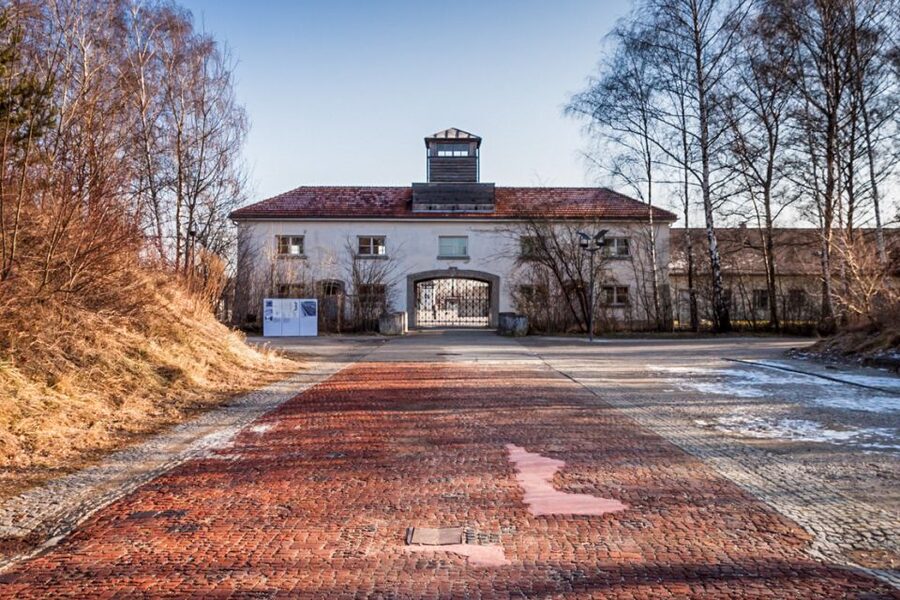
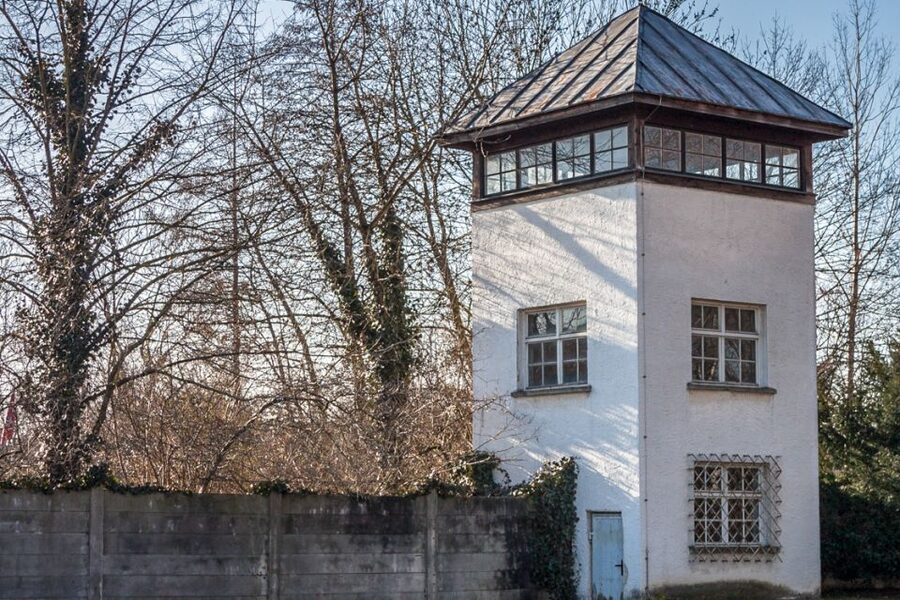
One of the hardest parts of visiting Dachau is learning how to look without turning away. The tour helps you do that by starting with the sites that frame the camp’s purpose. Passing through the Jourhaus is a key moment, especially because it includes the infamous sign Arbeit Macht Frei.
What I like about including this stop early is that it sets the tone without waiting. You see how propaganda tried to twist language and meaning, while the guide explains the real function of the place. It is not only about the sign itself, it is about how the system used symbols to normalize brutality.
You also visit the entrance building and gateway into the camp, plus other essential orientation points. This is valuable because it anchors your mental map. Later, when you are standing at Appellplatz or looking toward other buildings, you are not just wandering, you understand how the space connects.
Weigh these Munich picks against each other
- From Munich: Neuschwanstein & Linderhof Castle Full-Day Trip
★ 4.6 · 14,646 reviews - From Munich: Neuschwanstein Castle Full-Day Trip
★ 4.7 · 3,977 reviews - From Munich: Neuschwanstein Castle Full-Day Trip by Van
★ 4.8 · 1,177 reviews - Full-Day Dachau Concentration Camp Memorial Site Tour from Munich
★ 5.0 · 897 reviews
Appellplatz, barracks, and how control was staged
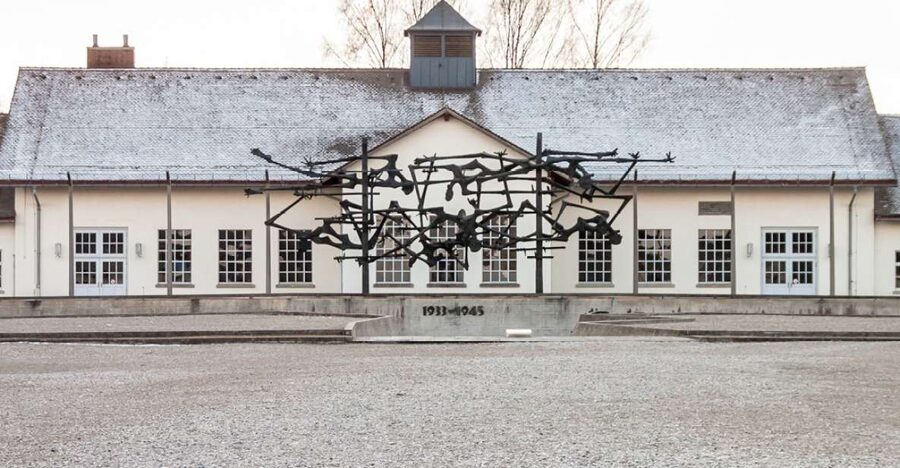
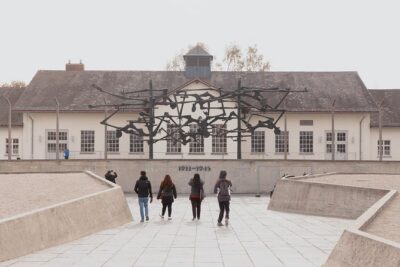
Appellplatz is the kind of location that makes the scale of routine feel real. The tour includes stops at Appellplatz and Barrack X, and the guide connects those places to camp operations and prisoner life.
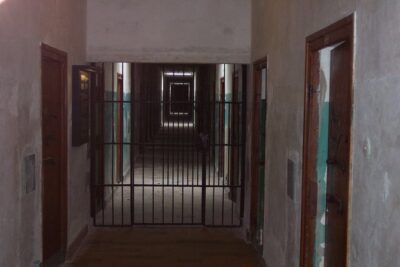
I find it helps that the tour includes both the processing or staging areas and the structures tied to housing. It is one thing to read about imprisonment. It is another to walk a route that shows how the Nazis organized prisoners into systems of movement, supervision, and repeated control.
The guide’s job here is crucial. You learn what the daily operations meant in practice, and you see how the camp used structure to enforce fear. Guides such as Adam and Hein have been praised for pacing and for explaining key facts clearly while still leaving space for people to process what they see.
Also, this portion is where you should slow down and look at small details. Even if the buildings feel stripped down or plain, your guide will explain why that physical layout matters.
The Bunker: punishment spaces described with care
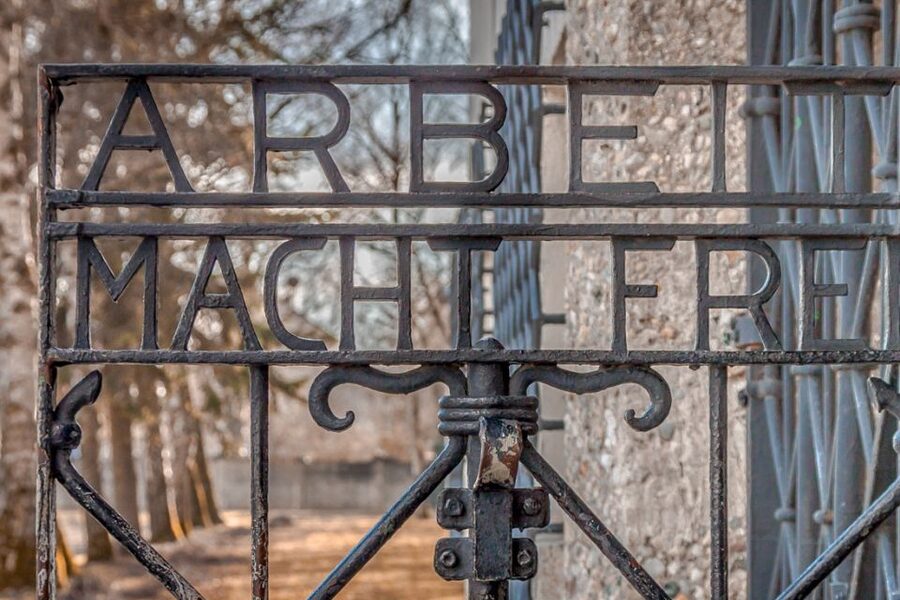
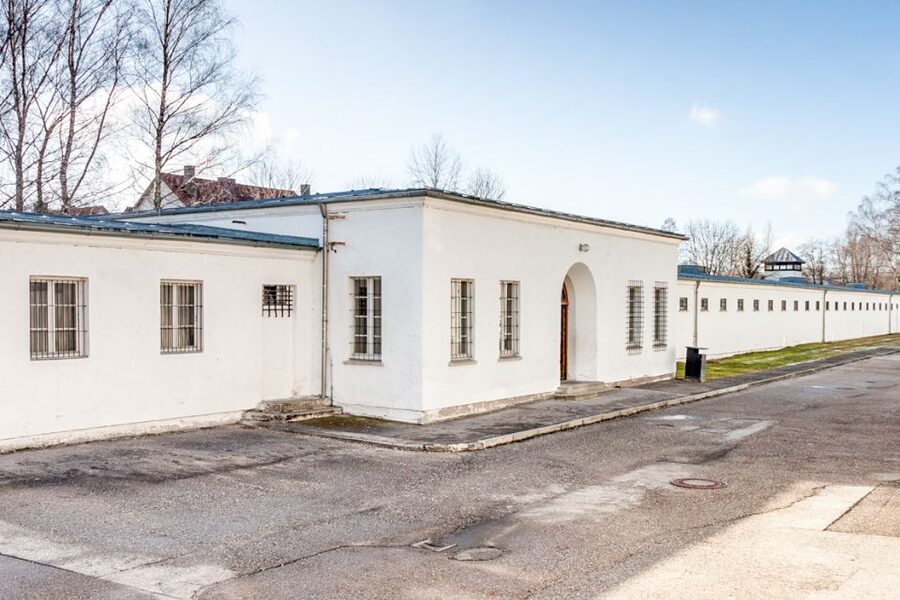
The tour includes the Bunker and the surrounding context for detention and punishment. This part of the day is likely to feel the most emotionally intense, and the value of a Memorial-qualified guide shows up here.
A strong guide does two jobs at once. First, they explain what the Bunker and related structures were used for. Second, they keep the group moving with respect, so people are not trapped in a confusing or chaotic crowd.
If you want the “why” behind the horror, this is where it connects. The tour description includes daily operations that lead into torture and punishment. With that context, the Bunker is not just a dark room, it becomes a visible step in a planned system.
Plan for the fact that some people need a moment before continuing. The tour keeps a clear route and timeline, but it also generally gives you the chance to stand and absorb what you are seeing.
School of Terror: the SS training facility stop
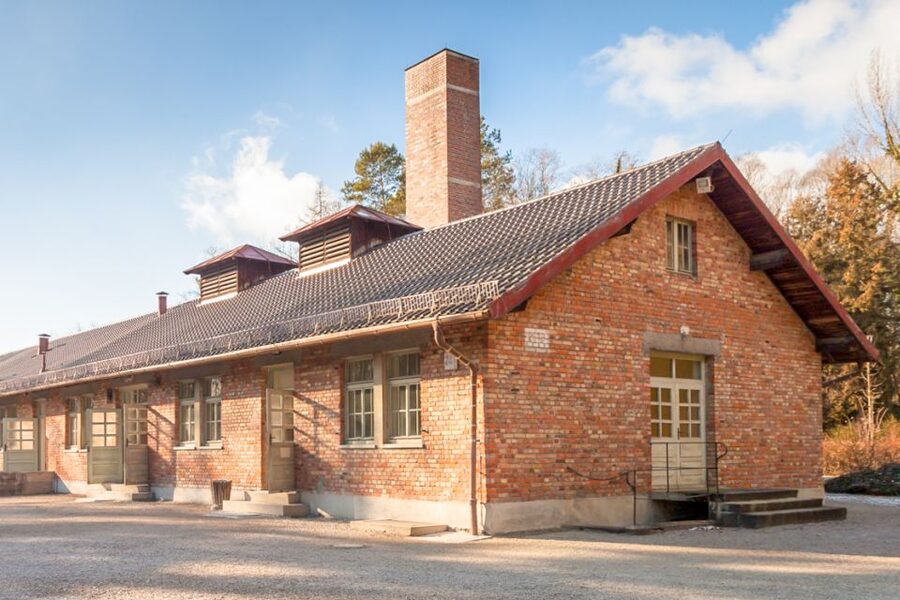
Another specific highlight is the S.S. Training Facility, also described as the School of Terror. This stop matters because it helps you understand the camp as part of a wider Nazi framework, not only a remote prison site.
Your guide ties this location back to the evolution and development of the camp. That context helps you see Dachau not just as a place where people were held, but as a tool for training and enforcing cruelty. The physical spaces make the idea easier to grasp because you are walking through the same categories of functions the Nazis used.
If you come into the day with a general sense of Dachau’s place in history, this stop can sharpen it. It connects camp reality to the broader system of ideology and behavior.
Timing, breaks, and the practical stuff that affects your day
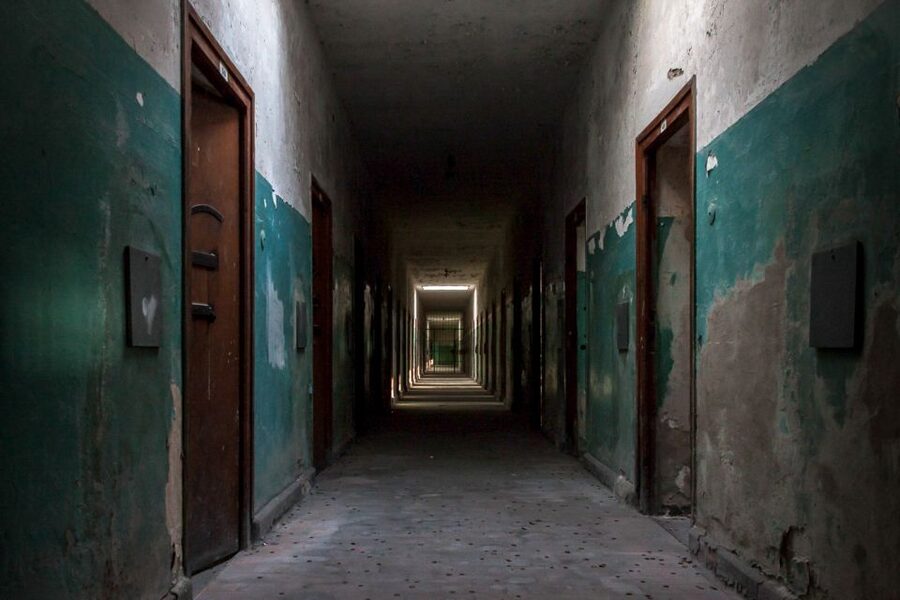
This tour is 6 hours total, with about 4 hours inside the camp and around 2 hours of travel. That structure is not accidental. Dachau requires attention, and too many rushed half-day visits end up feeling superficial or overwhelming in the wrong way.
You get a break of about 15 minutes after arrival at the Memorial Site. The tour description also notes an important rule: you cannot eat food while on the tour at Dachau. That means you should either plan for a big breakfast or bring something to eat for outside times, like before you start or during the short break.
Also, bring comfortable shoes. The site involves walking and standing, and you will likely want traction and support. You should also bring water and weather-appropriate clothing since a chunk of your day includes outdoor time, including the public transport segments and walking between sites.
One more practical rule: no video recording. You can take in what you see through your own eyes and memory, and you can use your guide’s explanations to fill in the gaps after.
Price and value: what $51 buys you on this kind of day
At $51 per person, this tour is priced like a standard Munich day trip, but the value is higher than it sounds. You are paying for more than a bus ride. You are paying for a live English guide with Memorial-qualified experience, plus train and bus fees.
If you tried to do Dachau on your own, you could save money on transport. But you would still face two challenges: understanding what you are looking at in a precise way and keeping a meaningful pace through emotionally difficult spaces. The tour handles both, which is why people rate it so highly and why the guide quality becomes the real driver of the experience.
Another value factor is timing certainty. You are scheduled to arrive, tour, and return, which reduces the stress of coordinating trains and buses when your attention is already stretched thin.
What the best guides do for this visit
A day like this needs a guide who understands both history and group management. Some guides in this program get praised for being friendly and answering questions, but the bigger theme is respect and clarity.
Names that stand out in recent feedback include Marcin and Sam, along with Adam, Hein, Keith, and Scott. People emphasize that these guides keep the group together, explain key facts, and handle the emotional weight carefully. One person even highlights that a guide helped connect Dachau history to a broader understanding, including stories learned firsthand from survivor accounts.
That last point is something I take seriously. When survivor stories are shared, they help put human scale on the places you are standing in. Even then, you are not being asked to become emotional on command. You are being invited to understand.
Who should book this tour, and who should think twice
This experience is designed for adults and older teens. Children aged 13 or under are not permitted, and ages 14 and over are welcome only with parents who understand the graphic nature of the content. Proof of age may be required.
It is also not suitable for mobility impairments or wheelchair users. Respiratory issues may also make this a tough fit, since the tour involves outdoor walking and a long day.
If you want a calm, guided route that explains what you see at a serious place, this tour fits well. If you prefer self-paced sightseeing with minimal group structure, you might find it too controlled. But for most people, the fixed route and Memorial-qualified guidance is a benefit, not a constraint.
Should you book this Dachau Memorial Site full-day tour?
I think you should book if you want a guided route that helps you make sense of a difficult site. The combination of Memorial-qualified interpretation plus a structured walk through the entrance areas, Jourhaus, Appellplatz, barracks, the Bunker, and Barrack X gives you a clear path through the camp’s purpose and operations.
You should also book if you are coming from Munich and want the day to be easy logistically. Meeting at Marienplatz, using public transport, and returning in the late afternoon keeps you focused and reduces stress.
You might want to skip it if the walking is a problem for you, or if you need a fully accessible route. And if you are the type of person who gets overwhelmed by extended, emotional history with limited breaks, plan extra time for recovery afterward.
FAQ
Where do we meet in Munich?
You meet your guide on Marienplatz, in front of the department store Ludwig Beck (Marienplatz 11). Look for a white and blue umbrella and signs advertising the Dachau Tour.
How long is the tour, and how much time is spent at Dachau?
The tour duration is 6 hours total, including about 4 hours inside the camp and about 2 hours of travel.
Is the tour guided, and what language is it in?
Yes. It includes a live tour guide, and the tour is offered in English.
What transportation is included from Munich?
The price includes train fee and bus fee. You travel from Munich by public transportation to the Dachau Memorial Site and return to the Marienplatz meeting point in the late afternoon.
What will I see at the Dachau Memorial Site?
You will visit key areas such as the Jourhaus, the entrance building and gateway (including the Arbeit Macht Frei sign), Appellplatz, the Bunker, Barrack X, and the S.S. Training Facility also known as the School of Terror, among other important camp sites.
Are children allowed?
Children aged 13 or under are not permitted. Children aged 14 and over are welcome if accompanied by parents who understand the graphic nature of the tour content, and proof of age may be required.
Can I eat during the tour?
No. It is not permitted to eat food while on tours at Dachau. You should eat a big breakfast or bring something to eat for the train and use available break time.
Is this tour accessible for wheelchair users?
No. The tour is not suitable for wheelchair users and is not suitable for people with mobility impairments.
Fresh reviews out of Munich
- Munich: Christmas Markets Food & Drink Tour★ 4.6 · 50 reviews
- Munich: Walking tour of the old town with all your senses★ 4.5 · 51 reviews
- Munich: Scavenger Hunt Self-Guided Tour★ 4.1 · 51 reviews
- Hidden Architectural Gems of Munich (Max. 16 guests)★ 4.9 · 52 reviews
- Shared Departure Transfer: Munich Central Station to Munich Airport★ 3.5 · 54 reviews
- Hard Rock Cafe Munich with Set Lunch or Dinner★ 3.5 · 54 reviews
- Quatsch Comedy Club München: Die Live Show★ 4.6 · 56 reviews
- From Munich: Royal Fairytale Tour★ 4.9 · 56 reviews
Dachau Memorial Tours, compared.
Dachau Concentration Camp Memorial Site Tour from Munich by Train
Read our review →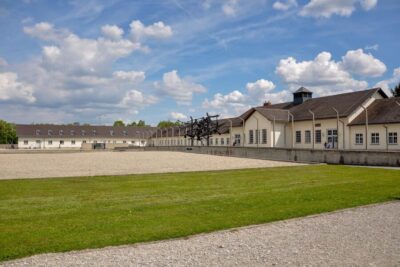
Dachau Concentration Camp Memorial Tour with Train from Munich
Read our review →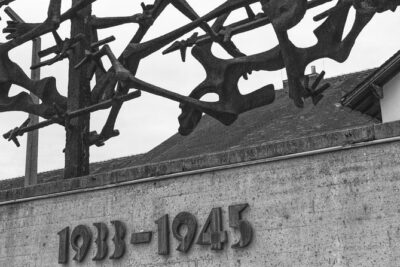
Early-Start Dachau Memorial Half-Day Tour from Munich
Read our review →
Guided Dachau Concentration Camp Memorial Site Tour with Train from Munich
Read our review →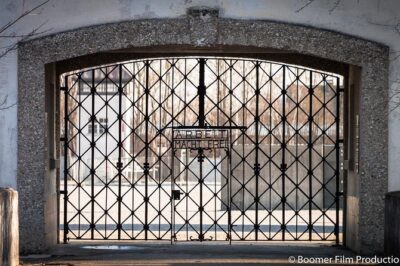
Full-Day Dachau Concentration Camp Memorial Site Tour from Munich
Read our review →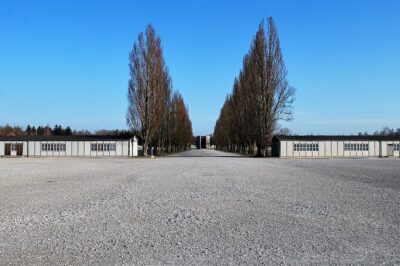
Dachau Small-Group Half-Day Tour from Munich By Train
Read our review →Browse the lists this tour appears in